Get Full Government Meeting Transcripts, Videos, & Alerts Forever!
Get email alerts on the Education Curriculum topic
No spam. Unsubscribe anytime.
Sayville leaders showcase 'Magnetic Literacy' pilot, plan districtwide rollout
Summary
At a Sayville Union Free School District workshop, administrators and elementary teachers presented results from a year‑long pilot of the Magnetic Literacy program, reported wide teacher support and outlined training, summer curriculum work and a phased district rollout beginning with launch training and further piloting.
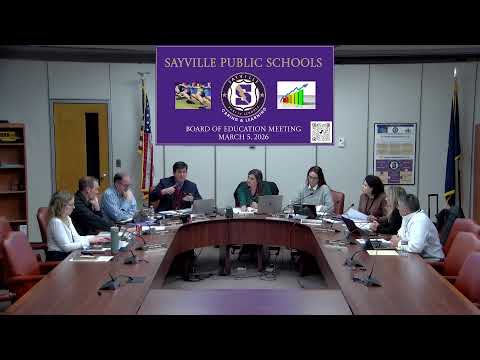
At a district workshop meeting, Assistant Superintendent Amy D'Ameola and elementary teachers presented a multi‑year pilot of Magnetic Literacy and described plans for districtwide implementation.
The presentation traced the district's literacy work over several years — including prior collaboration with Columbia University's Teachers College — and said leaders performed an audit to identify strengths and gaps before piloting new materials. ‘‘We wanted to make sure we did it right,’’ Dr. Foy said, using the district's preferred phrase to ‘‘go slow to go fast.’’
Why it matters: District leaders said the pilot aims to bring coherence across buildings and grade levels by combining research on the science of reading with long‑standing classroom strengths such as novel study, creative writing and independent reading. Superintendent remarks framed the effort as consistent with district outcomes — independent learners, caring citizens, communicators, critical thinkers and joyful learners.
Teachers and reading specialists described the program's core elements. Ashley Merchant, a reading teacher who led the district's professional development, summarized the program's priorities and the age split between K–2 and 3–5 materials, and said, ‘‘the answer is in the womb,’’ stressing the program's emphasis on early oral language foundations. Presenters highlighted systematic phonics, decodable texts, daily fluency routines and scaffolded vocabulary instruction tied to science and social studies content.
Pilot logistics and feedback: Leaders said training was provided by I‑Ready trainers, teachers had collaborative planning days across buildings, and reading teachers served as in‑house literacy experts to support tiered instruction. Presenters reported robust pilot feedback: materials were described as content‑rich, interactive and aligned across grades, and multiple speakers said pilot teachers overwhelmingly supported adoption — at one point the presentation reported ‘‘100% buy‑in’’ from piloting teachers.
Classroom examples underscored the program's impact: a kindergarten neighborhood theme increased participation and vocabulary development; second‑grade students described units on national parks and mini books that made instruction feel organized; third‑ and fourth‑grade teachers reported strong student engagement, explicit vocabulary routines and transferable assessment data that informed small‑group instruction. Second‑grade teacher Lisa Board said student engagement had ‘‘gone through the roof,’’ and fourth‑grade teachers pointed to a read routine and syllable work that helped students decode larger words.
Implementation next steps: Presenters said the pilot will continue through the school year, the district will hold a superintendent conference day to launch training, and summer curriculum teams will adapt materials so the district's version reflects local needs. Administrators emphasized that materials do not replace teacher judgment: ‘‘The materials are not the curriculum. We write curriculum, and we're going to use this as a key driver,’’ a district leader said, describing future curriculum writing and iterative professional development.
What comes next: The district will continue teacher piloting and training through the spring and plans broader rollout in the fall after summer curriculum work and continued PD.