
Norfolk officials cite early gains on VALS but flag third‑grade reading declines and need for targeted support
Get AI-powered insights, summaries, and transcripts
Subscribe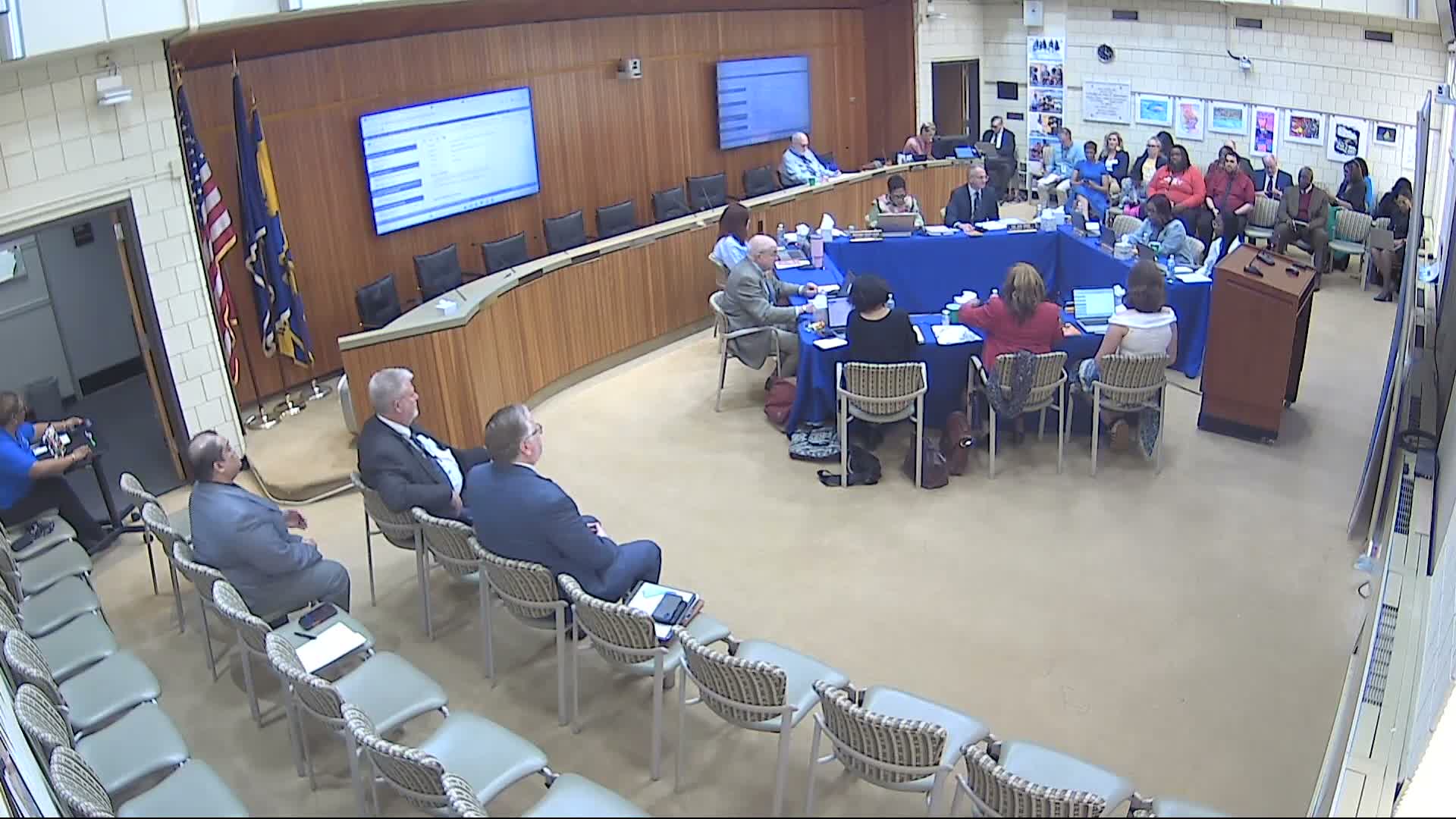
Summary
District staff reported midyear reductions in the VALS high‑risk band for grades 1–2 but warned winter growth-assessment results show fewer third-graders classified proficient than last winter; administrators outlined coaching, phonics instruction and partnerships for targeted fluency and comprehension supports.
Miss McGarity told the Norfolk School Board the division is using the Virginia language and literacy screener (VALS) in grades 1 and 2 to monitor progress toward the board’s goal of third‑grade reading proficiency. "Once students take the VALS assessments, they're placed in one of three wristbands," she said, describing low, moderate and high‑risk groups and noting the interim measure focuses on reducing the percentage in the high‑risk band.
McGarity said midyear VALS results showed a notable decrease in students in the high‑risk band and that many children moved toward moderate and low risk. She cautioned, however, that VALS is still new to the division and that the system is revealing patterns staff are still learning to interpret. "VALS is only in its second year of life," she said.
Board members pressed staff about subgroup results, particularly English‑language learners. Lisa Nash, introduced by staff as the senior coordinator for elementary English, said ELL students often show a slower initial pace because they are still acquiring language: "If they have a high level of language needs ... that is reading that's going to pop up." Nash and McGarity emphasized that the division is pairing phonics instruction with interventions and coaching rather than relying on automated tools alone.
On third‑grade proficiency (Measure 2.2), McGarity said the fall growth assessment this year was administered about six weeks later than the VDOE schedule, giving students additional instruction before that fall test and complicating year‑to‑year comparisons. She said winter-to-winter comparisons suggest a decrease in the percentage of third‑grade students marked proficient compared with last winter and called for acceleration strategies for the spring. "We still have time to accelerate," she said, but staff are "digging further" into school‑level patterns to identify effective practices.
Administrators described partnerships (including work with ARA) and targeted coaching, and highlighted a new K–2 benchmark curriculum rolled out last year. They told the board they are emphasizing fluency and repeated reading of complex texts to bridge phonics and comprehension and plan professional development for second‑grade teachers in March to support that transition.
The presentation closed with a staff request for more sustained, school‑based reading specialists and tutors to provide intensive supports in third grade. Board members asked for follow‑up information about subgroup trends and the specific formative measures schools are using so the board can monitor whether interventions are translating into improved proficiency by year’s end.