Get Full Government Meeting Transcripts, Videos, & Alerts Forever!
Get email alerts on the Early College Program topic
No spam. Unsubscribe anytime.
Dr. Mays says Alief early-college program helps students earn associate degrees; counselors available districtwide
Summary
In a brief Q&A, Dr. Mays told student Isabelle that Alief's early-college model is producing more associate-degree graduates and that the district provides on-campus counselors and rotating mental-health counselors, led by Dr. Alvia Baldwin, to support students taking college-level courses.
Dr. Mays said Alief's early-college model is helping more students leave high school with associate degrees, giving them options to enter the workforce or continue toward a bachelor's degree.
"So I think the biggest thing is, of course, more students graduating with associate degrees," Dr. Mays said. "When you come out of high school with that associate degree, guess what? You're saving money and you get a chance to make a couple decisions." He added the district is pursuing expanded dual-credit arrangements with partners such as Houston Community College to increase access.
The nut graph: The short interview, part of a recorded Q&A, focused on college-credit opportunities and levels of academic and emotional support for students enrolled in rigorous high-school and college courses. Dr. Mays framed the early-college pathway as both a cost-saving and college-readiness strategy and outlined counseling resources intended to help students manage the added demands.
On supports, Dr. Mays said the district and its college partners monitor student progress and intervene when students struggle. "We work with HCC closely to kind of monitor ... our students being successful," he said, and noted that when students are not succeeding the district looks for underlying reasons and makes adjustments. He said each campus has a counselor and that mental-health counselors "roll through" campuses to provide broader coverage.
Dr. Mays named Dr. Alvia Baldwin as the district lead overseeing counselors and advised students to contact their campus counselor first to be connected to mental-health services. "Doctor Alvia Baldwin is our lead over counselors ... she's ... supports counselors all over the district," he said.
Asked what habits matter most after graduation, Dr. Mays emphasized soft skills such as communication and collaboration. "Your mock trial team and your speech and debate team ... give you soft skills that you can go out there and you communicate and you can collaborate," he said, citing extracurricular programs on the campus as formative experiences.
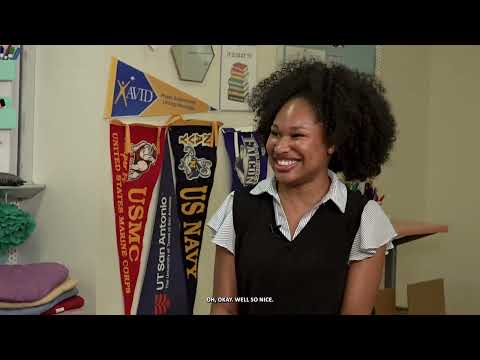
Student Isabelle, who the host identified as a member of the student advisory council, thanked Dr. Mays for the answers and said she felt prepared for postsecondary pathways.
The session concluded with Dr. Mays thanking Isabelle and noting the program will continue with future episodes of the Q&A series.