Get Full Government Meeting Transcripts, Videos, & Alerts Forever!
Get email alerts on the Public Safety Offenders topic
No spam. Unsubscribe anytime.
Council amends proposed child-safety-zone ordinance to add an appeal panel after heated public debate
Summary
Police proposed prohibiting certain registered sex offenders from residing or entering within 1,500 feet of places where children commonly gather. Council amended the draft to add a formal appeal mechanism (city manager + two councilmembers) and the amendment passed unanimously amid emotional public testimony on both sides.
The Midland Police Department proposed an ordinance that would prohibit some registered sex offenders from establishing residency or entering places defined as child-safety zones (schools, parks, daycares, pools, stadiums, etc.) within a 1,500-foot radius. Police presented local counts of registered offenders and argued that restricting residency and presence in those zones could reduce opportunities for repeat offenses.
Sergeant Michael Ball outlined the risk-level breakdown and the number of current registrants in the city. Staff emphasized that existing residents within a newly designated safety zone would be grandfathered but that new residences would be restricted; the ordinance would create a process for limited, case-by-case exceptions administered by the chief of police.
Public comment included strongly held views on both sides: victim advocates urged strict measures, while other speakers and researchers warned about the efficacy of residency restrictions and asked for careful review. Council debated the criminal and civil implications, notice and grandfathering mechanisms, and fairness.
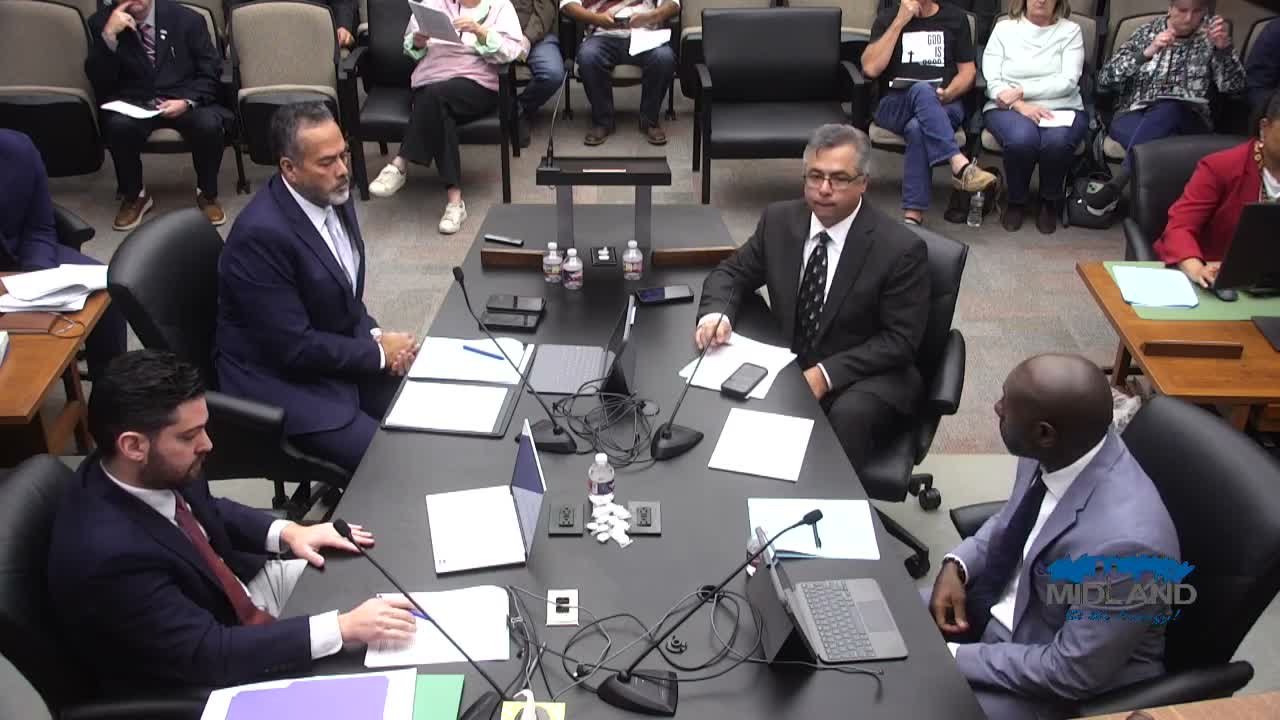
Council moved to amend the ordinance to add an appeal process: decisions by the chief to deny or condition an exemption may be appealed to a board consisting of the city manager and two councilmembers in an open meeting setting. Council adopted the amendment 6-0. Staff said they would add signage and a public-notice rollout for any zones designated under the ordinance and that the ordinance's remaining procedural details would be clarified before a second reading.
Next steps: staff will finalize language, add an administrative appeals process as amended, and produce outreach materials explaining the definition of child-safety zones, grandfathering rules and how an affected person may request an exception.