Board recommends denial of exterior‑materials variance for proposed Yamaha/DHL warehouse in Newnan

Coweta County Board of Zoning Appeals

Loading...

AI-Generated Content: All content on this page was generated by AI to highlight key points from the meeting. For complete details and context, we recommend watching the full video. so we can fix them.

Summary

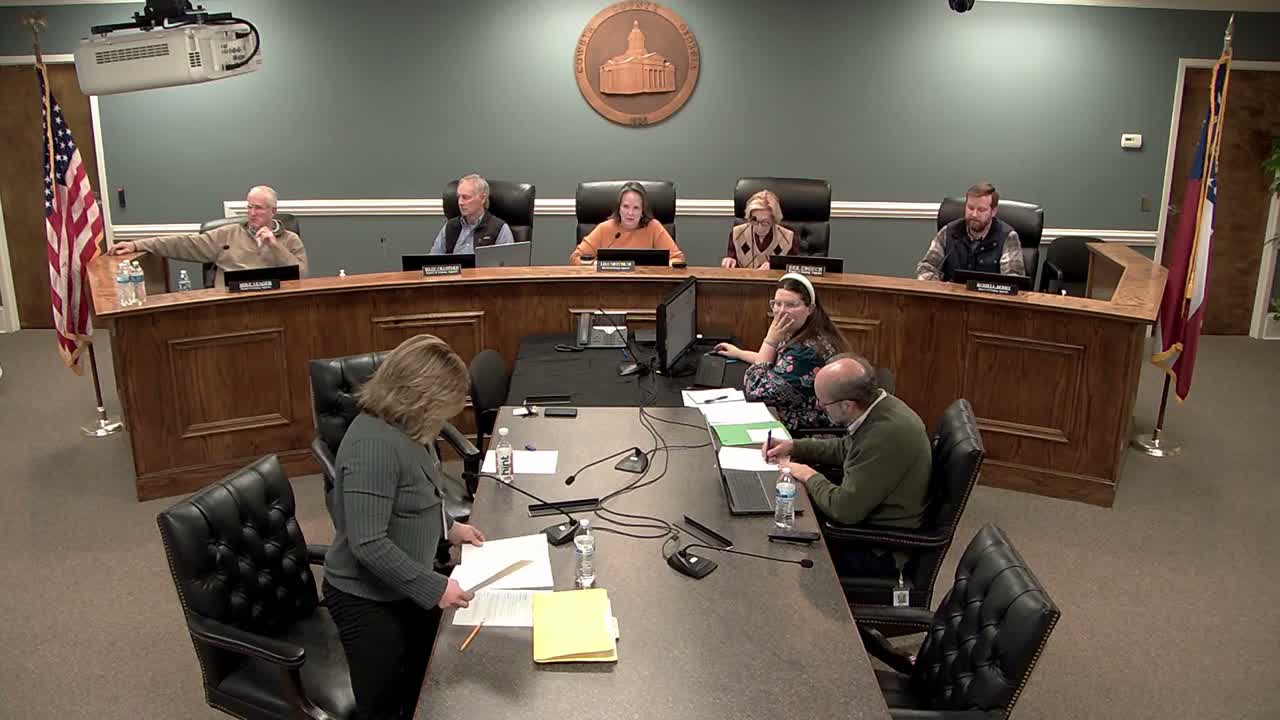
The Coweta County Board of Zoning Appeals unanimously recommended denial of a variance sought by Yamaha Motor Manufacturing (d/b/a DHL Supply Chain USA) to reduce Quality Development Corridor exterior material requirements for a proposed 784,700‑sq.‑ft. warehouse on Highway 34 East. Staff outlined conditions including DOT access approvals and 800 trees for screening; the board concluded the ordinance did not show the required hardship and will forward its recommendation to commissioners on Feb. 17, 2026.

The Coweta County Board of Zoning Appeals on Jan. 29 recommended denial of variance petition 25‑022, filed by Yamaha Motor Manufacturing Corporation of America doing business as DHL Supply Chain USA, which sought relief from exterior architectural requirements in the Highway 34 East Quality Development Corridor (QDC) for a proposed 784,700‑square‑foot distribution warehouse in Newnan.

Zoning manager Lisa Eschman told the board the 51‑acre site lies partly within the county’s QDC overlay, which requires each building elevation to consist of at least 80% 'category A' materials (brick, stone or glass) with no more than 20% 'category B' materials (stucco, EIFS, fiber cement). The applicant proposed predominately painted tilt‑wall panels across multiple elevations and offered to plant about 800 trees to screen the building. Eschman summarized staff‑recommended conditions that would accompany approval, including Georgia Department of Transportation approval for access points, construction of dedicated left‑turn lanes and compliance with the DRI (development of regional impact) notice of decision (DRI #4423).

Applicant representative Steve Hess said the design team had worked with staff for about a year and argued that full brick or similar 'class A' materials are costly and uncommon on buildings of this size and height. Architect Scott Shelton and civil engineer Bob McCann described design choices, noting the building’s scale (about 60 feet tall at portions) and that finished floor elevation and topography affect how visible the warehouse will be from Highway 34.

Board members pressed staff and the applicant on whether the proposed landscaping and topography would meaningfully screen a 60‑foot building; staff cautioned that tree size, final grading and slope make screening difficult to predict. Several board members said the county’s ordinance requires a demonstration of hardship for a variance and that economic infeasibility alone did not meet that standard. Members also discussed precedents in the corridor and past allowances of aluminum composite material (ACM) panels in lieu of brick on other projects.

After extended deliberation about hardship, precedent and possible compromise language (for example, applying QDC standards only to the portion of the building inside the overlay), the board concluded it could not find ordinance‑based justification for relief and voted unanimously to recommend denial. The board’s recommendation and staff report will be sent to the Coweta County Board of Commissioners, which will make the final decision at its Feb. 17, 2026 meeting.

Key facts: the project is proposed on an approximately 51‑acre vacant tract at Interstate Way and Highway 34 East; the applicant seeks a roughly 784,700‑sq.‑ft. warehouse approximately 60 feet tall; the applicant has proposed planting approximately 800 trees and building design elements intended to mitigate visibility; staff conditioned approvals on GDOT access permits, left‑turn lanes, and compliance with DRI #4423. The board recommended denial on the grounds that the ordinance’s hardship standard was not met.

Next steps: staff will forward the board’s recommendation to the Board of Commissioners for final action on Feb. 17, 2026.