Get Full Government Meeting Transcripts, Videos, & Alerts Forever!
Get email alerts on the Project Sale Annexation topic
No spam. Unsubscribe anytime.
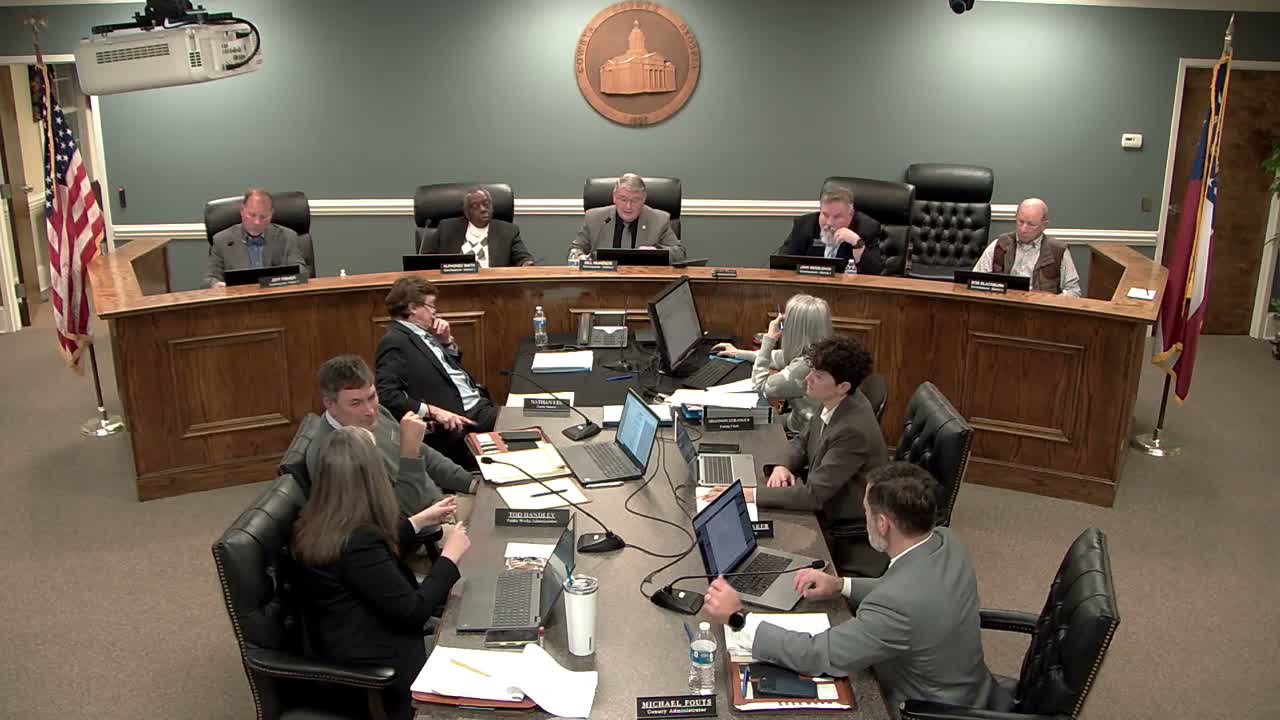
Coweta commissioners approve annexation agreement as residents decry proposed data‑center rezoning
Summary
The board approved an agreement with Templar Development and the City of Senoia that would allow annexation and development of about 26.16 acres, while residents filled the public‑comment period urging the county to reject rezoning tied to “Project Sale.”
The Coweta County Board of Commissioners voted Feb. 3 to approve an agreement with Templar Development Group LLC and the City of Senoia that would allow the annexation of roughly 26.16 acres and cap development at 61 single‑family homes if built as proposed.
Under the agreement presented to the board, the developer would be limited to 61 homes on the annexed land and, upon issuance of the 30th certificate of occupancy, pay Coweta County $3,500 per lot multiplied by the number of final recorded lots. Staff said the county would dismiss its pending objection to the annexation if the agreement is approved; the board adopted the agreement by voice vote.
Why it matters: many residents came to speak during the public‑comment period to oppose what they called “Project Sale” — a proposed large data‑center rezoning tied to the broader development discussion. Speakers said the project would require rezoning from rural conservation to heavy industrial and warned of long‑term impacts on well water, lighting, noise and the rural character of affected neighborhoods.
Residents’ complaints and claims were sharply worded. Misty Caballero said, “Please do not approve rezoning from rural to heavy industrial for data‑center projects.” Jimmy Newman urged the commissioners to “do the right thing and vote no to the project sale rezoning.” Kathy Newman cited a recent state audit revision and said the economic benefits and job numbers reported for data centers have been substantially corrected by the state auditor’s office.
Several speakers criticized county processes and the data‑center ordinance. Connie Litton said the ordinance changes approved in November diverged from citizen requests on building height, arterial definitions, bonds and decommissioning plans. John Kurtz, an illustrator who said he has exposed fraud in past development fights, told the board he had “seen a lot of lies about this project floating around” and accused officials of prioritizing outside interests.
Board response and action: the chair emphasized property‑rights protections under state law, saying applicants have a right to request rezoning and that the county must consider such requests. The board moved and seconded approval of the agreement (motion made by speaker 2; second recorded by speaker 11) and approved it by voice vote.
What remains unresolved: public commenters asked the board to pause or refuse rezoning for data centers until state‑level reviews or local ordinance changes are complete. The transcript records no additional staff study or binding moratorium tied to this vote; residents said they will continue to press for stronger local rules. The agreement approved tonight resolves the county’s legal objection to the annexation but does not itself rezone the property within county jurisdiction — it governs a negotiated transition should the property become part of Senoia.
Next steps: staff said the county will dismiss its court objection if the annexation proceeds under the terms of the agreement. Residents and advocacy groups signaled they will continue to attend meetings and press for ordinance revisions and greater transparency.