
Sen. Hufstedler's bill would require PFAS notification to public treatment works
Get AI-powered insights, summaries, and transcripts
Subscribe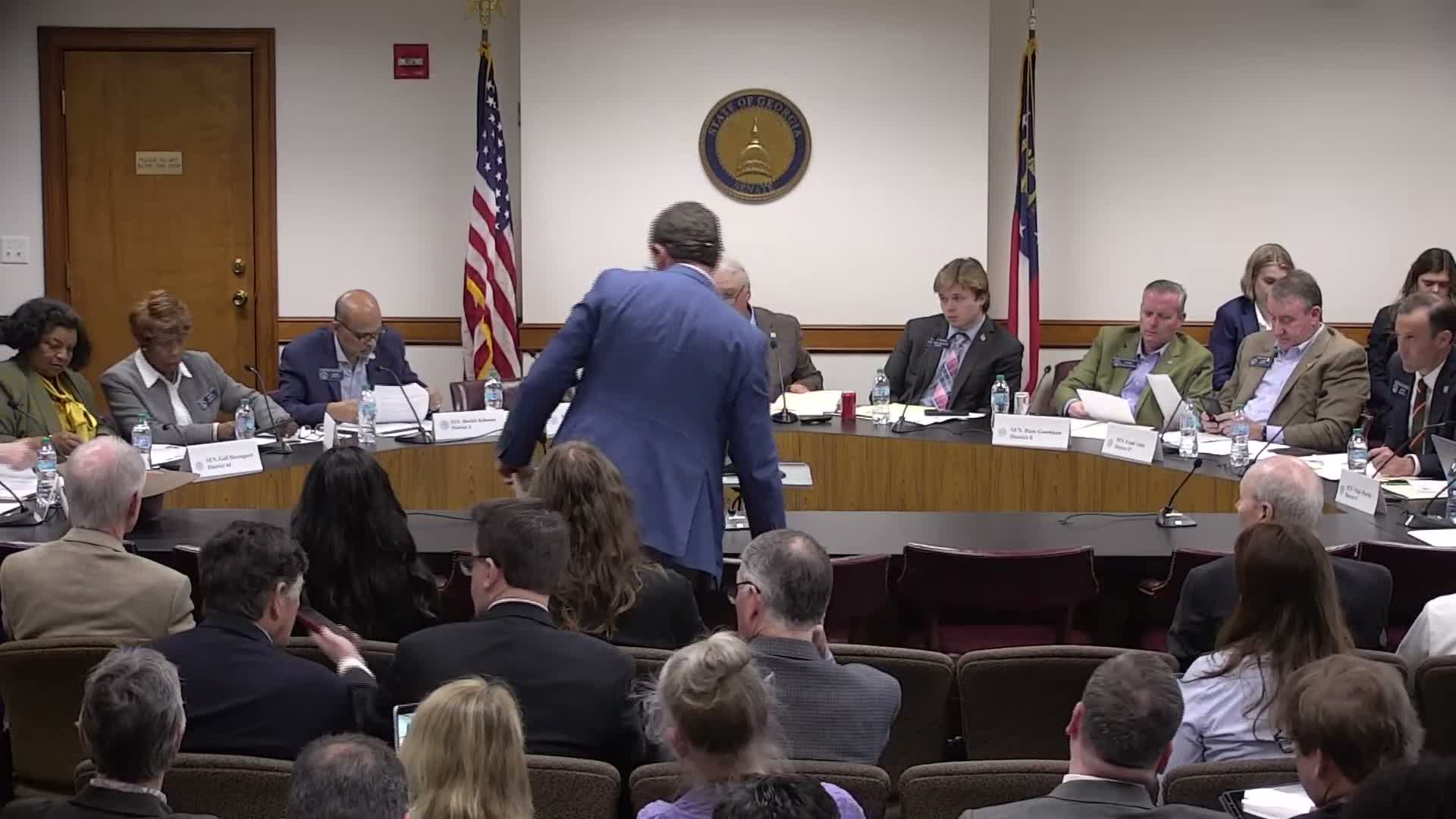
Summary
Senate Bill 538 would require manufacturers or large dischargers to notify municipal wastewater systems if PFAS compounds are being sent to publicly owned treatment works; witnesses said disclosure would aid local planning and prevent unrecognized contamination of effluent and biosolids.
Senate Bill 538, presented by Senator (speaker 2), would require certain dischargers or manufacturers to notify municipal wastewater operators when PFAS compounds are being sent to publicly owned treatment works. The sponsor described thresholds that would trigger notification — for example, discharges of 25,000 gallons or more or sources representing more than 5% of a treatment works' influent stream — and said the goal is transparency so local leaders can plan treatment and mitigation.
Jesse Dimumbrian Chapman, executive director of the Coosa River Basin Initiative, testified the lack of disclosure has hampered responses in northwest Georgia: "these compounds are being sent to publicly owned treatment works without the operator's knowledge," he said, and that contaminated effluent and biosolids have been spread as a result. Chapman and the sponsor told the committee the bill is intended to be a low-cost information-sharing measure rather than a new monitoring mandate; the transcript indicates the draft requires a responsible official to sign the questionnaire under penalty of perjury to attest to the accuracy of the response.
Why it matters: Committee members asked how the measure differs from federal EPA action; witnesses said federal rules currently cover only a small subset of PFAS compounds and do not mandate this kind of disclosure to treatment plants. Senators also asked about local costs: the sponsor noted that the city of Rome has installed treatment capacity that cost roughly $100,000,000 to address PFAS concerns.
Next steps: The hearing was informational. The sponsor offered to provide additional health-data and technical details to the committee at a later date.
Quoted from the hearing: The sponsor summarized the bill as creating "transparency" for municipal water systems; Jesse Chapman said the goal is to give local operators "public accountability for developing a plan" and to encourage local solutions before litigation proliferates.