
Senate Judiciary Committee advances Article V balanced‑budget application after divided testimony
Get AI-powered insights, summaries, and transcripts
Sign Up Free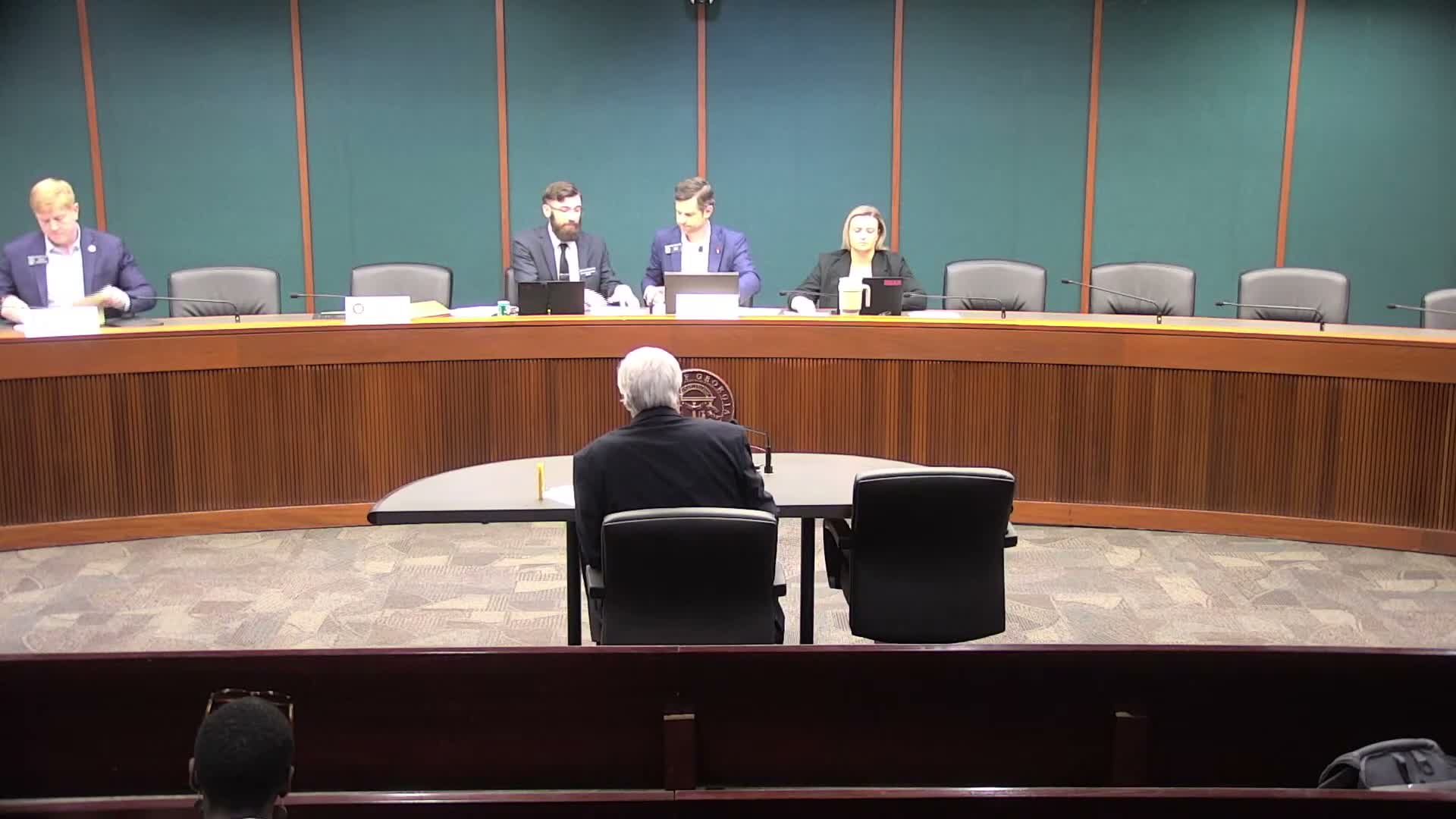
Summary
The Senate Judiciary Committee voted 5-3 to advance SR 262, an Article V application asking Congress to call a convention to propose a balanced‑budget amendment; supporters called it sensible fiscal policy while opponents and democracy‑protection groups warned of a risky, potentially open‑ended convention despite state-level delegate limits.
The Senate Judiciary Committee on Monday advanced SR 262, a resolution applying to Congress under Article V to call a convention to propose a balanced‑budget amendment to the U.S. Constitution, after a 5‑3 vote.
Chairman Kousserd presented the resolution as narrowly focused on a single subject — “a balanced budget with exceptions that are for emergencies or national defense” — and said Georgia’s submission includes a statutory delegate‑limitation provision (code section 28‑6‑8) that restricts delegates’ scope and imposes an oath and criminal penalty for violations. “It’s just really sensible fiscal policy, that I would love to see our nation get on track to do,” he told the committee.
Supporters argued the measure is a lawful, targeted use of Article V to restore fiscal discipline. Sully Sullivan, identifying himself as a member of the Black Republican Council, said SR 262 “is narrowly focused on fiscal restraints” and expressed confidence the state’s delegate instructions would prevent a broader agenda.
Opponents countered that an Article V convention’s procedures are undefined and risk opening the Constitution to unrelated change. Christy Minor testified the proposal “is a false solution” and warned a convention could be used to pursue measures far beyond fiscal policy. A representative from Common Cause Georgia urged the committee to “approach SR 262 with caution and to not advance this resolution,” saying the Constitution provides no enforceable rules guaranteeing a convention’s scope or delegate selection.
The resolution’s author noted a prior 2014 submission on the same subject and said the current version includes a sunset and explicit statutory steps for appointing and binding delegates. The committee recorded the motion to pass (moved by Senator Watson) and the tally was 5 in favor, 3 opposed; the measure advances to the next stage of the legislative process.
What’s next: SR 262 will be carried forward for consideration by the full Senate if scheduling allows, and the application would count toward the 34‑state threshold required to trigger an Article V convention only if other states file similar applications.