
Committee advances substitute to move Georgia to hand‑marked ballots, tightens voter‑roll enforcement
Get AI-powered insights, summaries, and transcripts
Subscribe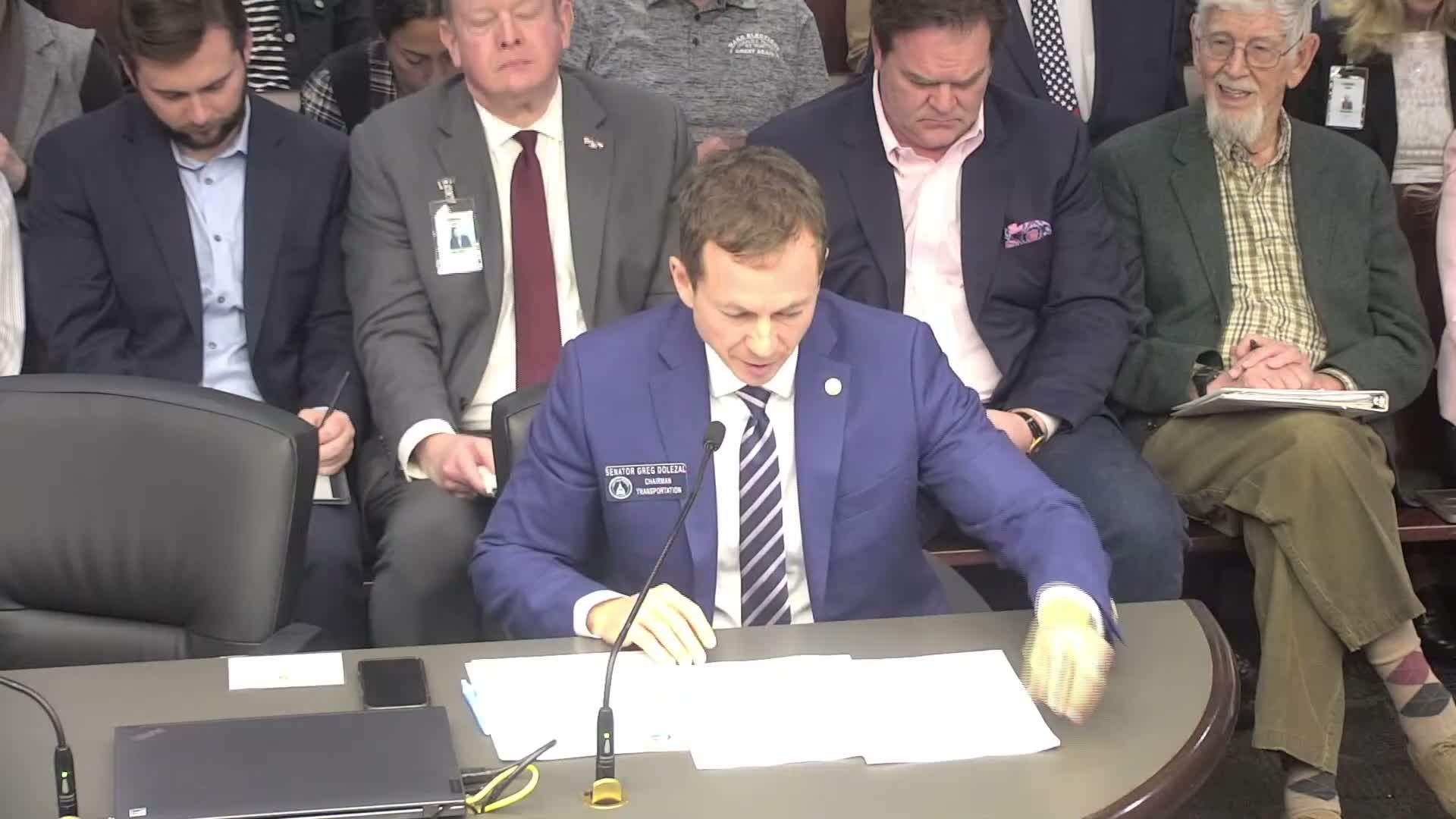
Summary
SB 568 would require hand‑marked paper ballots statewide, assign early‑voting locations to reduce preprinted permutations, make digital ballot images and security logs public, change audit/recount thresholds and add fines for failures in voter‑roll adjudication; election officials warned about procurement and training timelines while supporters cited voting‑system vulnerabilities.
Senate Bill 568 (committee substitute), presented by the bill sponsor, lays out a multi‑part plan for changing how Georgia conducts and audits elections. Major provisions discussed include:
- Moving to hand‑marked paper ballots and precluding QR codes, with the goal of creating auditable, human‑marked ballots; the author said the proposal would bring Georgia’s tabulation and posting practices into alignment with other states that use hand‑marked ballots.
- Requiring a uniform voting system procured by the state and making certain security logs and digital ballot images publicly available within 30 days.
- Assigning voters to an early‑voting location to reduce the number of distinct preprinted ballot permutations each site must stock (the sponsor argued this reduces waste and logistical burden when preprinting ballots), while allowing municipalities discretion to retain additional sites.
- Strengthening voter‑roll challenge procedures and imposing fines after adjudication for failures to comply; the bill text envisions civil fines (the transcript mentions $10,000 per registration in some sections) to compel counties to act on confirmed ineligible registrations following adjudication.
- Changing audit and recount procedures: the substitute initially raised the recount threshold to 2 percent, and also moved toward manual hand audits and audits of federal and statewide contests. Committee discussion later amended the recount threshold to 1 percent during markup.
The hearing was heavily attended by county election officials, poll workers and local elected leaders. Election administrators (including the Georgia Association of Voter Registration and Election Officials and county registrars) and procurement experts warned the committee that a statewide transition to hand‑marked ballots without ballot‑on‑demand technology — and with current procurement timelines — would be operationally difficult before the upcoming statewide elections. They recommended additional procurement time, piloting and expanded training for poll workers.
Supporters and some witnesses pointed to cybersecurity concerns with current optical/tabulating systems. The sponsor cited a 2022 CISA report and said Georgia still uses an older certified version of a vendor’s software (identified in testimony as version 5.5a) and that moving to hand‑marked paper ballots would reduce certain vulnerabilities. Local officials including the Fulton County commission chair warned that assigned early‑vote locations and preprinted ballots could reduce convenience for voters in large, geographically dispersed counties and said they would resist actions that appeared to suppress early voting access.
Committee members debated several amendments. The Burns amendment revised the serialized ballot identifier language to add 'batch' identifiers and other edits; another amendment lowered the recount threshold from 2 percent to 1 percent. A motion to delay the bill’s effective date to July 1, 2027 failed. The committee approved the bill as amended (recorded count in committee: 8 in favor, 4 opposed). The author and opponents signaled continued negotiations over technical procurement, audit nomenclature and enforcement provisions.