
Committee advances bill to allow product‑liability claims when AI harms minors
Get AI-powered insights, summaries, and transcripts
Subscribe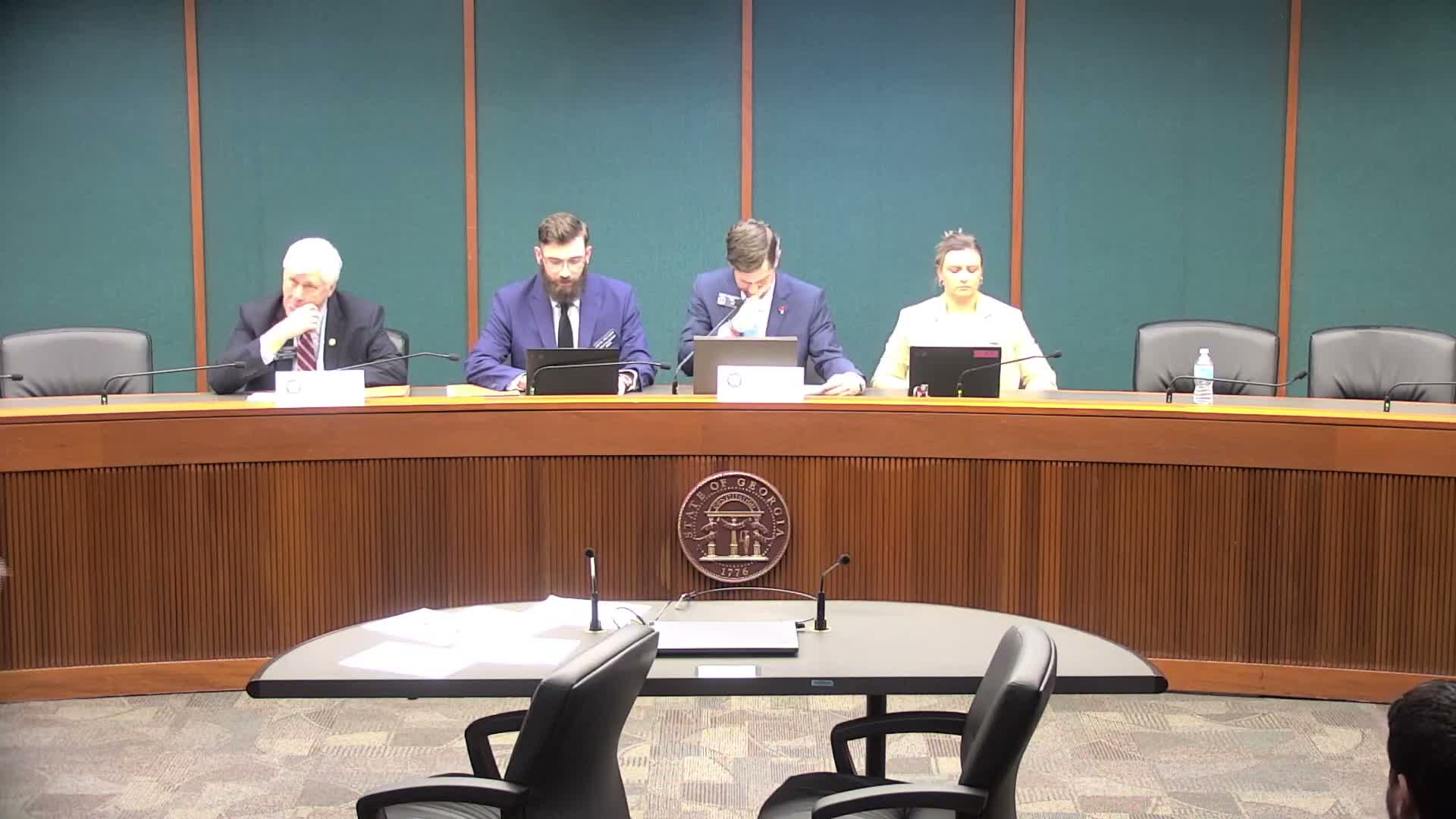
Summary
A Senate committee advanced SB 488, which would clarify that certain artificial‑intelligence products used or marketed to minors can be treated as products under Georgia’s product‑liability code, enabling parents to pursue product‑liability claims if a minor is harmed. The measure passed the committee motion and will move forward for further consideration.
A Senate committee voted to advance legislation that would let parents pursue product‑liability claims if an artificial‑intelligence product sold or promoted to children causes harm.
The bill’s author told the panel the measure is narrowly tailored to place AI within existing product‑liability sections (referenced in testimony as 51‑1‑11 and 51‑1‑11.1), not to regulate AI broadly. “This is not a regulatory bill,” the author said, adding the change is intended to ensure parents have a civil path when a minor suffers serious injury tied to a generative AI product.
Trip Richardson of Frontline Policy Council, who said he was speaking in support, told the committee: “This bill does not hinder innovation and it does not presume wrongdoing. It simply clarifies that AI companies have the same responsibility as other product manufacturers to ensure their systems are reasonably safe and to warn of known risk.”
Opponents warned the text could amount to strict liability for software. “I’m gonna vote against your bill because I think you’re making a sea change in our general tort law in Georgia by going to strict liability,” Senator Kauser said, arguing that the bill risks skipping negligence and defect elements normally required in product‑liability cases.
The author and supporters responded that the draft is intended to fit into existing product‑liability code and that elements such as merchantability and causation remain part of the chain of proof. The author said the bill would be limited to cases where AI products are shown to be defective or unmerchantable and that the measure is “narrowly tailored.”
Following questions and brief testimony, the committee moved to pass the bill and the motion carried. The committee action sends SB 488 to the next stage of consideration, where further drafting or amendments are possible.
What happens next: The committee vote advances SB 488 toward consideration on the floor or in subsequent committee stages; sponsors and opponents signaled readiness to continue negotiating precise language around liability standards and the interplay with existing product‑liability elements.