
Committee advances bill to make key offices nonpartisan in five metro counties
Get AI-powered insights, summaries, and transcripts
Subscribe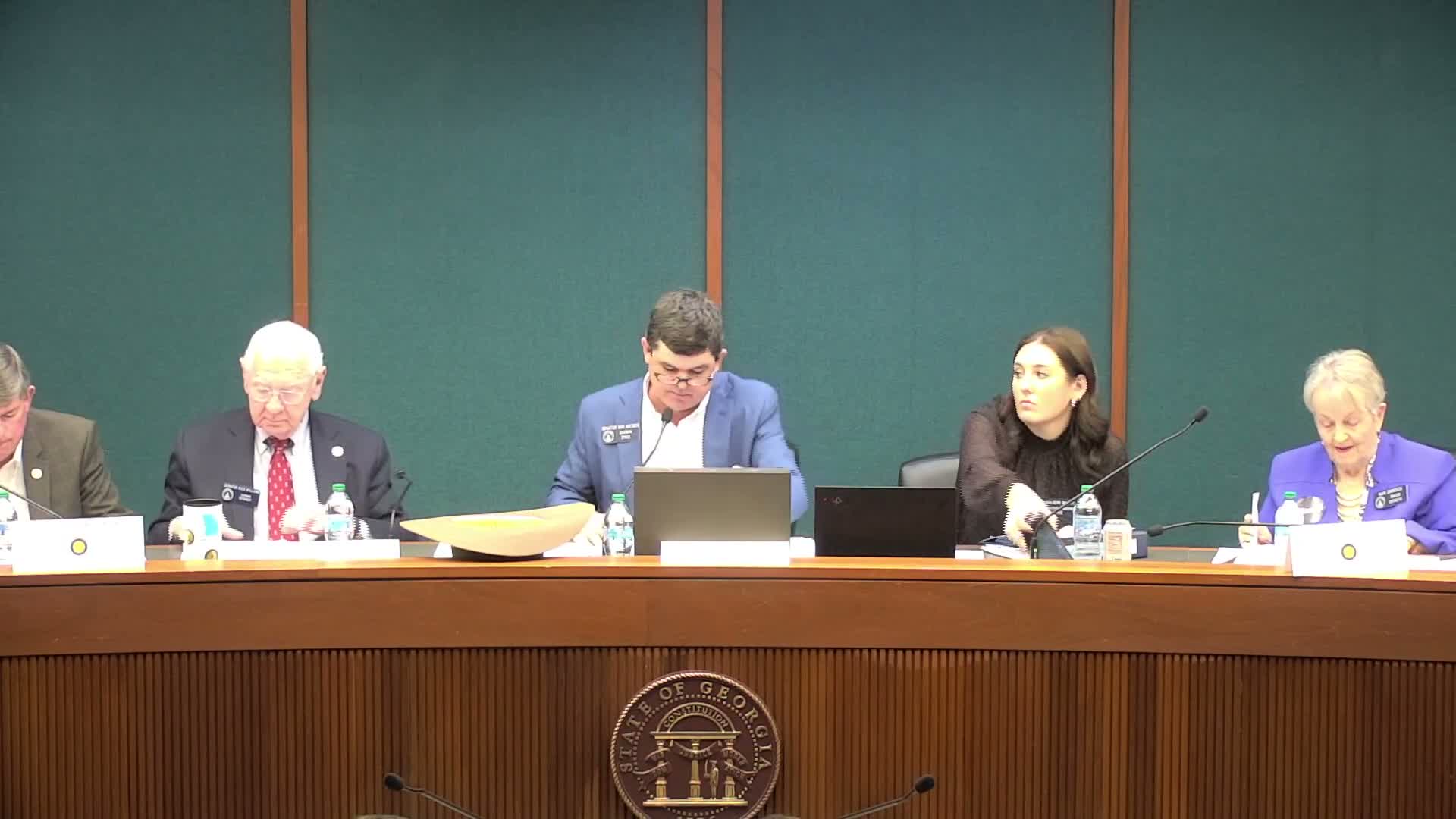
Summary
The Senate Ethics Committee advanced SB 573 to make certain county offices nonpartisan in five large metro counties (Fulton, Gwinnett, Cobb, Clayton and DeKalb). District attorneys and others warned the change may require a constitutional amendment; the bill’s author said legislative counsel supported the statute as drafted.
Senate Bill 573, as introduced by Senator Seltzler, would convert selected county offices — including county commission seats, district attorney and solicitor offices, clerks of superior and state courts, tax commissioners and elected surveyors — to nonpartisan elections in five specified metro counties: Fulton, Gwinnett, Cobb, Clayton and DeKalb. The author said those counties share consolidated policing and medical‑examiner functions that, he argued, make nonpartisan governance appropriate.
The committee debated the bill at length. Senator Jackson and others asked why the measure applied only to the five named counties rather than other consolidated governments (for example, Macon‑Bibb or Augusta). Seltzler said he chose a ‘‘core five’’ because of the concentration of executive, policing and investigative powers in those counties and because nonpartisan governing bodies have eased contentious debates in major urban jurisdictions, he said.
Several district attorneys and the DA Association testified in opposition or caution. Joe Mulholland, president of the DA Association, told the committee that 40 of 51 district attorneys voted to oppose the bill as drafted and that their view might differ if the rule applied statewide. DeKalb District Attorney Sherry Boston said legal counsel had warned that changing the election method for district attorneys could require a constitutional amendment; Boston also noted that the five named DAs in the metro counties she and others represent are women and raised concerns about fairness of a selective carve‑out.
The author replied that legislative counsel reviewed the language and concluded the statute, as drafted, falls within the General Assembly’s power; he characterized the proposal as a governance reform intended to remove partisan pressures from certain local offices. Committee members discussed the constitutional and practical implications of changing DA elections and whether the measure should be broader or go to voters.
A motion to table the bill failed on a recorded count, and the committee ultimately voted to advance SB 573. The motion carried in committee; the chair announced the bill would proceed to the next stage.
The committee did not adopt additional technical amendments during the hearing; members and witnesses asked for further work on constitutional questions and local implementation. The bill will move to rules for scheduling and may return with drafting or scope changes.