Get Full Government Meeting Transcripts, Videos, & Alerts Forever!
Get email alerts on the War Powers topic
No spam. Unsubscribe anytime.
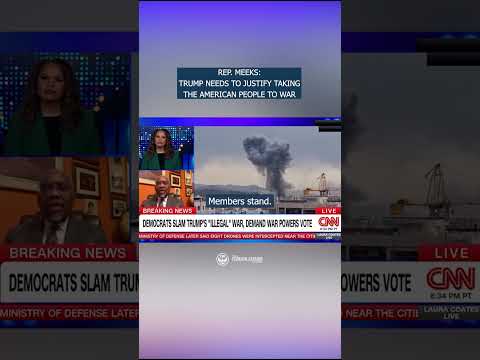
Lawmaker urges Congress to hold a formal war-powers vote
Summary
A lawmaker argued Congress must vote to declare war and put members on the record, saying removing a war-powers vote concentrates power in a single person and that the public would bear the costs; no formal vote appears in the transcript.
A lawmaker speaking at the hearing urged Congress to hold a formal war-powers vote, saying the Constitution assigns the authority to declare war to the legislative branch and that the administration should present reasons before committing U.S. forces.
“The war powers vote is so that 1 man, and it's in the constitution, It says the only 1 body could declare war,” the lawmaker said, later adding, “You get rid of a war powers vote, then you might as well have a king.” The speaker argued that without a vote, ‘‘you don't have to deal with Congress’’ and that members’ constituencies deserve to know where their representatives stand.
The speaker framed the vote as accountability for the costs of war: “The American people are the ones that are gonna pay for it. The American people are the ones that gonna have to make the sacrifices for it,” and said a roll call would put each member "on the record." The lawmaker also described the present situation as a ‘‘war of choice, not a war of necessity,’’ and asked whether a potential vote would pass.
The remarks in the transcript consist of a single sustained statement and do not record any formal motion, vote, or response from other members or officials. The transcript does not show that the body took any formal action or scheduled a vote during this session. The speaker’s calls for a vote and for the administration to justify use of force were presented as arguments in favor of congressional oversight rather than recorded outcomes.
The immediate next step shown in the transcript is a question from the same speaker about whether a vote would pass; no vote tally, motion text, or procedural outcome is recorded in the provided segments.