
Senate committee approves bill letting districts offer Teachers Retirement to school support staff
Get AI-powered insights, summaries, and transcripts
Subscribe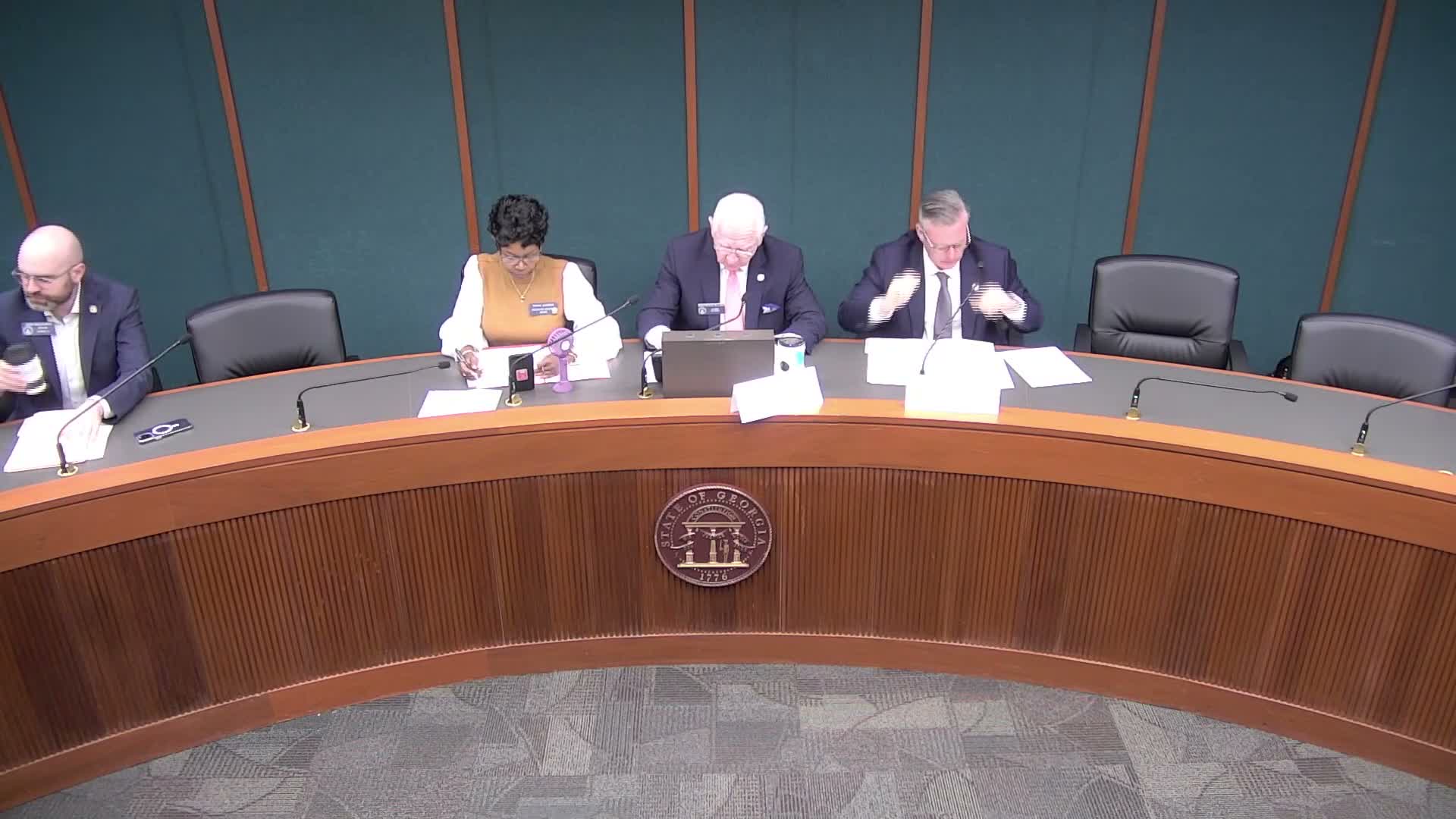
Summary
A Senate committee voted to advance SB209 (LC560619S), which lets local school boards opt to allow certain school employees to join the Teachers Retirement System; supporters said it helps low-retirement workers, while opponents warned of long-term state and local costs.
A Senate committee advanced SB209 (LC560619S) on a voice vote after proponents said the bill would give local school boards the option to allow bus drivers, cafeteria workers and other support staff to join the Teachers Retirement System (TRS).
The chair opened the session and the bill’s presenter said prior committee work produced permissive language so counties and school boards could choose whether to participate, avoiding what the presenter called an “unfunded mandate.” An actuary who spoke to the committee said, “there would be no immediate cost to the state as a result of this bill,” because the bill makes participation permissive and initial outlays depend on local elections to participate (Carol, actuary).
Sponsor supporters argued the change would improve retirement outcomes for lower-paid school employees. “$300 a month for retirement for somebody that does that for 30 years is not adequate,” a committee supporter said, urging the panel to consider the workforce and the local economic multiplier when retirees spend benefits.
Opponents warned of long-term fiscal exposure. One committee member said the bill could create unfairness between local school employees who would gain access to a defined-benefit plan and other state employees who do not have it. Committee members and presenters discussed actuarial estimates: presenters cited a prior estimate that if about one-third of eligible employees elected TRS membership, the state’s first-year share could be about $21,000,000 (state portion only). Committee discussion extrapolated that if all eligible employees enrolled the state share could rise toward $90,000,000 and combined state/local costs might reach roughly $180,000,000 over time.
Proponents said many local school employees earn low retirement benefits now and that expanding TRS access would provide greater retirement security and put dollars back into local communities. Opponents urged that local school systems, which several members said hold significant reserves, should prioritize pension funding locally rather than shift costs to the state.
Senator Davenport moved that SB209 do pass; Senator Bank Bangam seconded. The committee voted by voice and the chair announced the motion carried, reporting SB209 favorably.
The bill now moves to the next stage of consideration in the legislature.