
State Board deadlocks 4 4 on multiple federal grants after debate over data stewardship and mental-health "guardrails"
Get AI-powered insights, summaries, and transcripts
Subscribe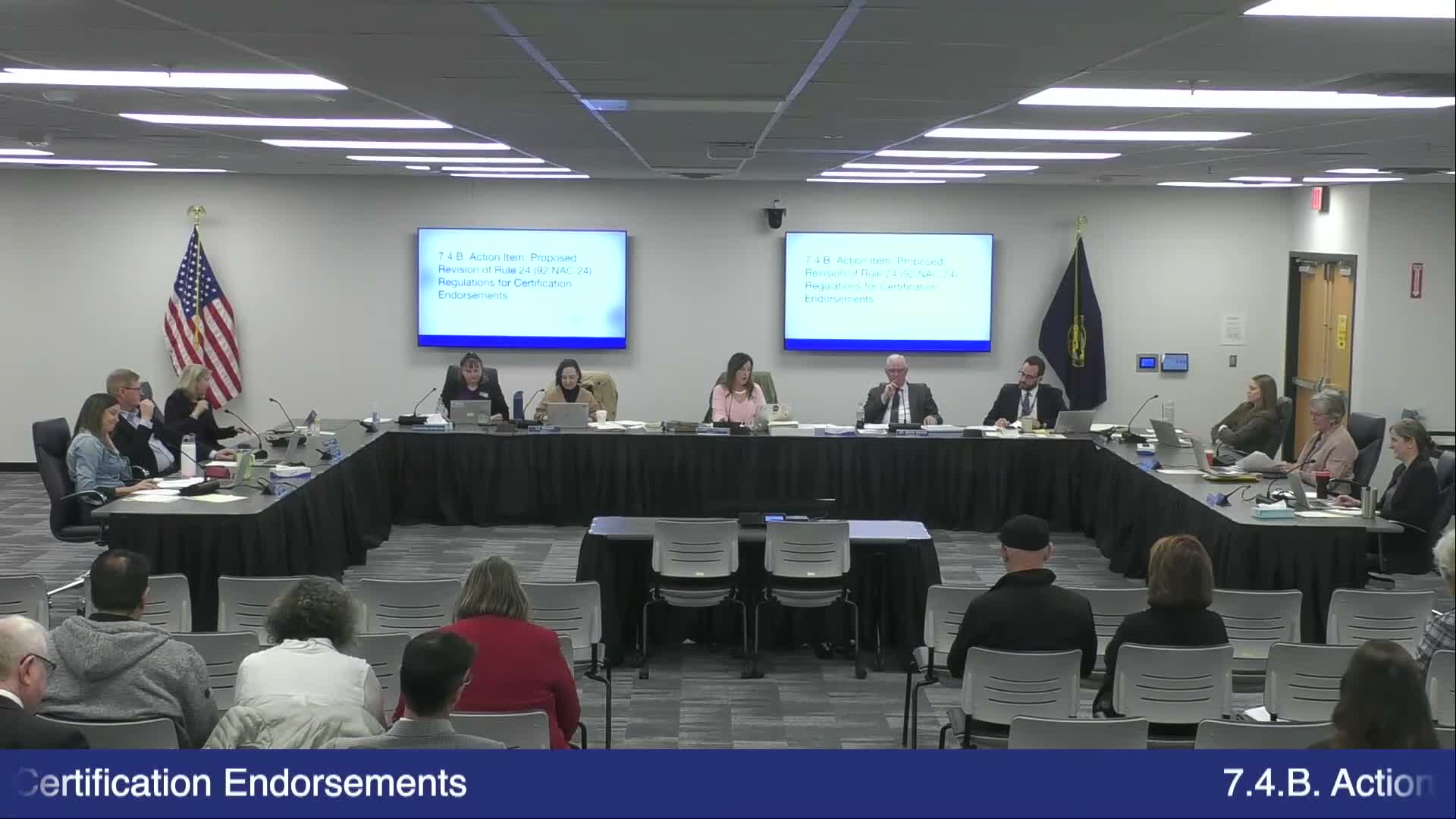
Summary
In three separate roll-call votes the board split 4 4 and did not approve (a) Preschool Development Grant planning and subcontracting for eKIDS/EC data-lab work, (b) a mental-health service professional demonstration grant to expand school psychologist capacity, and (c) a school-based mental-health services grant; debates focused on subcontracting, data safeguards, sustainability and specific program guardrails.
At its March 6 meeting the Nebraska State Board of Education twice considered and rejected on 4 4 roll-call votes several federal grant actions after extended discussion about subcontracting, data stewardship and required 'guardrails' for school-based mental-health services.
Preschool Development Grant (PDG) planning and eKIDS/EC data lab: Board members discussed a motion to accept PDG funds and authorize the commissioner to subcontract to fulfill grant requirements for eKIDS/EC data-lab planning. Melody Hobson (Office of Early Childhood Education) told the board the grant is federal, led by DHHS with NDE as a partner, and that the work would focus on planning, safeguarding personally identifiable information and improving aggregated reporting across varied early-childhood providers. Several board members questioned why NDE would subcontract to an out-of-state vendor when Nebraska technical capacity exists and asked for clearer use cases and measurable near-term outputs. The motion failed on a 4-4 vote.
Mental-health service professional demonstration grant (school psychologists): Board members debated a demonstration grant intended to fund training and workforce expansion for school psychologists and related specialists, including positions targeted to high-need ESUs and rural districts. Supporters said the funding would help recruit and retain school psychologists and provide locally based services rather than outsourcing. Amy Roan (Office of Special Education) explained statutory roles of school psychologists under Rules 51 and 52 and federal IDEA obligations for evaluations and multidisciplinary teams. Opponents requested written guardrails and measurable outcomes; the motion failed on a 4-4 vote.
School-based mental-health services grant: A lengthy discussion covered concerns about program scope, parental notification, evidence-based practice requirements, sustainability and oversight. Some board members said they are pro-mental-health services but require explicit policy guardrails (parental rights, data and outcome measures, background checks and limits on non-evidence-based practices) before authorizing subcontracting. Public commenters and ESU representatives urged acceptance, stressing workforce shortages and rural needs. The motion failed on a 4-4 tie.
Across the three items, supporters cited strategic-plan alignment and direct district benefit; opponents emphasized process issues, the need for clearer safeguards and long-term sustainability. Where the grants were federal funds awarded to DHHS with NDE participation, several board members stressed that refusing NDE's role could mean DHHS obtains an alternate contractor but Nebraska would not directly receive or manage the work.