Get Full Government Meeting Transcripts, Videos, & Alerts Forever!
Get email alerts on the Aklng Property Tax topic
No spam. Unsubscribe anytime.
Mayor urges caution as AKLNG tax proposal could cut local levy to 2 mills
Summary
Kenai Peninsula Borough Mayor Macchicki told the assembly the borough cannot subsidize the Alaska LNG project and urged careful review of a governor-backed proposal to reduce the oil-and-gas mill levy from 20 mills to 2 mills, and described work by a borough-led property tax working group.
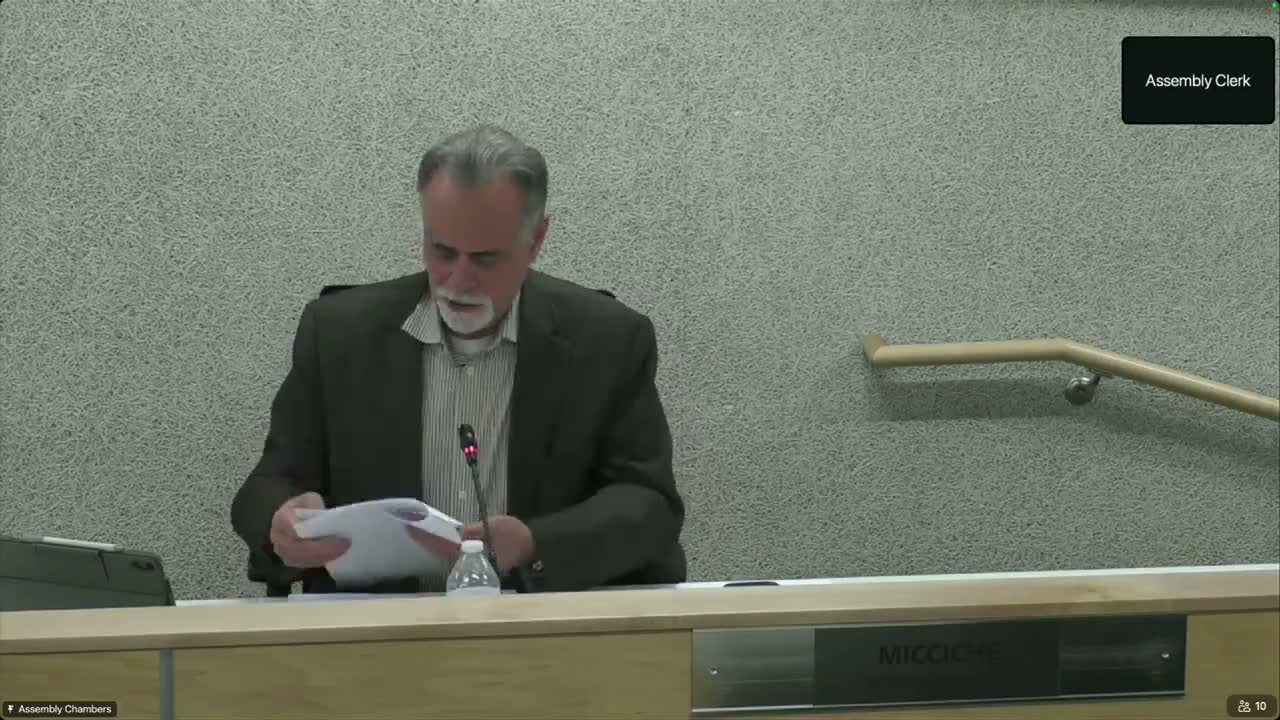
Mayor Macchicki told the Kenai Peninsula Borough Assembly on Jan. 20 that the borough must not shoulder costs to subsidize the Alaska LNG (AKLNG) project as state and municipal leaders negotiate possible property-tax changes tied to the facility. “This is a big deal,” Macchicki said, describing the project as a multi‑billion‑dollar, multi‑phase undertaking with substantial local cost exposures.
Macchicki said the administration is participating in two property‑tax working groups and in negotiations over proposals the governor has discussed, including a drop of the current 20‑mill levy on oil and gas property to 2 mills. He said the borough has sought assurances that any tax‑related arrangements will cover local costs and cautioned against agreements that would shift the financial burden to local taxpayers.
The mayor described the AKLNG plan as two phases — a pipeline terminating in Beluga and an LNG export terminal near Nikiski — and said some proposed calculations presuppose a throughput figure far higher than current usage. “We cannot our community cannot subsidize AKLNG,” he said. Macchicki said the borough’s negotiators are pressing for realistic volume assumptions and options such as construction‑phase compensation or a payment‑in‑lieu‑of‑taxes approach for operations, so long as those payments cover the borough’s costs.
Macchicki said borough representatives on the working group include himself and Assemblymember Harbaugh and that the administration is approaching talks in good faith. He warned the proposed schedule is aggressive amid budget season and said the borough will seek additional time if necessary to fully understand local impacts.
The mayor also reviewed other items in his report, including an upcoming opioid‑settlement bill the administration plans to drop at a future meeting, a critical‑communications pilot to test lower‑cost power and connectivity options in low‑signal areas, and ongoing meetings with school officials about district consolidation and potential supplemental funding from municipalities.
Macchicki said next steps could include asking the assembly for a resolution of support if negotiators reach terms that the borough deems fair. He did not present specific drafts of any tax legislation or a formal agreement to the assembly at the Jan. 20 meeting.