Get Full Government Meeting Transcripts, Videos, & Alerts Forever!
Get email alerts on the Fraud Detection Ai topic
No spam. Unsubscribe anytime.
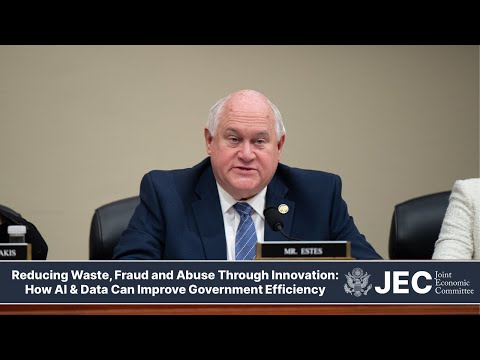
House Social Security subcommittee chair presses GAO on AI, data tools to curb improper federal payments
Summary
At a congressional hearing, the chair of the House Social Security subcommittee pressed witnesses on using machine learning and data analytics to detect improper federal payments; a GAO official described agency tools and a fraud‑risk framework, and another witness stressed avoiding false positives.
The chair of the House Social Security Subcommittee pressed witnesses on using artificial intelligence and data analytics to detect improper federal payments and reduce taxpayer losses, citing GAO estimates of large annual fraud ranges.
She told the panel that, "based on data from 2018 to 2022, GAO estimates that aggregate fraud was between $233,000,000,000 to $521,000,000,000 each year," a range she said implies losses of more than $1 trillion to as much as $2.6 trillion over five years. She asked what the Government Accountability Office and other agencies are doing to implement machine learning and analytics to bring that number closer to zero.
Dr. Thomas, a Government Accountability Office official, said GAO is developing tools for analysts to identify potential indicators of fraudulent events and making those tools available to other agencies. "We are developing tools for our analysts to identify the flags ... of what are potential indicators of fraudulent events, fraudulent programs, fraudulent payments," he said, and emphasized GAO's fraud‑risk framework as a way for agencies to identify where fraud could occur and adjust program design to reduce that risk.
The chair said she wanted to address public fears that anti‑fraud efforts might wrongly remove benefits from people who deserve them and asked another witness, Mr. Chilson, how AI can target improper payments without harming legitimate beneficiaries. Mr. Chilson said accuracy is key and pointed to private‑sector examples in financial services where improved detection has reduced false positives. "These tools can help both eliminate fraud, but also serve the people who are rightfully getting benefits, more quickly, and accurately," he said.
The exchange centered on two themes: the scale of estimated improper payments cited from GAO data and the technical and policy challenge of deploying analytics that reduce fraud while minimizing errors that affect beneficiaries. Panel witnesses described encouraging agencies to adopt GAO recommendations and the fraud‑risk framework; witnesses also stressed improving accuracy to avoid wrongly disrupting benefit payments.
The chair concluded the line of questioning after her allotted time expired and yielded back her time.