Get Full Government Meeting Transcripts, Videos, & Alerts Forever!
Get email alerts on the Ov Path Forward topic
No spam. Unsubscribe anytime.
Oro Valley planners present ‘OV Path Forward’ survey results; phone sample deemed statistically projectable
Summary
Town planners and consultants told the Planning and Zoning Commission on June 4 that the OV Path Forward "big community survey" produced consistent top priorities across phone, online and paper methods, with the probability-based phone sample of 300 respondents providing projectable results for adult residents. Resident working groups will use the findings to draft a 10-year plan that citizens will vote on in 2026.
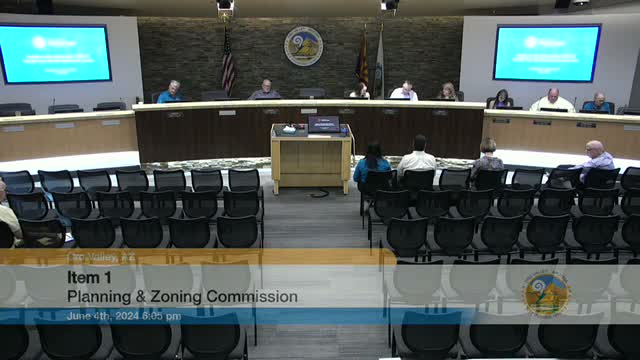
Malini Simms, principal planner for the town of Oro Valley, told the Planning and Zoning Commission on June 4 that the OV Path Forward initiative will use resident feedback to shape a 10‑year action plan that residents will vote on in 2026. "Our goal is to empower residents to confidently make decisions that will build their next 10‑year plan," Simms said.
Consultant Jan Gourdley of Gourdley Group and Andy Wellick of FMR Associates reviewed the survey work and top findings. Gourdley said the engagement effort included in‑person events, paper surveys and an online questionnaire, but she emphasized that "only the phone survey is really representative and can be projected for the general population of Oro Valley," because the phone sample was randomly selected and monitored against 2020 census demographics.
Wellick described the phone sample in more detail, saying the firm fielded about 300 phone interviews, a sample size that the consultants said supports a 95 percent confidence level for the reported results. He urged commissioners to consult the detailed findings for full tables and verbatim comments.
Across the three survey methods, consultants said residents consistently ranked public safety, natural beauty and parks/outdoor recreation among what they value most about living in Oro Valley. Traffic, lack of nearby services and concerns about growth were among the top items residents said they valued least. On water issues, the top three priorities were increasing public awareness of water conservation, tightening conservation requirements for new development and reducing drinking‑water use for golf‑course and turf irrigation.
On land‑use questions, more than half of respondents favored a central gathering area, with employment opportunities and restaurants/retail also rising near the top. Economic development preferences placed medical and health employment highest among industries residents would like to see expand.
Commissioners pressed consultants on how 1–5 rating scales were summarized on slides. Several commissioners said slide percentages were initially hard to interpret; consultants replied that the top‑priority slides show the share of respondents who selected 4 or 5 on the scale and that the detailed analysis includes means and cross‑tabulations. "There's a score out of five in the detailed analysis," Simms added, and consultants pointed commissioners to OVPATHFORWARD.COM for the full background report and verbatim comments.
Simms said more outreach results — including event and online participation detail — will be presented to the commission in August. She also said resident working groups will use the survey results, background data and guiding principles to draft goals and measurable actions for the plan.
Next steps: staff and consultants will present additional results in August and facilitate resident working groups to draft the vision, guiding principles and goals for the 10‑year plan that voters will consider in 2026.