Get Full Government Meeting Transcripts, Videos, & Alerts Forever!
Get email alerts on the District Governance topic
No spam. Unsubscribe anytime.
Superintendent outlines evaluation timeline, strategic-planning process and launches cell-phone pilot for grades 9–12
Summary
Dr. Williams told the school committee she will upload evaluation materials by April 1, with the subcommittee meeting the week of April 20 and final evaluation at the May 5 meeting; she also described a pilot cellphone policy for grades 9–12 beginning Feb. 23 that places phones in classroom holders and allows limited use between classes and at lunch.
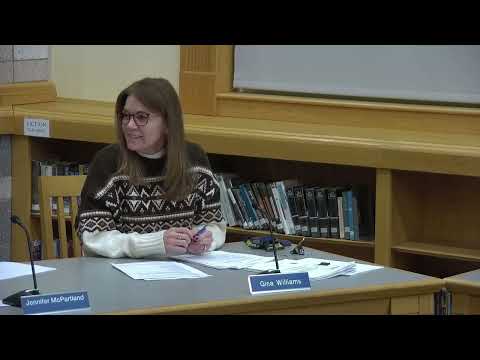
Dr. Williams, superintendent, told the East Bridgewater School Committee on Feb. 17 that she will upload evidence for her evaluation and share a review link with committee members by April 1 to give the board roughly three weeks to review.
"I can have all my evidence uploaded and the link shared with the committee by April 1," Dr. Williams said, and outlined a subcommittee meeting the week of April 20 leading to a May 5 full‑committee evaluation before the town election.
The superintendent also described a strategic‑planning schedule with six meetings beginning March 2 and said the committee composition will include district and building leadership, two staff from each school, a grade‑10 and a grade‑11 student, a parent from each of the district's three schools, two town officials and one school committee member.
Why it matters: the evaluation timeline sets the procedural steps for superintendent oversight and the strategic plan will shape district priorities for the coming school year.
On school day operations, Dr. Williams announced a pilot of new cell‑phone expectations for grades 9–12 that begins Monday, Feb. 23. Under the pilot, students may have phones during passing time and at lunch; during class time phones are to be stored in classroom holders (some on desks, some wall‑mounted). Seniors may use phones during senior lab or AP lab; exceptions for academic or medical needs will be made case by case. Teachers are expected to limit in‑class phone use and many will use holder placement as part of attendance-taking.
"So pretty much all 9 through 12 students should expect that they can have their cell phones when they are passing between classes and when they are at lunch," Dr. Williams said, adding staff and student input guided the decisions.
Committee members asked how substitutes, study halls and late arrivals will be managed and pressed for clarity on staff expectations; the superintendent said staff phone use should be limited during class time except in an emergency and that the district will make case‑by‑case accommodations.
Next steps: the superintendent said she will circulate the strategic‑planning schedule and support materials; the evaluation subcommittee will meet and the board will receive the culmination of district assessment and stakeholder feedback ahead of May 5.