
Virginia House passes broad package of bills, including offshore wind workforce, iGaming and adult-use cannabis framework
Get AI-powered insights, summaries, and transcripts
Subscribe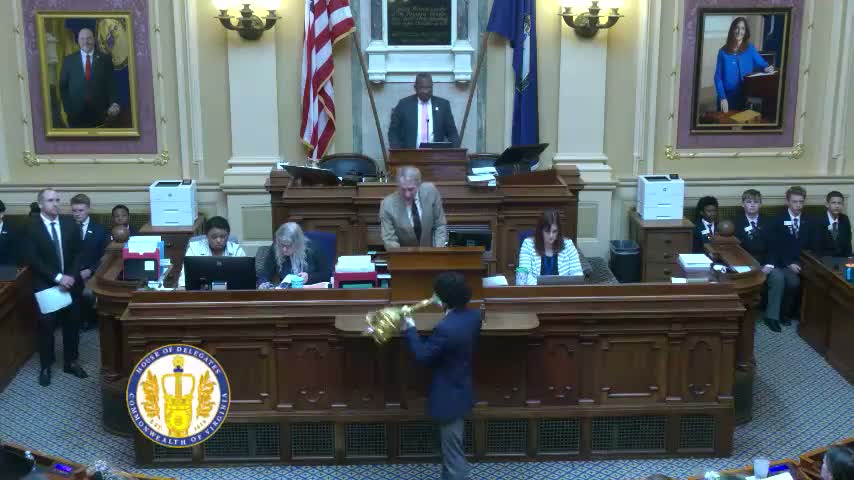
Summary
On March 4, 2026, the Virginia House of Delegates passed more than 100 bills on third reading, approving measures to direct offshore wind workforce training, authorize an iGaming framework, and create a regulated adult-use cannabis retail market, among other actions. Several firearms-related bills also advanced after extended floor debate.
RICHMOND — The Virginia House of Delegates convened on March 4, 2026, and moved a large portion of its printed calendar, approving more than 100 bills on third reading and adopting floor substitutes on multiple high-profile measures.
The House approved Senate Bill 25, the Offshore Wind Workforce Development Act, after adopting a House Appropriations amendment that made the measure identical to House Bill 67. "This amendment makes senate bill 25 identical to my house bill 67," Delegate Fagan said, adding that the measure directs the Department of Energy to develop workforce training for offshore wind jobs while prioritizing veterans, local workers and historically disadvantaged communities. The bill passed 86–13.
Lawmakers also passed Senate Bill 118, an iGaming/iLottery bill that had been conformed to a House substitute and a reenactment clause; the bill passed on a 70–29 vote. Later in the day the House adopted an appropriations substitute to conform Senate Bill 542 to House Bill 642, establishing a legal adult-use retail cannabis market in the Commonwealth; that measure passed 66–33.
Several criminal-justice and public-safety bills cleared the floor in recorded votes. Measures approved Tuesday included bills addressing competency restoration, court and criminal procedure reforms, adjustments to juvenile adjudication, and multiple public-safety initiatives described on the floor by committee patrons.
Firearms legislation received extended debate. Members argued over the scope and enforceability of proposals that would restrict certain weapons and limit magazine capacities; sponsors said the measures would reduce the presence of weapons "functionally similar" to those used in mass shootings while opponents warned the bills could face legal challenges and create compliance complexities.
The House also adopted ceremonial resolutions and recognized visiting groups including seniors organizations, school delegations and nonprofit groups.
The House clerk read the calendar and managed routine procedural motions, including naming conferees on a set of bills where the Senate had insisted on its amendments. Several bills were temporarily passed over for later consideration before being taken up and voted.
Most bills that passed the House on third reading will proceed to conference if the Senate and House versions differ, and some measures will move toward final enrollment and transmission to the governor. For bills that passed after floor substitutes, conferees were typically requested or noted on the record.
What happens next: bills conforming to House language and those that require conference committee work will move through that process; several measures adopted today include delayed effective dates or reenactment clauses that direct further review and implementation steps.