
Local bankers: farmers and ranchers remain vulnerable as drought, insurance and land sales reshape decisions
Get AI-powered insights, summaries, and transcripts
Subscribe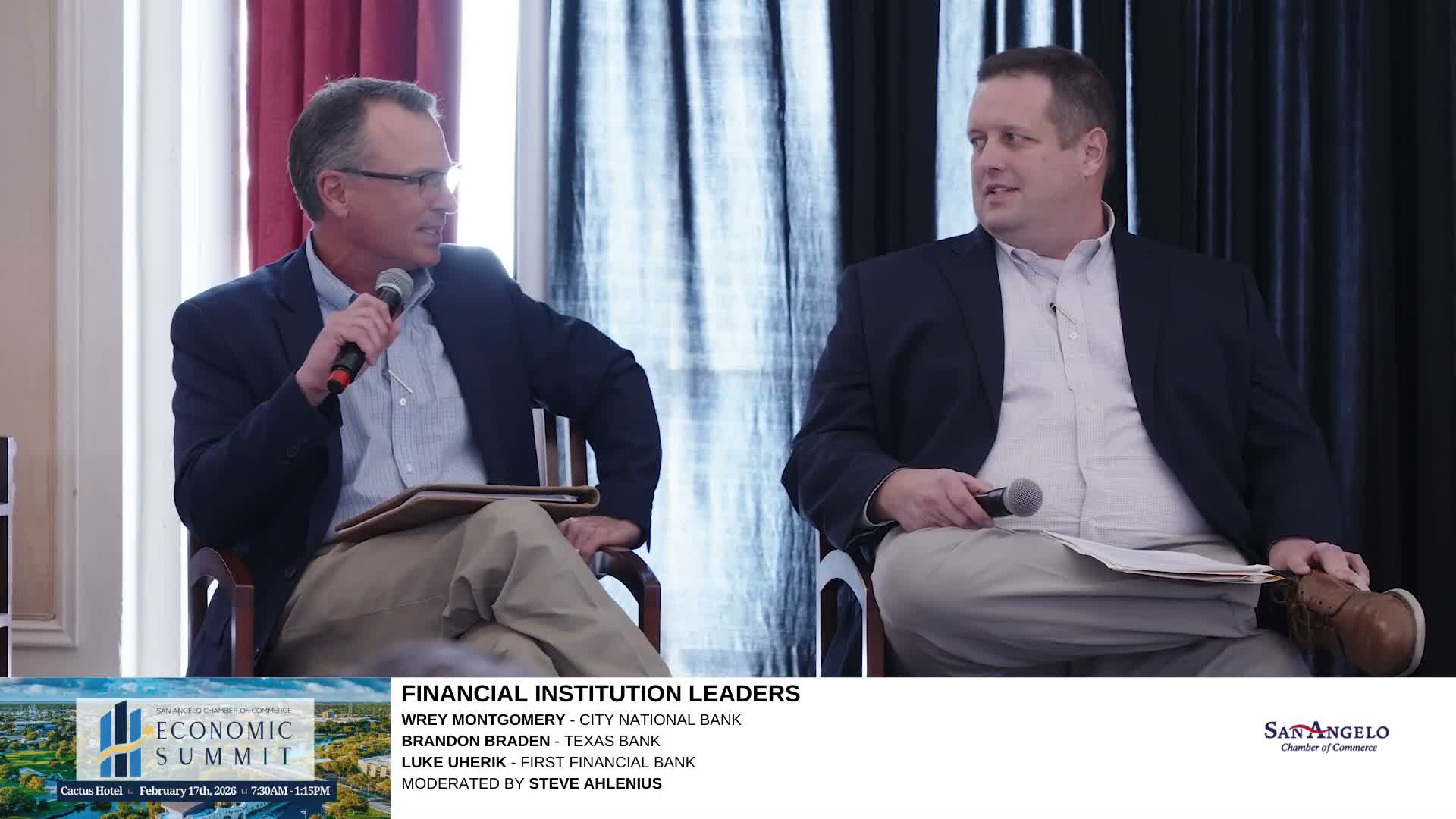
Summary
Panelists said agriculture in the San Angelo region is 'stable at best' and increasingly dependent on insurance and government assistance; drought, water-table stress and high per‑acre development offers are changing ownership dynamics.
Panelists at a San Angelo bankers' discussion said the local agriculture sector faces persistent pressure from drought, rising costs and shifting land economics that make farming financially precarious without government and insurance support.
Brandon Braden of Texas State Bank described the sector as "stable at best," saying many operations rely on insurance and government assistance to remain viable after several years of volatile returns. He gave a concrete example: "He makes $28 a bale on irrigated; he loses money on the dry land side," illustrating narrow margins for producers without irrigation.
Braden warned that rising per‑acre land values near some towns are encouraging owners to sell rather than continue farming. "If I inherit a 100‑acre farm and I don't farm, I'm gonna ask somebody to farm it and get paid $60 an acre for a non‑irrigated farm," he said, contrasting that with recent developer offers in some areas "like Wall, big deal, $17,000 an acre," which he noted could translate to roughly $1.7 million for 100 acres.
Panelists also flagged water resources as a constraint. Braden said local lakes and groundwater levels are low and that some non‑agricultural uses (he mentioned data centers) will increase competition for water.
The bankers said better insurance products, clear government assistance and knowledgeable agents are critical to keep many farms solvent, and that generational transitions will remain a major challenge for long‑term agricultural continuity.
No formal policy actions were taken at the panel; bankers urged continued discussion among lenders, producers and local officials about land use, water management and transition planning.