
Local bankers say San Angelo economy is 'cautiously optimistic' as jobs and data centers drive growth
Get AI-powered insights, summaries, and transcripts
Sign Up Free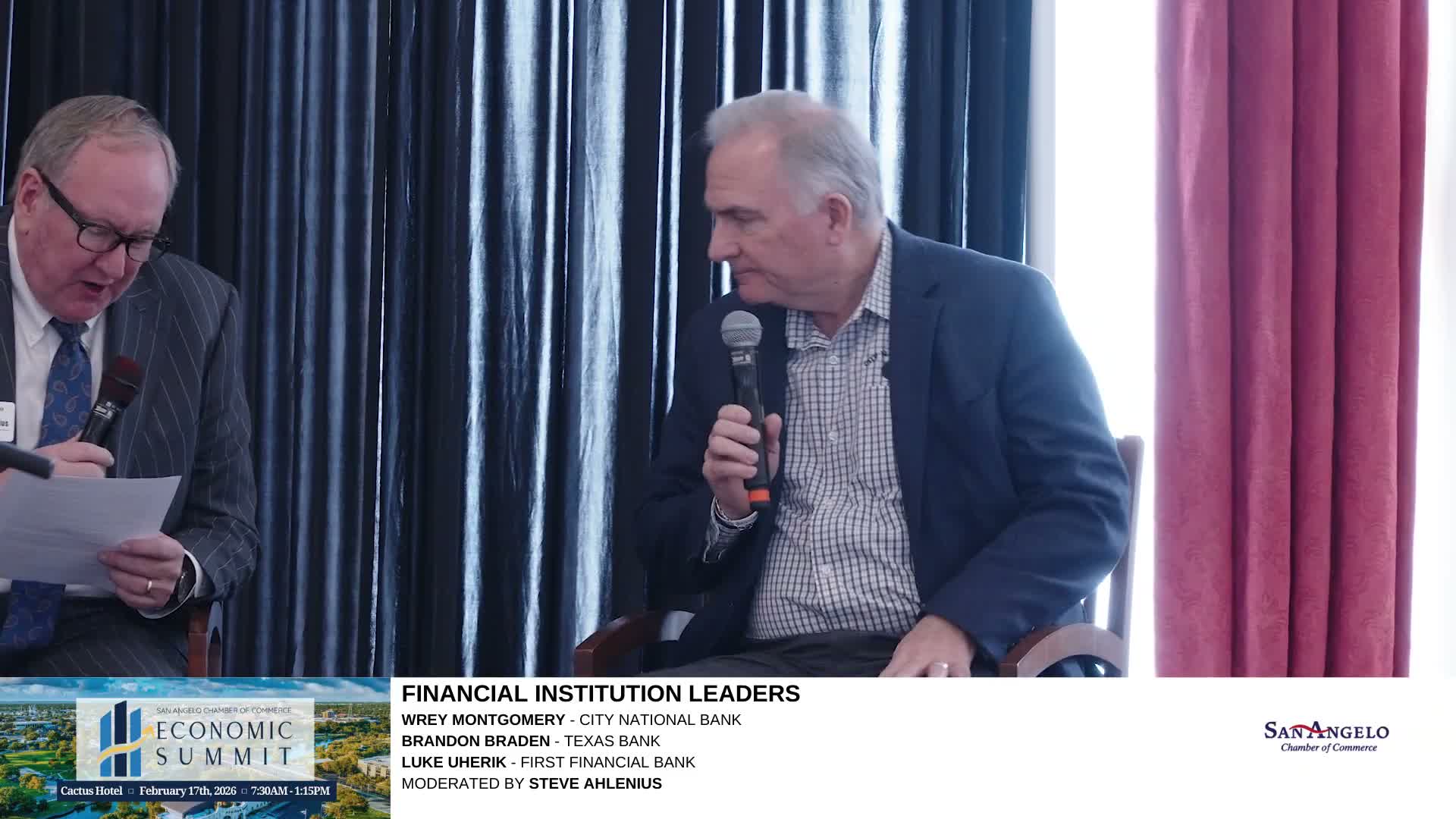
Summary
At a San Angelo bankers' panel, local lenders described a resilient, broad-based local economy driven by job growth, data-center and military-related activity, but warned housing shortages and infrastructure constraints could limit expansion.
A panel of San Angelo bankers on Monday described a cautiously optimistic local economy buoyed by job growth, data-center investment and regional institutions, but they warned housing supply and infrastructure constraints could slow gains.
The discussion, at a business-panel lunch, featured Ray Montgomery of City National Bank, Brandon Braden of Texas State Bank and Luke Urich, market president for his bank's San Angelo market. Montgomery called San Angelo an "oasis in the desert," saying the city often performs differently than national trends and that local institutions and recent investment have created a resilient local ecosystem.
"San Angelo has always been ... we have our own little ecosystem," Montgomery said, noting data centers, regional education and medical partnerships and local business networks as strengths. "I saw the term oasis in the desert, and I kinda like that term."
Urich cited an updated housing study showing Tom Green County added about 5,800 jobs between 2020 and 2024, roughly 1,500 per year, and said momentum is expected to continue through 2030. "That momentum is expected to continue through 2030," he said, adding the report links job growth to housing needs.
Panelists stressed that housing — especially starter homes priced in the roughly $175,000–$225,000 range — is not keeping pace with job creation. "We will benefit from the addition of some of the things we've talked about coming to our community," Urich said, "but the biggest challenge is just the continued tightening of the housing market."
Speakers also discussed the near-term impact of large construction projects. Urich noted that a major data‑center build could put "3 to 4,000 people on-site for several years," placing demand on housing, services and infrastructure. Panelists said they are already seeing inquiries for RV and short-term lodging as developers and entrepreneurs seek interim housing solutions.
Downtown revitalization and commercial renovations drew favorable comments: Montgomery praised reinvestment and conversions bringing restaurants and residences to the central business district. Panelists said such projects must meet renovation economics to be bankable, and lenders are seeing some viable deals.
The panel closed with a caution about operational risks for the community: banks are updating technology to respond to fraud, and panelists urged public education and planning to address infrastructure constraints tied to growth. No formal votes or policy decisions were taken at the event.
The planning commission and a committee reviewing subdivision ordinances were cited as the next steps in aligning development rules with the city's growth trajectory.