
Committee directs research into proposed public‑safety training facility after members press for details
Get AI-powered insights, summaries, and transcripts
Subscribe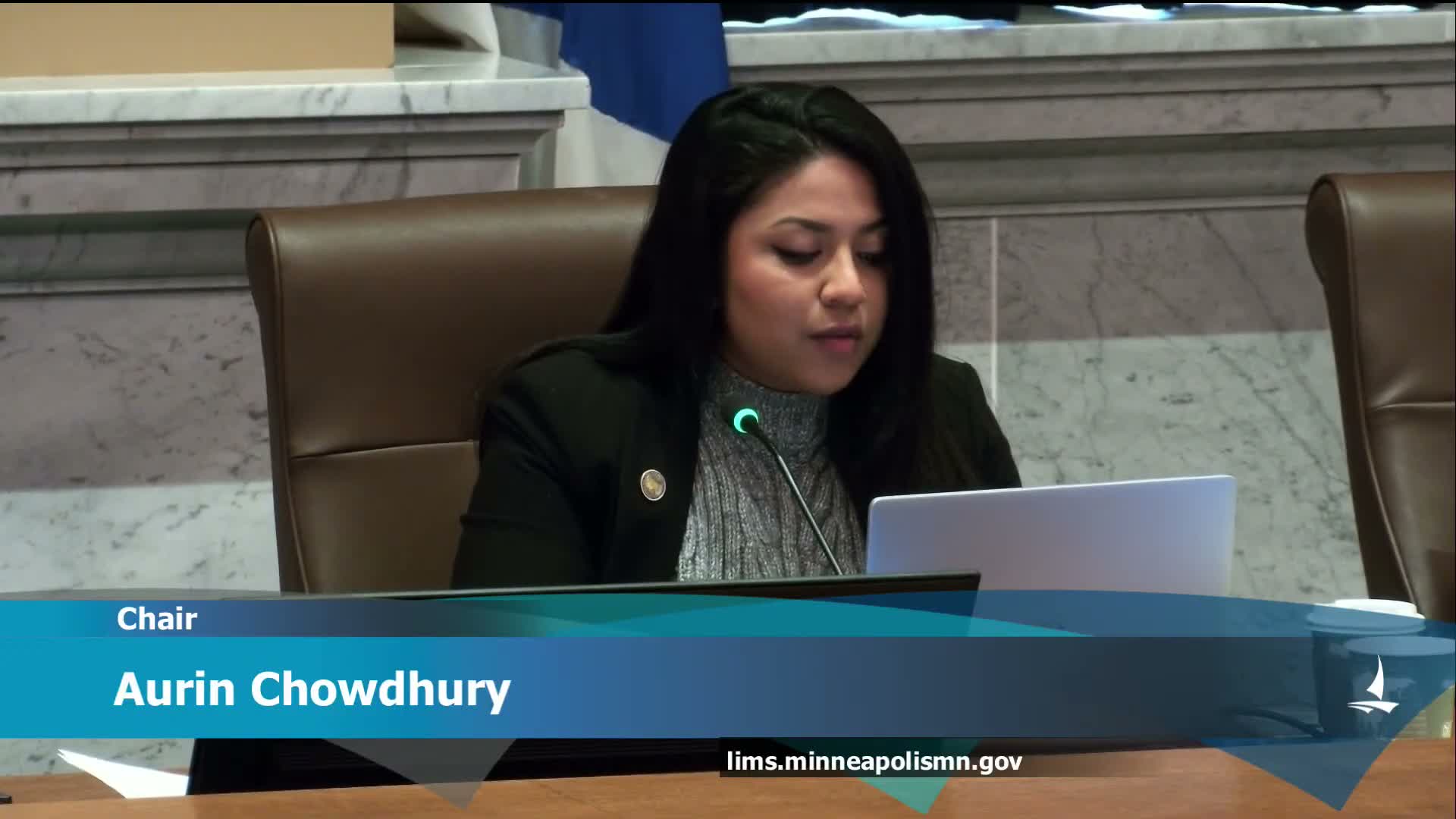
Summary
The Super Committee of the Whole approved a staff direction asking legislative research to analyze national best practices, costs and training needs for a proposed public‑safety training facility so councilors can evaluate potential locations and trade‑offs before any capital expenditure.
The Super Committee of the Whole voted to send a staff direction to the Legislative Research & Oversight division to analyze public‑safety training facilities, including comparable city practices, facility functions and cost estimates, after a lengthy discussion among council members.
Chair Oreen Choudhry opened the adjourned meeting and asked the clerk to call roll before the committee began discussion of the staff direction sponsored by Council Members Palmisano and Whiting. Council Member Whiting moved the directive and Chair Choudhry seconded.
Director Hawkins of the administration told the committee the research would benchmark what other cities do for training facilities, identify best practices and short‑ and long‑term costs, and return a policy briefing in time to inform upcoming decisions. "Our goal with this is to work as a parallel to what the administration is bringing forward so council has additional information to consider," Director Hawkins said.
Several council members urged caution about moving too quickly to buy or build a facility without fuller analysis. Council Member Wansley said her office and others had sought similar information for more than three years and warned that a nearly $40 million project needed more staff‑level detail and independent review. "We should avoid rushing into the purchase of a multimillion‑dollar building," Wansley said, noting unaddressed questions about staffing levels, alternative response programs and how bonded dollars would be prioritized.
Other members asked the staff direction to evaluate how a potential new facility would support multiple public‑safety functions — police, fire and emergency response training — and whether alternatives like co‑located multi‑agency centers could reduce community impact. Council Member Vitak urged the analysis to consider impacts across neighborhoods, particularly North Minneapolis, where existing training sites had prompted complaints.
After the debate the committee took a roll‑call voice vote; the clerk recorded 11 ayes and the chair said the motion carries. The staff direction will be forwarded to the full City Council for consideration at the March 5 meeting.
The committee’s action does not authorize construction or purchase; it directs staff to return factual analysis and options for council consideration.
What comes next: Legislative research will compile a briefing on national practice, siting, costs and trade‑offs and return the results to the council; any future capital decision would require separate approvals.