
Presenters urge ERS SSRPC to press agencies and oppose proposed transmission corridor; cite land‑value and environmental concerns
Get AI-powered insights, summaries, and transcripts
Subscribe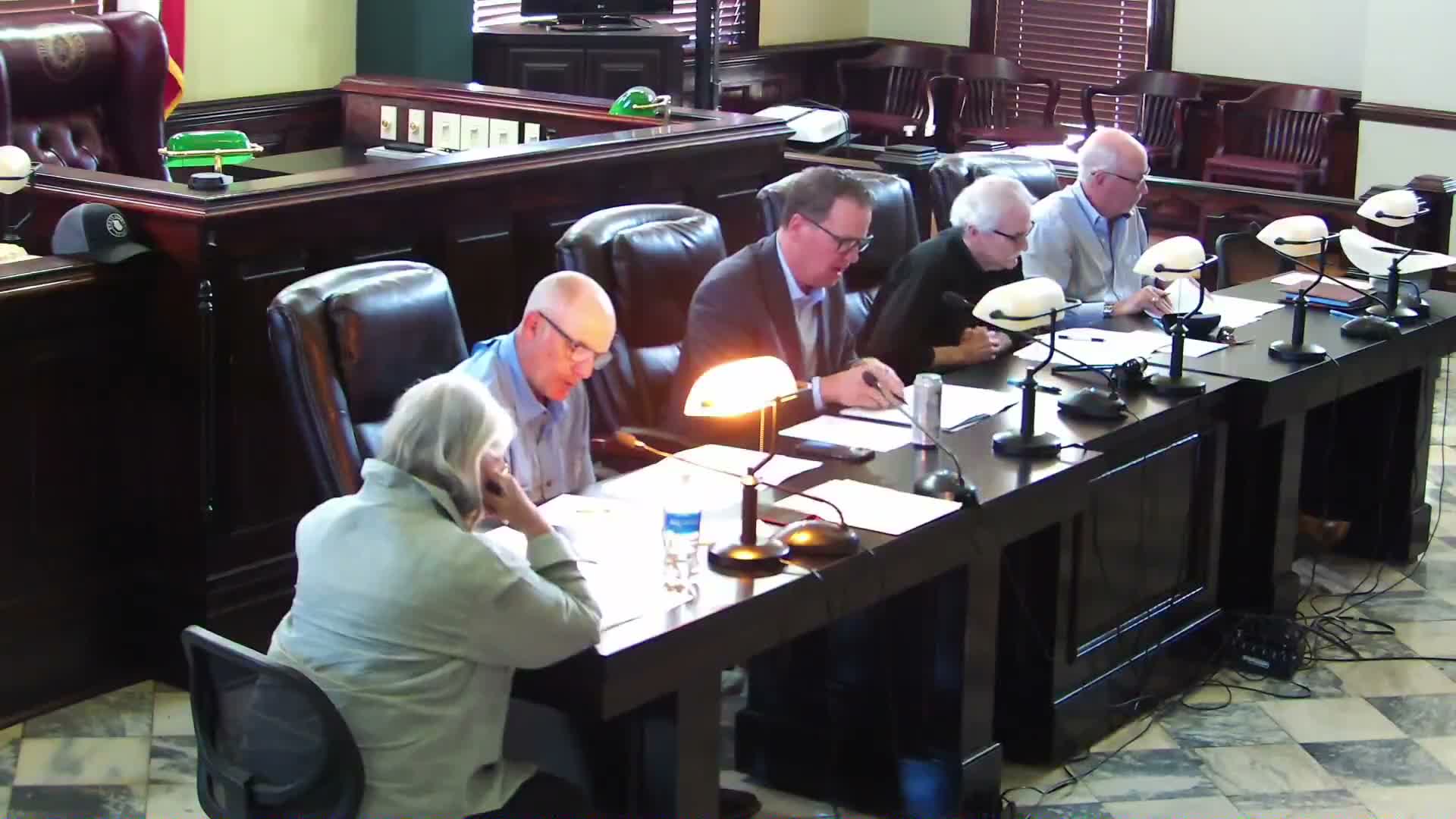
Summary
Advocates at the commission’s first meeting urged the newly formed ERS Summerville Subregional Planning Commission to pursue agency coordination, intervene in PUC proceedings and seek environmental review for the proposed transmission corridor (referred to in remarks as the '7 65' project), citing land‑value losses and recommending early legal engagement.
At its inaugural meeting the ERS Summerville Subregional Planning Commission heard extended public comment and advice from advocacy groups and technical advisors urging a coordinated local response to a large proposed transmission corridor repeatedly referenced in remarks as the "7 65" project.
Dan Liefeld, CEO of American Stewards of Liberty, told the commission his group has helped other Texas counties organize under coordination statutes and offered attorneys, funding and a national strategy to press state and federal agencies. "We don't want we don't believe these lines are necessary," he said, urging the commission to craft a written policy and send formal letters to agencies to require coordination rather than allowing a quiet permitting pathway.
A presenter advising the commission (identified in the transcript as a presenter and policy advisor) recommended the commission translate local harms into specific policy language — for example, limiting easement widths, prioritizing corridor alignment with existing infrastructure, and requiring agencies to justify large right‑of‑way requests. That presenter said Encore’s filings describe the overall project footprint in a way the presenter characterized as very large and cited an estimate of roughly 4,000 linear miles for earlier project segments; the presenter also provided an estimate mentioned in the meeting transcript of an $8,200,000,000 statewide land‑value loss attributed to the project. Those figures were presented as advisory claims for the commission to consider; no independent source was cited in the meeting transcript.
The presenter also argued there is a federal nexus that could trigger a more extensive environmental review (an environmental impact statement) rather than a narrower environmental assessment, and suggested commission counsel draft formal coordination letters to agencies and press for an EIS where appropriate.
Community participants and commission members discussed mapping concerns (participants said some preferred maps in use were outdated and cross schools and facilities) and stressed that landowners should file comments and consider intervention with the Public Utility Commission (PUC). Eric Duff, who identified himself during public comment, asked whether the commission would produce public work products (one‑pagers or talking points) residents could use; commissioners agreed to consider producing coordinated messaging to support local testimony and interventions.
No formal policy was adopted at the meeting; commissioners directed staff to collect local GIS and impact data and scheduled recurring meetings to draft and refine a policy position and potential letters to agencies.
Representative claims in the meeting (as presented in the transcript) included: that the project could devalue nearby land by about 40% in immediate corridor areas, that Encore’s documentation contemplates thousands of linear miles, and that large infrastructure financing creates incentives for corridor expansion. The commission recorded these as matters to be examined and to inform future policy drafts rather than as adjudicated facts.
The commission encouraged public participation and adjourned after setting the next steps.