Advocates warn HB 2008 would chill librarians’ associations; committee advances bill
Loading...
Summary
House Bill 2008 would bar public school libraries from using public funds to pay dues to professional associations; opponents including Secular AZ and the ACLU argued to the committee that the bill risks viewpoint discrimination and undermines association and petition rights, but the committee recorded a due-pass recommendation.
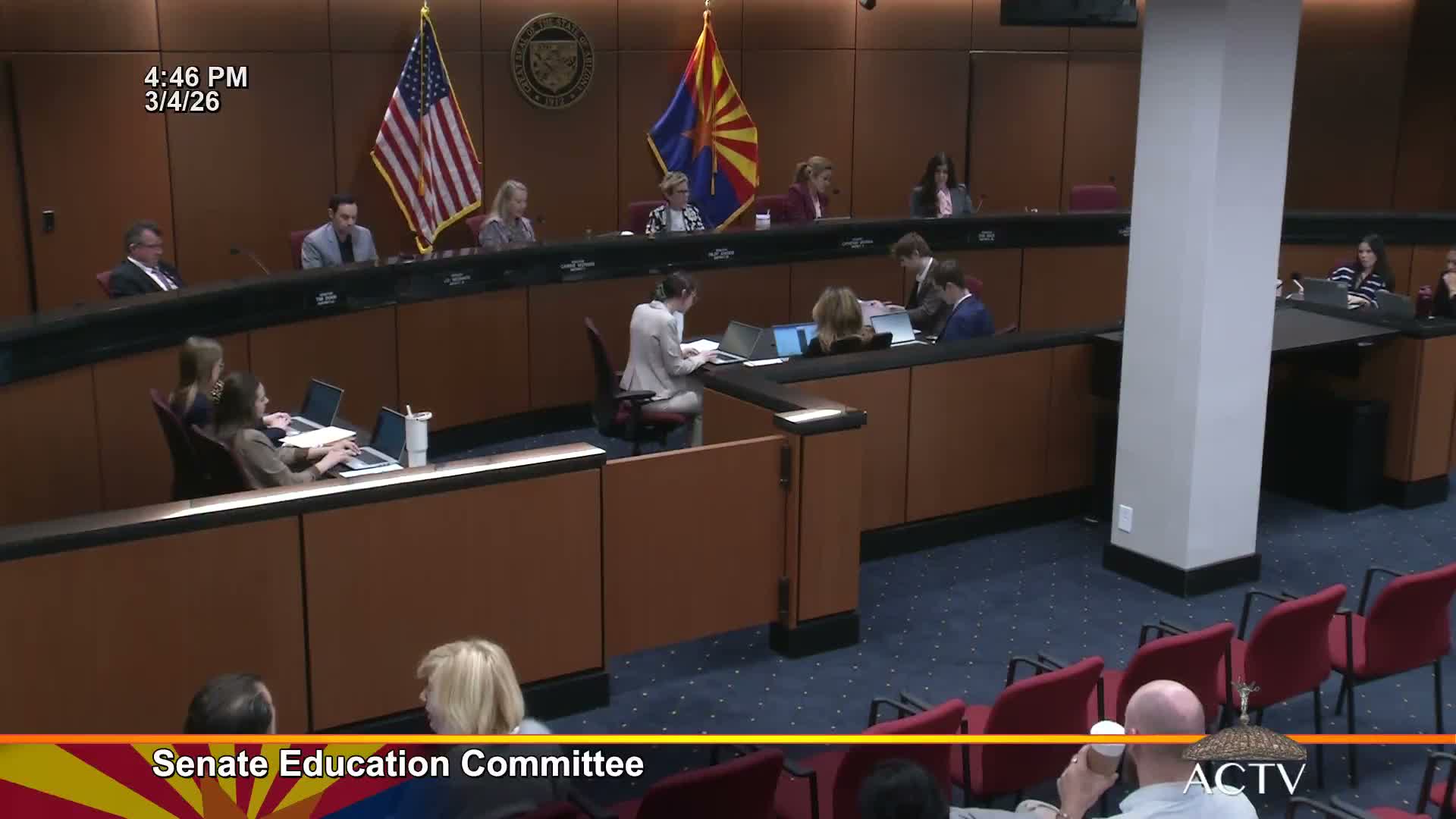
House Bill 2008, which would prohibit public school libraries from using public monies to pay dues to professional associations that advocate for libraries and librarians, received a due-pass recommendation from the Senate Education Committee on March 3, 2026.
Presenters described the bill as a policy limiting use of public funds for memberships in organizations that advocate on behalf of their fields. During public comment, Jeannie Castine of Secular AZ urged the committee to vote no, saying the measure would allow personal bias to dictate professional memberships and could lead to censorship or 'book bans.'
Caitlin Contreras of the ACLU of Arizona told the committee the bill would penalize constitutionally protected activity, framing professional association membership as a core means of collective expression and a method for educators to provide subject-matter expertise to policymakers. “The bill penalizes constitutionally protected activity,” Contreras said, arguing the proposal amounted to viewpoint discrimination.
Proponents argued the bill addresses political advocacy by some associations and sought to impose restrictions specifically on school library spending. After discussion and brief explanation of votes, the committee moved and recorded a due-pass recommendation (4 ayes, 2 nays, 1 not voting). The committee did not adopt amendments during this hearing and several senators urged further consideration about whether the bill targets a problem that currently exists.