Get Full Government Meeting Transcripts, Videos, & Alerts Forever!
Get email alerts on the Local Coastal Program topic
No spam. Unsubscribe anytime.
Arcata City Council introduces comprehensive Local Coastal Program update; council amends outdoor-lighting language
Summary
Arcata City Council voted to introduce an updated Local Coastal Program ordinance and a corresponding resolution, incorporating changes to sea-level adaptation zones and new outdoor-lighting limits tied to dark-sky recommendations. Council directed the ordinance to return on the March 18 consent calendar.
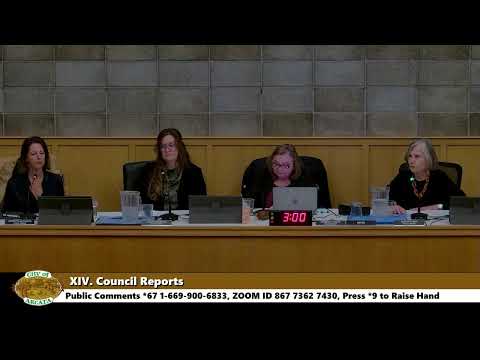
The Arcata City Council on March 4 introduced a comprehensive update to the city’s Local Coastal Program (LCP), moving the ordinance and associated resolution toward formal adoption and adding amendments to the coastal zoning ordinance that staff say respond to Coastal Commission and community feedback.
Community Development Director David Lloyd told the council the update pairs a coastal zoning ordinance with a policy element that overlays the citywide zoning code. He said the update clarifies sea-level rise adaptation by designating Zone 1 for critical infrastructure and Zone 2 for areas where managed retreat may be appropriate. Lloyd said staff will remove three specific parcels from Zone 1 after Coastal Commission input, while noting the Coastal Act provides some protections for previously developed properties.
“The LCP mirrors the general plan work we completed and focuses the coastal overlay on the developed areas it was intended to regulate,” Lloyd said, explaining the proposed changes respond to recent Coastal Commission comments.
The draft also includes new outdoor-lighting rules that staff added after consultation with Humboldt Waterkeeper. The amendments set a blanket color-temperature limit of 2,700 kelvins for coastal-zone lights, add BUG (backlight–uplight–glare) ratings, and set lumen caps: 1,100 lumens for residential fixtures and 3,200 lumens for commercial/industrial outdoor lighting. Waterkeeper representative Sylvia Van Ryan urged stricter limits in open-space areas, recommending a B1 BUG rating (1,000-lumen cap) rather than the B3 rating staff proposed for the coastal zone.
Ben Noble, the city’s code consultant, suggested the council could adopt B3 for more urbanized coastal areas and a lower B1 limit for open-space zones. Lloyd said adopting a zoned approach would require more analysis and could delay Coastal Commission certification; as a compromise, staff proposed keeping B3 in the LCP and pursuing citywide or zoned refinements later as part of a separate code update.
Public commenters repeatedly raised fire-safety concerns following a January 2 downtown fire and asked the council to revisit height limits and operational capacity for the Gateway District. Residents and a speaker for the Arcata Fire District urged caution and asked the city to pursue funding or operational solutions to ensure adequate fire response for taller buildings. Lloyd said the city has been working with the fire district, Cal Poly Humboldt and other partners on standards-of-cover and building protections and that some operational funding questions remain to be resolved outside of the certification process.
Council member Schaeffer moved — and Council member Stillman seconded — to introduce ordinance 15-81 (the coastal zoning ordinance as amended), adopt resolution 256-02 (the local coastal element), and direct staff to place the ordinance on the March 18 consent calendar. The motion passed by voice vote.
What happens next: staff will incorporate the council’s amendments into the materials to be returned on March 18. Once the city completes local approvals, staff said it expects to submit the package to the California Coastal Commission in April or May for certification under the Coastal Act; the statutory review window is 90 days but the commission may extend the timeline.
The action taken on March 4 was an introduction; the ordinance will return for final action on the March 18 consent calendar. The Coastal Commission’s review and any certification conditions will determine when the LCP becomes effective.