Legislators hear CalPERS actuarial update as officials defend assumptions and audits
Loading...
Summary
At a joint Assembly–Senate hearing, CalPERS chief actuary Scott Turandau outlined the fund's use of a 6.8% discount rate and a 20‑year amortization period, explaining how those assumptions affect employer contribution rates and the state budget; lawmakers pressed for clarity on data timing and market volatility.
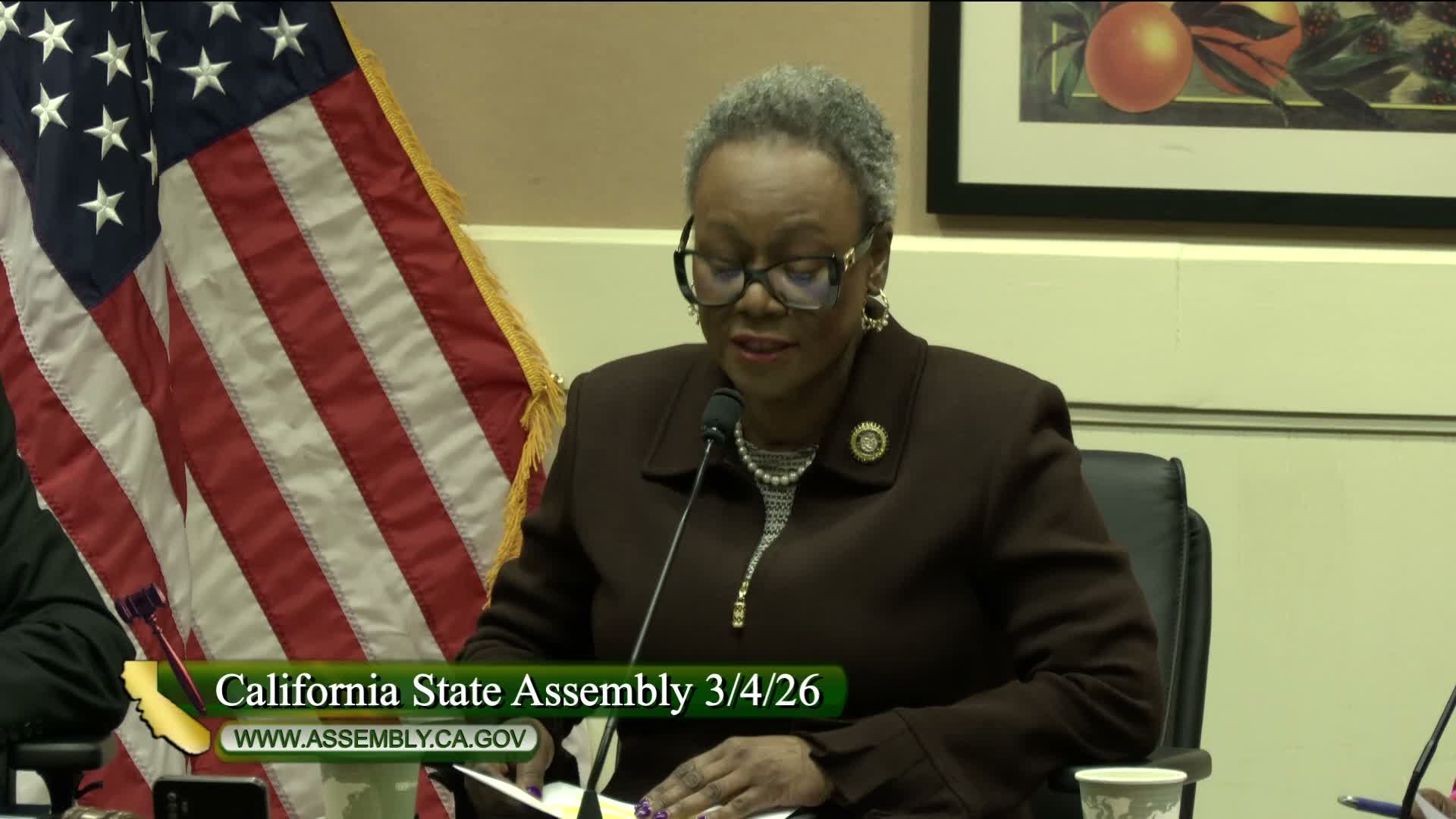
At a joint hearing of the California State Assembly Committee on Public Employment and Retirement and the Senate Committee on Labor, Public Employment and Retirement, CalPERS chief actuary Scott Turandau presented the California Actuarial Advisory Panel’s annual review and described key assumptions that determine contribution rates and liabilities.
Turandau told lawmakers that CalPERS continues to use a 6.8% long‑term investment return assumption. “For reference, CalPERS’ current discount rate is 6.8%,” he said, linking that assumption to how the system discounts future benefit payments and estimates expected investment earnings. He added that lower returns would require higher employer contributions and increase unfunded liabilities, which in turn pressures state and local budgets.
The chief actuary explained the plan’s 20‑year amortization approach for new gains and losses, using a mortgage analogy to describe the tradeoffs: shorter amortization raises near‑term payments but reduces long‑term interest costs, while a longer schedule smooths contribution volatility. Turandau noted that CalPERS’ 20‑year amortization exceeds the average expected remaining service for active members, which he said is about 11–12 years, and referenced California Actuarial Advisory Panel guidance that a 15–20 year range is reasonable for large, open plans.
Lawmakers pressed CalPERS officials on the currency of the data used to set rates. Turandau described the valuation cadence: audited asset figures are finalized in November, the CalPERS board reviews the analysis in April, and the resulting contribution rates (derived from fiscal‑year data as of June) inform the state’s budget cycle. When asked whether more current asset data could be used in times of market stress, he said participant‑level census data does not usually change materially year to year, while asset values can be volatile, so the fund relies on an audited point‑in‑time snapshot and subsequent adjustments for gains and losses.
Senator Smallwood Cuevas emphasized the broader economic risks that could affect assumptions, including federal policy shifts and geopolitical events. “We want to make sure that we have all of the information necessary,” she said, urging CalPERS to consider downside scenarios and communicate updates promptly. Lawmakers also asked about emerging risks such as automation and AI; Turandau said CalPERS is monitoring trends but has not yet seen evidence of material impacts on participant counts or salaries.
Michael Cohen, a senior investment official accompanying Turandau, addressed audit and information‑request matters. “We’re independently audited every year,” Cohen said, and CalPERS has complied with federal requests for information; he added there has not been a formal federal review released at this time.
On system health, Turandau summarized recent funding progress: he said funded status was “about 65%” roughly a decade ago and had climbed into the high‑70s as of the last June 30 reporting; he added that by year‑end returns had pushed funded status “into the eighties, pushing 85%.”
During a brief public comment period, Eric Lohrer of the California State Association of Counties thanked the committees and CalPERS staff for reforms and said the improved funded status reflected prudent management and prior statutory reforms. The chair closed by stressing fiduciary duty to beneficiaries and adjourned the hearing.
The key next steps Turandau described are the April board review of audited assets and the use of June fiscal‑year data to set contribution rates that feed into the following year’s budget process; the committees requested continued updates as new data become available.