Lifetime Citizen Portal Access — AI Briefings, Alerts & Unlimited Follows
League of Women Voters of Colorado trains activists on how bills become law and how to lobby
Loading...
Summary
The League of Women Voters of Colorado hosted a virtual activist training explaining the state legislative process, committee hearings, fiscal notes and practical steps for citizens to track bills and testify. Presenters urged relationship-building with legislators, joining stakeholder coalitions and joining LWVCO's Legislative Action Committee.
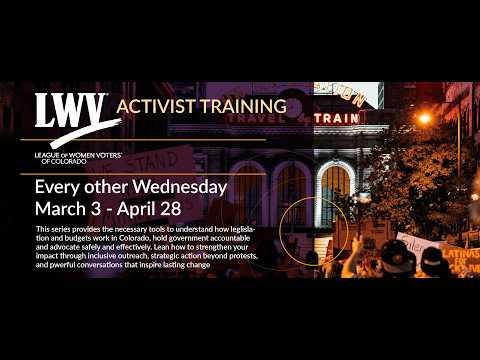
Beth Hendricks, executive director of the League of Women Voters of Colorado, opened a spring activist training session and introduced Andrea Wilkins, the League’s legislative liaison, who gave a step-by-step primer on how Colorado’s legislature works and how citizens can participate.
Wilkins told attendees that Colorado’s General Assembly is bicameral, with 35 senators serving four-year terms and 65 representatives serving two-year terms, and that members are subject to an eight-consecutive-year term limit. She reviewed the nonpartisan agencies that support lawmakers — Legislative Council Service (which produces research and fiscal notes), the Joint Budget Committee and its staff (which forecast revenue and shape the state budget), the Office of Legislative Legal Services (which drafts bills), and the Office of the State Auditor (which audits state programs).
Wilkins explained the legislative path for a bill: introduction in its chamber of origin, assignment to a committee where public testimony is recorded and a committee vote is taken, a Committee of the Whole/second-reading debate, and a recorded third-reading vote. If passed, the bill repeats those steps in the other chamber and, when differences arise, the chambers may use a conference committee to reconcile amendments. She emphasized that fiscal notes are essential for any bill with a budgetary impact and that committee hearings are the primary opportunity for citizens to testify.
On practical citizen advocacy, Wilkins advised attendees to track bills through the General Assembly website and committee calendars, sign up in advance to testify (remotely or in person), prepare concise three-minute remarks, and cultivate relationships with their representative and senator. She recommended joining stakeholder groups and LWVCO’s Legislative Action Committee to coordinate testimony, develop messaging and fundraise when pursuing initiatives.
In a question-and-answer exchange, an attendee identified as Jeff asked what advocates should do while awaiting a public-health study related to universal health care. Wilkins recommended joining existing stakeholder calls, coordinating messaging and planning for either a citizen initiative (which follows different procedures) or for lining up a legislative sponsor if the group pursues lawmaking through the General Assembly.
The session closed with a reminder that LWVCO publishes resources and contact information for members who want to monitor bills, sign up to testify, or join the League’s lobbying work.
The training is part of a multi-session spring series that will cover protester rights, outreach to marginalized voters, deep canvassing, and Colorado’s budget process.