Get Full Government Meeting Transcripts, Videos, & Alerts Forever!
Get email alerts on the Court Budget topic
No spam. Unsubscribe anytime.
Commission approves 41b District Court 2023 budget as administrators warn of caseload-driven shortfall
Summary
The Mount Clemens City Commission approved the 41b District Court's 2023 budget after Court Administrator McGrail said the court filed a balanced budget but warned a recent drop in ticket-related caseload—largely tied to Clinton Township—could create a $400,000–$500,000 shortfall that communities may have to cover.
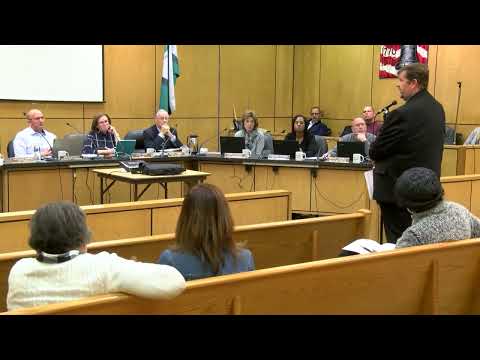
The Mount Clemens City Commission voted to approve the 41b District Court 2023 budget following a presentation by court administrator McGrail and a commission question-and-answer session.
McGrail told the commission the court had "presented a balanced budget," but that recent months have shown "a significant drop in our case load, from tickets, mainly attributed to Clinton Township," and called that loss an "unknown" that might require a later budget amendment. He estimated that if the caseload remained at current levels the court could face "a shortfall of about 4 to 500,000 total." He said Mount Clemens' share under the existing intergovernmental agreement was likely in the mid-teens, which would make the city's portion tens of thousands of dollars.
Commissioners asked whether the drop reflected fewer traffic citations, and McGrail said the decline in traffic tickets has a cascading effect on other filings. He noted Clinton Township has lost several high-volume ticket writers and is working to reinstate some traffic enforcement capacity, and he described efforts to protect the court's capital obligations, including an approximately "$1,000,000 a year" bond payment.
McGrail also raised a broader legal uncertainty: a case before the Michigan Supreme Court challenges the funding mechanism for district courts. He said oral arguments suggested the mechanism could be found unconstitutional, a decision that could change whether districts remain revenue-producing units or become a state cost.
Despite those uncertainties, the commission moved and approved the court budget by roll call. The commission and court administrator said they will continue to monitor caseload trends and keep communities apprised; McGrail said staff would be available to answer follow-up questions.
Action and next steps: The budget was approved by roll call. City and court officials said they may return for a budget amendment if caseload-driven revenue shortfalls materialize.