
Housing authority previews annual plan, seeks three MTW waivers
Get AI-powered insights, summaries, and transcripts
Subscribe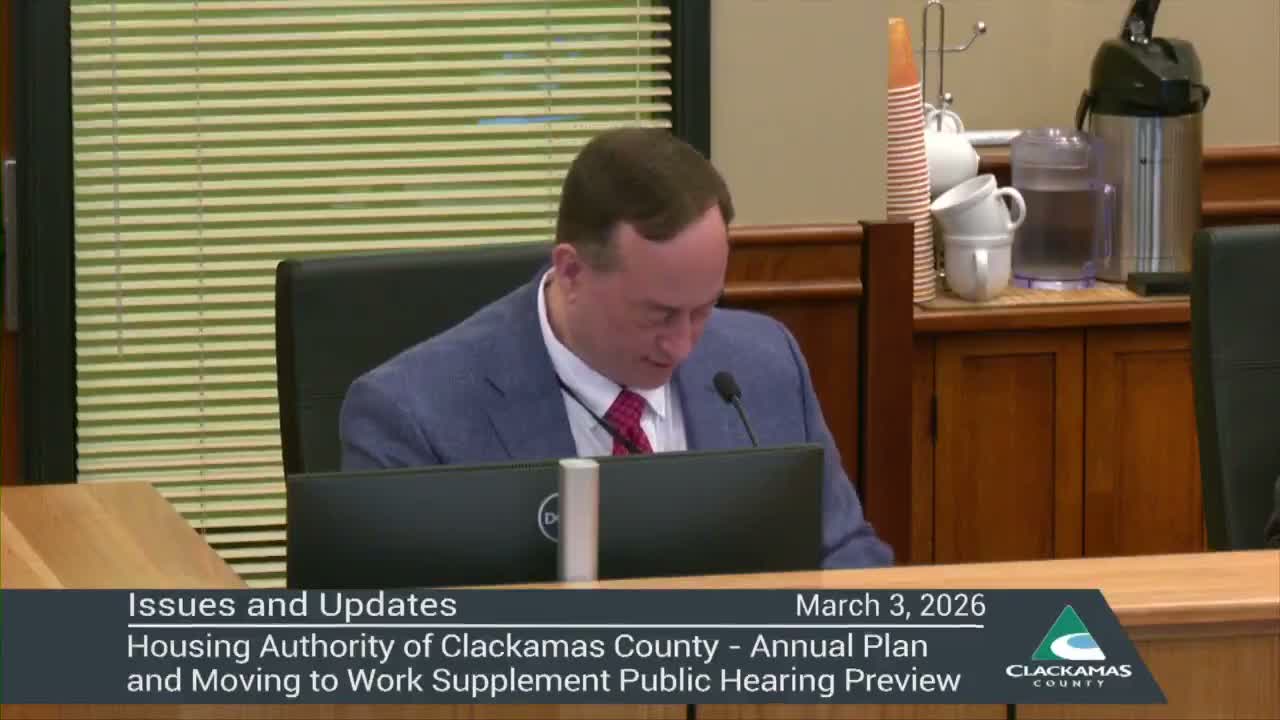
Summary
Clackamas County's Housing Authority briefed commissioners on its draft FY2026–27 annual public housing plan and proposed three Moving to Work waivers — raising the asset threshold to $100,000, limiting interim reexaminations to income changes of 10% or more, and allowing inspections up to 90 days before move-in. A public hearing is scheduled for March 5; comments stay open through March 15.
The Housing Authority of Clackamas County presented a draft annual public housing plan and three proposed Moving to Work (MTW) waivers during a March 3 policy preview.
Shannon Callahan, the Housing Authority executive director, told the Board the plan covers the authority’s fiscal year from July 2026 through June 2027 and focuses on the agency’s ongoing repositioning work expected to complete in 2027. Callahan outlined three MTW waivers being proposed: only counting assets above $100,000 when calculating tenant rent; conducting interim income reexaminations only for changes of 10% or more; and permitting property inspections up to 90 days before a family moves in.
Callahan said the $100,000 asset threshold is intended to reduce administrative burden while recognizing that modest assets such as retirement accounts are consistent with long-term financial sustainability and self-sufficiency. On interim reexaminations, she said the proposal recognizes de minimis income changes and would limit midyear reexaminations for increases or decreases below 10%, with full verifications remaining at scheduled certification times. For inspections, staff argued a 90‑day inspection window would improve processing times and make it easier to work with landlords and reduce vacancy durations.
The board was told the Housing Authority will take public comment at its business meeting on Thursday, March 5, keep the record open through March 15, and return a final plan for board consideration. If approved by the board, staff said the final plan will be submitted to the U.S. Department of Housing and Urban Development no later than April 17 to meet statutory requirements.
Callahan answered commissioners’ questions about verification documents and noted typical sources used for income and asset calculations include pay stubs, W‑2s, tax returns, bank statements, disability checks and child-support information. She said certain triannual verification practices already exist for elderly and disabled households, while working families are generally subject to annual certification.
The preview was informational; no final board action on the plan or waivers occurred at the March 3 session. The public hearing and comment period will be the opportunity for residents and stakeholders to weigh in before staff returns a final plan to the board.