Developers and property owners press Tempe consultants for more outreach, warn draft guidelines could deter investment
Loading...
Summary
Developers and major downtown property owners at a Tempe public meeting said they were not adequately consulted and warned detailed guidelines could function like regulations that reduce property values; consultants said the materials are preliminary and pledged broader outreach and additional targeted meetings.
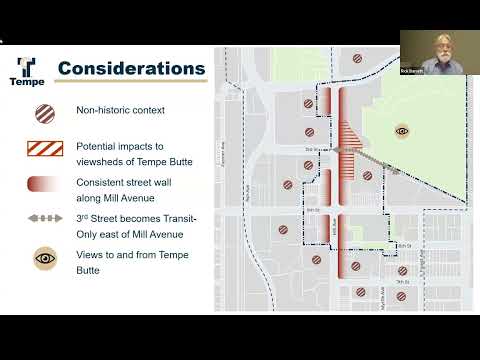
Developers, property owners and neighborhood representatives raised strong concerns about outreach and potential investment impacts after City of Tempe consultants presented preliminary Downtown Historic Core Plan draft guidelines.
Darren Sender, a zoning attorney active in downtown Tempe, told the consultants he had not seen one‑on‑one outreach to many large property owners or developers and said detailed, specific guidelines can operate in practice as regulations. ‘‘This is something that they're trying to tell council,’’ Sender said, warning that guidance perceived as prescriptive will influence prospective purchasers and investors.
Sam Gordon of Wexford said he received notice of the project only within the past few weeks and urged the consultants to contact major owners directly. ‘‘I can promise you with 1000% certainty, it will deter major investment into your city,’’ Gordon said, arguing that a broad green historic‑core boundary may discourage new capital unless owners and investors understand implications and compensation mechanisms.
Consultants and staff responded that the materials are draft guidelines intended to inform site‑by‑site negotiations, not zoning changes, and that implementation would rely on development agreements rather than unilateral restrictions. ‘‘If we've not been successful at engaging folks, that's on us. We will double down and try to do that,’’ a consultant said, offering to re-send outreach lists and schedule additional targeted meetings for property and business owners.
Other speakers echoed the need for more inclusive engagement: developers asked for direct phone outreach, neighborhood leaders requested printed materials and recordings, and representatives of the Historic Preservation Commission asked that the study boundary be reconsidered to include additional historic properties east toward College Avenue.
Legal questions about Proposition 207 — the state measure that can require compensation when land‑use actions diminish property value — surfaced during the discussion. Consultants said the draft is not intended to change zoning and that compensation concerns are one reason the team is framing guidance as negotiable recommendations to be implemented through mutually agreed development agreements.
The consultants said they will schedule additional stakeholder sessions, host an in‑person open house at the Hayden House and provide an online meeting option for property and business owners. They also planned to present the recommendations to the Historic Preservation Commission and Development Review Commission in the coming weeks before a targeted City Council review in July 2026.