
Senate EPW hearing on TSCA fees and new-chemicals draft exposes split: industry seeks predictability, Democrats warn of weakened protections
Get AI-powered insights, summaries, and transcripts
Subscribe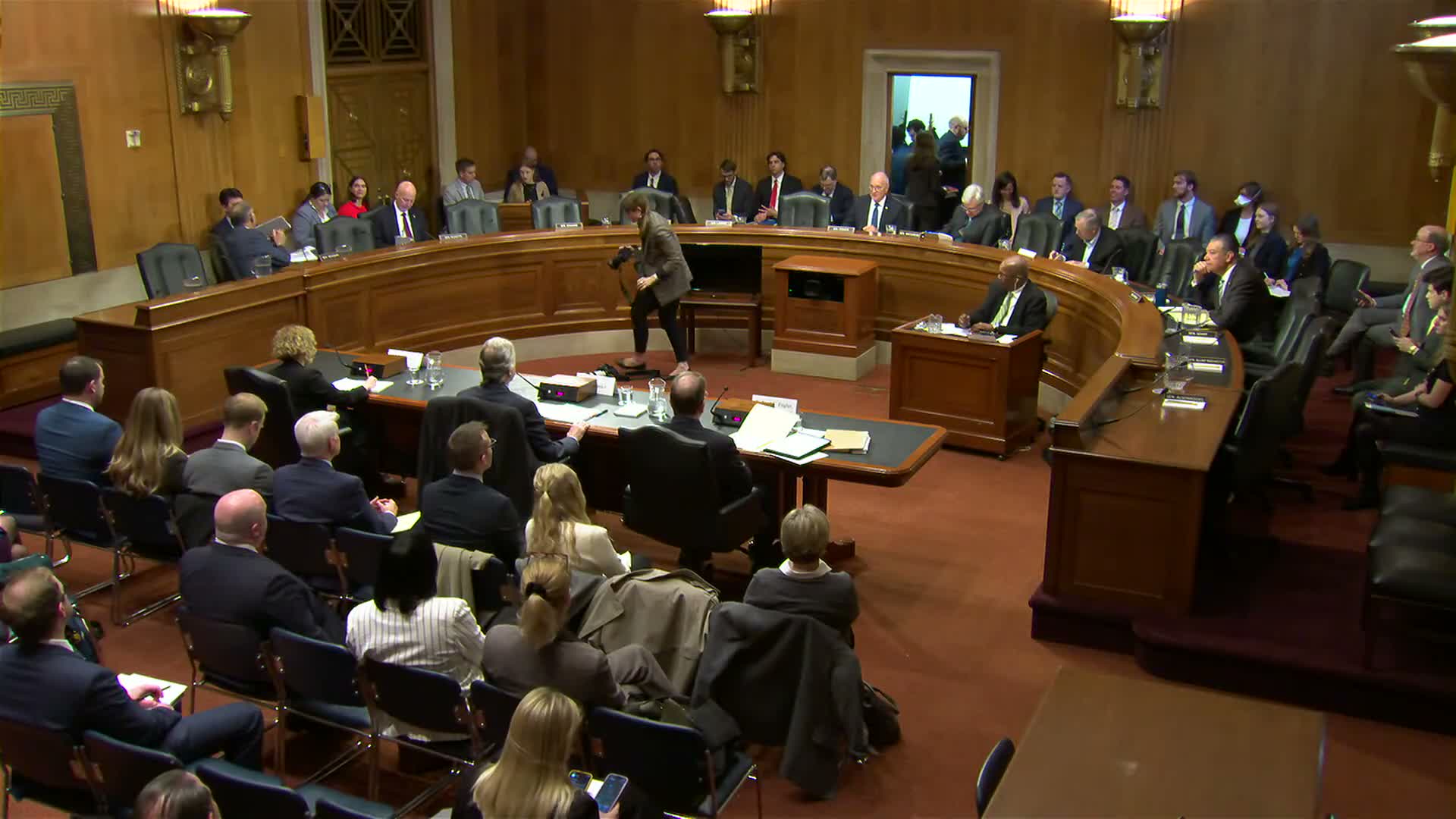
Summary
Witnesses and senators debated a TSCA discussion draft that would set review timelines and new pathways for certain chemistries; industry witnesses urged predictable, conditions-of-use pathways for semiconductors while Democrats and former EPA officials warned the draft could let unreviewed chemicals into commerce and that staffing and scientific integrity are major constraints.
The Senate Environment and Public Works committee heard testimony and questions on a discussion draft titled the Toxic Substances Control Act (TSCA) Fee Reauthorization and Improvement Act of 2026, with witnesses and senators sharply divided over how to speed EPA review of new chemicals without weakening protections for public health and the environment.
Acting chair framed the draft as targeted reforms to make EPA’s new-chemicals review more predictable, saying the current implementation has drifted from Congress’s intent and at times imposed costly, one-size-fits-all restrictions that hamper innovation. “When Congress last amended TSCA 10 years ago, we sought to modernize the statute to reflect current needs and technology,” the acting chair said, and the draft seeks to match review periods to submission complexity and to reauthorize a user fee to provide EPA resources.
Ranking Member Whitehouse said he supports fee reauthorization in principle but warned of “corporate capture” and political interference at EPA, arguing reforms must safeguard scientific integrity. “When it comes to chemical safety, the biggest challenge we face is the corporate capture of the EPA since January 2025,” he said, and urged that any changes preserve the 2016 law’s protective standards.
Among witnesses, Dr. Richard Engler, director of chemistry at Bergeson & Campbell testifying for the Coalition for Chemical Innovation, argued delays often stem from statutory ambiguity and agency practice—not lack of data—and urged clearer definitions of key TSCA terms so EPA does not default to broad restrictions. “There is no way to test out of a restriction unless the testing shows low hazard,” Engler said, and he used a “shark and swimmer” analogy to distinguish hazard from actual risk.
David Isaacs, vice president for intergovernmental affairs at the Semiconductor Industry Association, told the committee that semiconductor manufacturing depends on specialized, low-volume chemistries used in tightly controlled fabs and urged a narrow stewardship pathway and defined timelines so U.S. semiconductor investment is not driven overseas. He said industry supports targeted reforms rather than open-ended exemptions and highlighted the need to consider conditions of use, volumes, and engineering controls in review decisions.
Michal Friedhoff, a former EPA official now at Holland & Knight, outlined four principles—safety and speed, fee reauthorization modeled on successful pesticide-fee programs, sufficient EPA resources, and implementability—and warned that provisions deeming equivalency to inventory chemicals or delegating reviews to third parties risk letting chemicals bypass EPA scrutiny. Friedhoff also cautioned that EPA has lost a substantial share of experienced staff; she said the office that administers TSCA has about 40 fewer staff than it did under the prior administration and warned that creating new programs or accreditation schemes could divert scarce career scientists.
Senators pressed witnesses in exchanges that focused on several hot-button issues: whether EPA must issue significant new use rules (SNRs) on most new chemicals; whether a “more likely than not” (>50%) standard for restricting chemicals would tie EPA’s hands; whether equivalency or low-volume exemptions could permit PFAS-like chemistries to avoid review; and whether accrediting third-party assessors would create conflicts or further deplete EPA staff. Witnesses generally supported clearer standards, category-based approaches, targeted stewardship pathways, and restoring agency resources; Democrats warned that automatic deadlines or weakened standards risk public health.
Senator Merkley flagged the possibility that equivalency provisions could allow melted-down plastics or other complex feedstocks to bypass review by being treated as similar to inventory chemicals. “If equivalency is given a bypass because it’s equivalent to a chemical that was never in the first place reviewed, you basically have an open door to unreviewed chemicals,” he said.
The acting chair closed the hearing with administrative deadlines: senators may submit written questions for the record by 5 p.m. Wednesday, March 18, and witnesses must return answers by April 1. The hearing adjourned with no committee votes on the discussion draft itself.
Next steps: the committee will collect written questions and consider drafting legislative text; senators on both sides signaled interest in bipartisan work but substantial differences remain over standards, staffing, and delegation of review authority.