
Fort Lauderdale tightens rules for pedicabs, golf‑cart shuttles, raises insurance minimums
Get AI-powered insights, summaries, and transcripts
Subscribe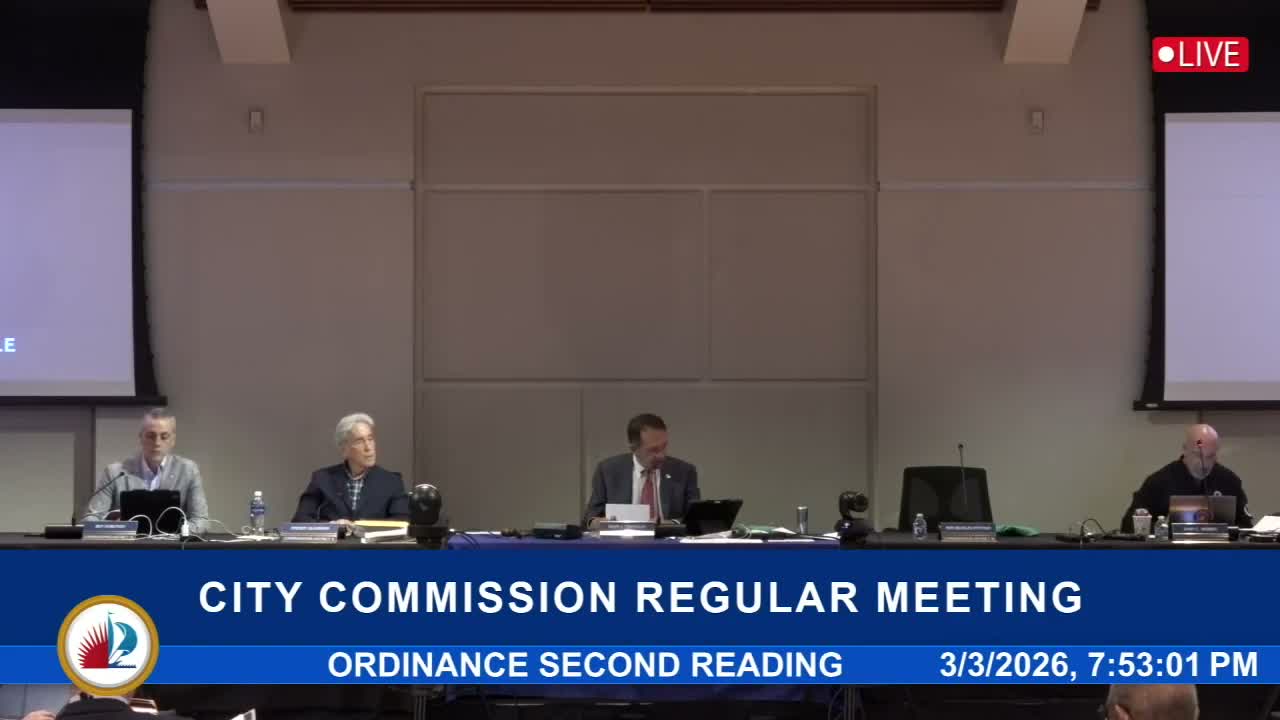
Summary
After public testimony from operators and business owners, the City Commission approved a vehicles‑for‑hire ordinance that raises insurance minimums to $150,000 per occurrence/$300,000 aggregate, establishes a permit process and operating standards, and sets an initial cap and education period.
A divided but unanimous commission on March 3 adopted a new vehicles‑for‑hire ordinance that creates an administrative permitting system for pedicabs, golf‑cart shuttles and similar low‑speed vehicles and requires higher insurance limits than previously in place.
The ordinance, introduced on second reading and amended at the dais, sets insurance minimums at $150,000 per occurrence and $300,000 aggregate and requires operators to meet defined operating standards, background checks and permitting rules. The commission also approved a 90‑day educational period before enforcement and directed staff to monitor the program and return with any recommended adjustments.
Local operators and industry representatives told the commission they support formal rules but warned that very high insurance thresholds would force many small operators out of business. “One million dollars is excessive when you consider the cost,” attorney Paul Minoff said on behalf of a client, adding that insurance premiums for single‑cart operators can run several thousand dollars a year.
Local operator Carlo Barrios, who runs a multi‑vehicle company, urged caution but asked the commission to continue working with operators: “Insurance is necessary… but work with us so we can look out for the city and our people,” he said.
City staff and the city’s risk management team defended the higher limits as a balance between protecting passengers, third parties and municipal risk exposure and keeping the industry viable. Risk staff noted many municipalities now require limits at or above the levels the commission adopted and recommended the city pursue consistent state standards to avoid regulatory gaps.
The ordinance includes enforcement provisions, a permit cap and administrative fees; several commissioners described the adopted insurance floor and education period as an initial approach that can be revisited if enforcement or market effects warrant change.
The ordinance passed on a roll call with Commissioners Sorensen, Vice Mayor Herbst, Commissioner Glassman and Mayor Dean Trantellis voting yes; the commission instructed staff to study implementation steps and to pursue state‑level consistency efforts.