Get Full Government Meeting Transcripts, Videos, & Alerts Forever!
Get email alerts on the Goodrow Housing topic
No spam. Unsubscribe anytime.
Planning commission backs Goodrow workforce housing, sends rezoning to council after debate on height, AMI and short-term rentals
Summary
The Sedona Planning & Zoning Commission recommended rezoning 60 Goodrow Lane to allow a 51‑unit multifamily project and approved development review after days of testimony and discussion over height variances, targeting at up to 120% AMI and limits on short‑term rentals.
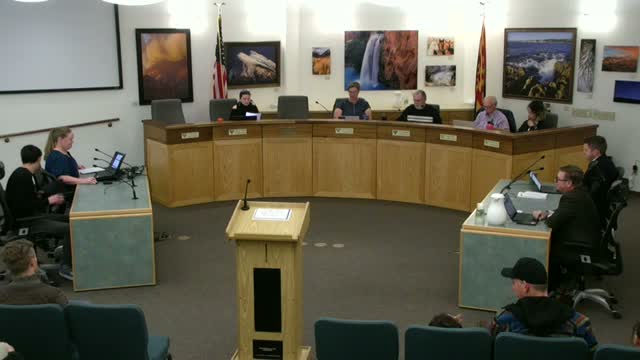
The Sedona Planning & Zoning Commission on Dec. 2 recommended that City Council approve a zone change for the Goodrow Housing project and separately approved the development review for a proposed 51‑unit multifamily complex at 60 Goodrow Lane, moving the project one step closer to construction amid divided public comment.
The mixed townhome-and-apartment proposal, filed as case PZ24-00011 by BCT Sedona Multifamily LLC, would rezone about 2.9 acres from single‑family RS‑10 to RM‑3 and allow up to 20 units per acre under the requested designation. Staff told the commission the applicant is seeking exceptions under the city’s DIGA incentives for affordable housing for building height and massing; the documents note the developer is targeting households up to 120% of area median income (AMI) and proposing a 90‑day minimum rental for the first 10 years.
Why it matters: Sedona officials and residents have said the city lacks places for local workers to live. Supporters argued the site is a sensible infill location near transit and jobs and that the design preserves open space, while opponents raised concerns about height, massing, traffic on Goodrow Lane and the risk of units becoming short‑term rentals.
What the commission heard - Staff presentation: Planning staff summarized the application’s technical elements and said the commission’s role was to recommend on zoning and take the final action on development review, noting outstanding issues including the DIGA exceptions, community participation and detailed affordability terms.
- Applicant presentation: Architect Bruce Taylor and the project team described a plan with 35 apartments and 16 townhomes, three apartment buildings tucked into lower topography, covered parking under the apartments and about 52% of the site set aside as open space. Taylor said the apartments have floor‑to‑roof heights up to 38 feet at the lowest pad and the team is willing to pursue darker colors and architectural detailing to reduce the perceived height.
- Public comment: Neighbors and professional residents emphasized traffic and safety on Goodrow Lane and what they called tall, out‑of‑scale massing for the neighborhood. David O’Donnell said the project “bends or breaks existing codes” and questioned whether the proposal would deliver truly affordable housing. Opposing comments also flagged floodplain and circulation concerns.
Supporters, including the Greater Sedona Chamber of Commerce president David Key and Sedona Oak Creek Unified School District Superintendent Tom Swanninger, urged the commission to back the project as workforce housing that will help retain teachers and hospitality workers. Cheryl Baron, speaking as a lodging industry representative, said local employers cannot find staff who live in town.
Key factual details from the record - Location and scope: 60 Goodrow Lane; approximately 2.9 acres; proposed 51 multifamily units (mix of apartments and four‑unit townhomes). - Affordability: Applicant documents state the project is “targeted” to households earning up to 120% AMI; exact share of units at that AMI level was not specified in the packet and will be addressed in negotiations. - Short‑term rentals: The applicant proposes a prohibition on short‑term rentals for 10 years; staff and commissioners discussed longer deed restrictions and whether anti‑condo‑conversion language is needed to maintain long‑term rental status. - Height exceptions: Staff noted buildings exceed some code height allowances by 7 to 19.5 feet; the applicant described possible credits (color, architectural detailing) that might reduce the requested exception by up to 5 feet.
Excerpts from the hearing - “We are jewelry artists... we will be prepared” — Paul Kaiser, property owner/applicant, introducing the project and asking for a continuance on a different item (Arts in 1). - “It is our intent that the AMI thing would be for the entire life of the project.” — Basil Marr, project co‑owner, clarifying that he understood the income targeting was meant to be permanent while a 10‑year short‑term rental restriction had been discussed separately. - “We need to have this kind of housing here.” — Cheryl Baron, lodging industry representative, urging support for more workforce housing so employees can live in town.
Commission action and next steps The commission voted to recommend approval of the zone change to City Council and separately approved the development review. Commissioners who supported the project cited the site’s proximity to an arterial, the preservation of open space enabled by placing parking beneath buildings, and the need for workforce housing; dissenting commissioners identified unresolved traffic impacts on Goodrow Lane / Rodeo Road and wanted stronger or longer short‑term rental protections.
Both the zone change recommendation and the development review approval will be forwarded to City Council for final action on the zoning; the development agreement (which would record any long‑term affordability or short‑term rental restrictions) will be negotiated with council. Staff and several commissioners flagged that many of the specific affordability and deed‑restriction details belong in that development agreement and are subject to council review.
What remains unresolved The record shows differing expectations about the duration and scope of short‑term‑rental restrictions and whether the AMI targeting applies to all units or a percentage of units. Staff and the applicants said those details will be clarified through a development agreement or council negotiations, and commissioners asked staff to relay the commission's preference for longer restrictions and safeguards against condo conversion.
The commission closed the item after voting; the zone change and development review will go to Sedona City Council for final determination.