Get Full Government Meeting Transcripts, Videos, & Alerts Forever!
Get email alerts on the Road Maintenance And Accountability topic
No spam. Unsubscribe anytime.
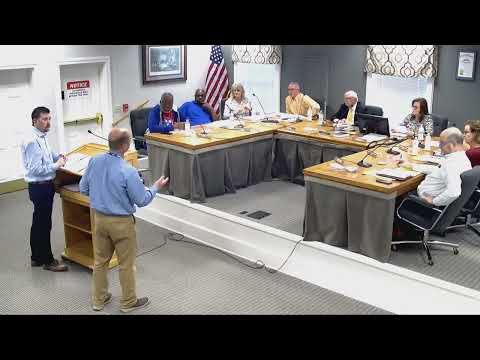
Council takes up Brinley Court failures, directs staff to investigate contractor responsibility
Summary
Councilors and staff examined why Brinley Court is failing, heard that the road’s subbase was not properly prepared and that the binder/top course was not applied on schedule. Council directed the city manager and staff to investigate reconstruction options, potential bond/penalty claims and return recommendations.
A significant portion of Lewisburg’s March work session centered on recurring failures at Brinley Court and who should pay for repairs. Staff and council members described a construction process that skipped required subbase preparation and delayed application of the binder and final asphalt, which contributed to the road’s deterioration.
Brandon explained the city’s repair plan: "The severe spot will be taken out and then eight inches of proper material will be replaced and surface reapplied," describing removal of clay and replacement with rock. Planning and engineering staff told council the binder coat was not applied when expected and residents used the road for years before final surfacing, increasing damage.
Members debated liability. Some council members said the developer or contractor should be responsible; others warned that pursuing legal remedies could be lengthy. Questions focused on whether contractors were licensed, bonded or subject to penalties for failing to meet subdivision standards. "Contractors have bonded," Mayor Jim Bingham said, and staff were tasked to determine whether bond claims or other remedies are available.
Council directed the city manager and relevant staff to investigate: confirm which party built the failing sections, review contract and inspection records, evaluate the feasibility and cost of spot repairs versus full reconstruction, consult legal counsel about bond/penalty remedies and return with a recommendation. Several members emphasized minimizing taxpayer exposure while ensuring safe, durable repairs for affected residents.
No formal vote on repairs was taken during the work session; staff said they would report findings and cost estimates to the council at a future meeting.