Get Full Government Meeting Transcripts, Videos, & Alerts Forever!
Get email alerts on the Social Services topic
No spam. Unsubscribe anytime.
Commission approves 1,500 sq. ft. food pantry at St. John Vianney; applicants, volunteers emphasize need
Summary
The Sedona Planning and Zoning Commission unanimously approved a conditional-use permit for a 1,500-square-foot food pantry at St. John Vianney Catholic Church, with applicants and parish volunteers saying the new space will end outdoor waits and better serve about 45 families per week.
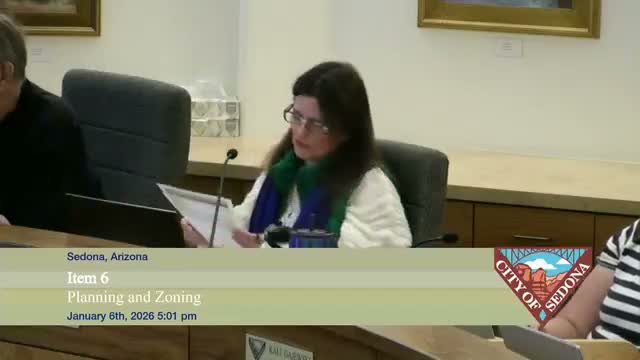
The Sedona Planning and Zoning Commission on Jan. 6 approved a conditional-use permit for a new 1,500-square-foot food pantry at St. John Vianney Catholic Church (case PZ25-00008CUP, APN 408-25-041B). Staff recommended approval after reviewing required criteria in the Land Development Code; commissioners voted in favor by unanimous voice vote.
Applicant Andrew Brealey, a Sedona resident and president of the local Saint Vincent de Paul chapter, described current pantry operations from a roughly 480-square-foot portable building and said volunteers often serve about 45 families a week. “We have a weekly food pantry, which is open from 9 a.m. to 11 a.m. every Thursday, 52 weeks a year,” Brealey said, explaining the need to consolidate operations indoors to avoid exposing clients and volunteers to extreme weather and to provide more dignified, private client interviews.
Father Ignatius Mazanowski, pastor at St. John Vianney, told the commission the parish supports the project and that the new location improves traffic flow and parking compared with the existing site. Architect Doug McCord described efforts to site the building to minimize campus disruption and preserve mature trees. Pantry manager John Such and client-services coordinator Maureen Coza described long waits, limited indoor interview space, and volunteer labor that currently requires outdoor canopies; they said the new building would shorten wait times and provide private client interviews.
Commissioners and members of the public raised questions about parking, handicap access and on-site camping. Applicants and staff responded that handicap spaces will remain available and that the new building will sit adjacent to two handicap spaces within about five feet; applicants said they will post and enforce no-overnight-camping policies on church property and will call law enforcement if necessary. Andrew Brealey and others identified local funding sources and donors that support the pantry’s operations.
After public comment from parishioners and neighbors — both supportive and raising operational questions — a commissioner moved to approve the CUP, another commissioner seconded, and the motion passed unanimously. The commission adopted staff findings and attached conditions of approval.
What happens next: The approval allows the church to seek building permits and complete construction under the conditions adopted by the commission. Staff will review building-permit submittals for compliance with applicable codes.