
Health, Human Services and Elderly Affairs committee advances 14 bills in executive session; several measures split committee
Get AI-powered insights, summaries, and transcripts
Subscribe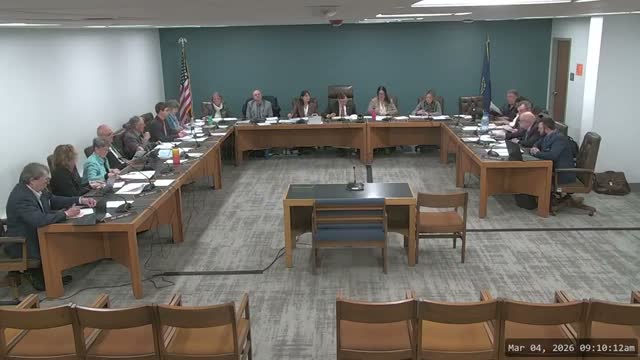
Summary
The House committee advanced 14 bills at an executive session, approving a mix of votes on bills addressing mental-health emergency response, immunity language, medical free-speech, school vaccine clinic rules, Medicaid cost sharing, investigational use of ibogaine, and SNAP eligibility. Several measures drew close 10-8 votes and generated minority reports.
The House Committee on Health, Human Services and Elderly Affairs met in executive session to consider 14 bills that ranged from procedural cleanups to sharply contested policy changes. The committee approved motions to move bills forward on a mix of 18-0 and narrow 10-8 votes, and several items drew commitments to file minority reports or send measures to interim study.
Representative Drew moved that HB 1070 be ruled inexpedient to legislate, saying the bill could create a scenario where an EMS crew calls police to handle a violent mental-health episode and the police then transport the patient involuntarily. The committee approved the ITL motion 18-0.
Representative Kesselring won approval of Amendment 1006H to HB 1071, which she said limits any repeal of immunity so it is effective only from the date of passage and not retroactive. The amendment and the bill as amended passed on a 10-8 vote; a minority report was signaled by members in opposition.
Representative McGrath described changes to HB 1117 as clarifying who qualifies as a "health care provider," restricting covered medications to FDA-approved products and restating enforcement and remedy language. She characterized the bill as protecting "medical free speech," and the committee passed the amendment and bill, 18-0.
On HB 1249, members supported language allowing equipment such as nebulizers to be purchased more readily at pharmacies; the committee voted 18-0 for ought to pass.
A number of bills prompted fuller debate. On HB 1335, members questioned whether nonphysician providers such as chiropractors and acupuncturists were adequately covered and whether a $5,000 threshold in the bill was appropriate. Representative Nagel urged an interim study to consider inclusion of nonphysician providers and concerns raised in testimony; the motion to pass carried 10-8.
The committee considered HB 1337, which would repeal an autism council. Representative Coval said parents and families reported the council had not fulfilled statutory duties and had assumed powers not explicitly granted in statute; other members pointed to the council's 2025 annual report and prior efforts to correct deficiencies. The motion to repeal carried 10-8.
On HB 1449, which would require parental presence at school vaccination clinics in some circumstances, members split over access burdens for rural parents and parental-rights arguments; the committee passed the bill as amended, 10-8, and a minority report was anticipated.
Immigration- and refugee-related HB 1706 drew emotional remarks from members on both sides about the value of refugee programs, the federal funding structure for resettlement services, and the bill's policy aims; the motion passed 10-8.
On Medicaid-related measures, Representative Mazur argued HB 1760’s repeal of co-pay and premium directives would shift costs without identifying stable funding; other members warned co-pay requirements can impede access for people on fixed incomes and increase emergency care use. The committee voted 10-8 on the motion before it.
The committee also debated HB 1772 and Amendment 0365H to allow ibogaine to be prescribed for investigational use in New Hampshire. Supporters said the change simplifies prior structure and enables investigational prescribing; opponents warned the drug is Schedule I and that more study or advisory oversight was needed. The amendment and bill as amended passed 10-8.
SNAP-related legislation drew sustained pushback about implementation cost and the risk that tighter eligibility checks could remove eligible households. Representative Coval described Amendment 1027H to HB 1797 as a correction removing soda/candy exclusions and tightening verification against federal databases; opponents said the changes would duplicate work, add monthly checks and could push families off benefits. The committee passed the bill as amended, 10-8.
Votes at a glance
- HB 1070 — Motion: ITL; result: 18-0, motion passes. - HB 1071 — Amendment 1006H adopted; bill as amended: 10-8, motion passes (minority report signaled). - HB 1117 — Amendment 10268H adopted; bill as amended: 18-0, motion passes. - HB 1249 — Ought to pass: 18-0. - HB 1335 — Ought to pass: 10-8 (discussion on scope for nonphysician providers). - HB 1337 — Repeal motion passed: 10-8. - HB 1449 — Ought to pass as amended (parental presence at vaccine clinics): 10-8 (minority report signaled). - HB 1706 — Ought to pass: 10-8 (contentious debate on refugee program implications). - HB 1760 — Motion (repeal of co-pay/premium directives debated): 10-8. - HB 1772 — Amendment 0365H (ibogaine investigational use) adopted; bill as amended: 10-8. - HB 1773/HB 1797 (SNAP-related) — Amendment 1019H/1027H adopted to remove soda/candy exclusion and tighten verification; bill as amended: 10-8. - HB 1790 — Interim study motion adopted: 18-0. - HB 1794 — Motion passed: 11-7 (study/fiscal-impact concerns of Medicaid changes). - HB 1797 (final bill items) — Passed as amended: 10-8.
What comes next
Several assembly members said they will file minority reports on measures that carried by narrow margins; a number of bills were directed to further study or will be reported to the full House with committee recommendations. Chair closed the session and reminded members to submit committee reports by early afternoon.
Notes on attribution and scope
Quotes and attributions in this report map only to speakers who identify themselves or are named directly in the transcript. Where speakers raised concerns without a clear, attributable name in the speaker roster, this report summarizes the argument without assigning an unverified identity.
The committee transcript records votes and many substantive claims and clarifications by legislators and staff. This article does not infer facts beyond the record of the session and does not attribute remarks to individuals not clearly identified in the transcript.