
Pacific Council adopts initial 2026 salmon management alternatives, including treaty and non‑Indian packages
Get AI-powered insights, summaries, and transcripts
Subscribe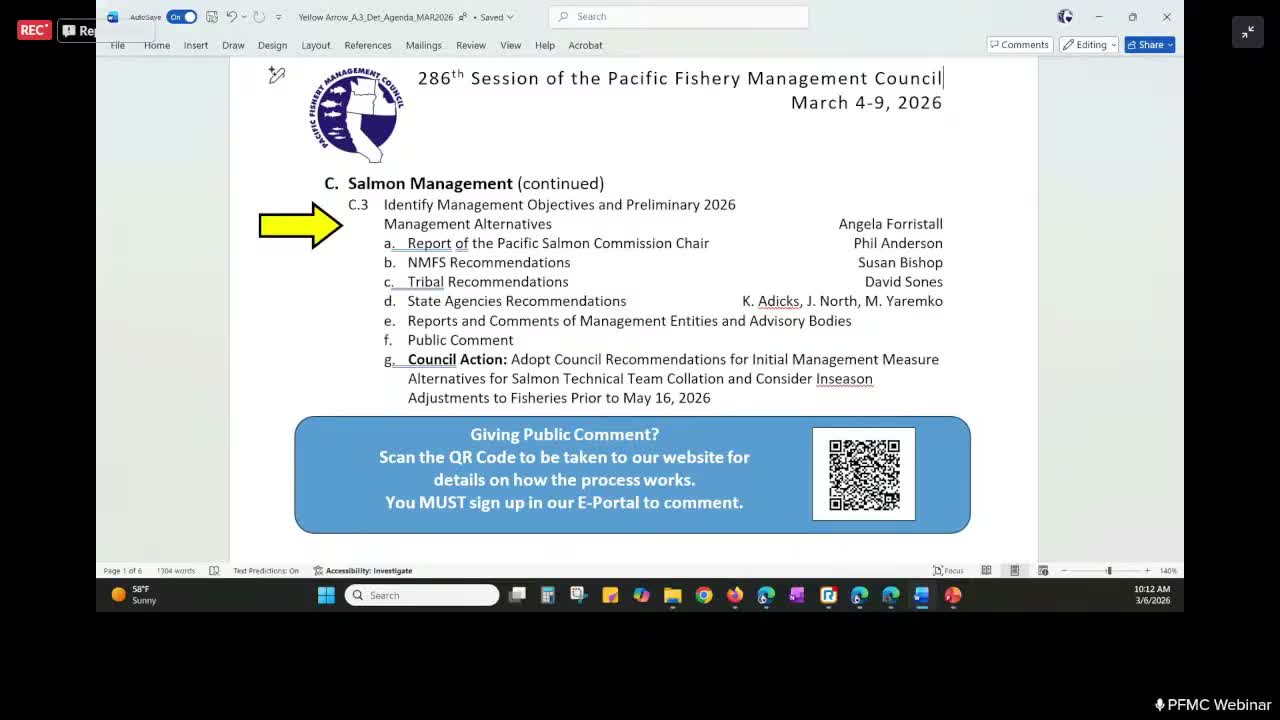
Summary
The council adopted initial sets of non‑Indian and treaty troll salmon management alternatives for 2026 and directed staff to analyze impacts for April; tribal delegations urged conservative planning to protect upriver runs and treaty rights.
The Pacific Fishery Management Council on March 5 adopted preliminary management alternatives for 2026 ocean salmon fisheries, approving separate non‑Indian and treaty (tribal) packages and asking the Salmon Technical Team (STT) to analyze the adopted options and report back for April review.
What the council adopted: Councilmember John North moved to adopt the Salmon Advisory Subpanel’s set of non‑Indian ocean fishing alternatives and specific date edits for Oregon; the motion (seconded and later affirmed) passed unanimously. Separately, tribal representatives proposed and the council adopted treaty troll alternatives with three quota tiers (55k/50k; 45k/40k; 35k/30k) and season structures; that motion also carried unanimously.
Why it matters: The adopted packages form the first set of public alternatives for preseason review under the Pacific Salmon Fishery Management Plan. NMFS, state agencies and tribal co‑managers must ensure that final selections meet Pacific Salmon Treaty obligations and ESA consultation standards. Susan Bishop (NMFS) had earlier told the council NIMS guidance requires council fisheries, combined with other Southern US fisheries, to stay within exploitation‑rate caps negotiated under the treaty.
Council and tribal concerns: Tribal leaders and Columbia River treaty delegates urged conservative management and attention to treaty harvest needs. Bruce Jim Sr., speaking for several Columbia River tribes, framed the stakes in cultural terms: “Salmon are key to our spiritual and cultural needs,” he told the council, urging that ocean planning safeguard upriver runs and tribal access. Several council members and advisory bodies stressed continuing collaboration and called for in‑season tools and monitoring to respond to changing forecasts.
Next steps: The STT will collate council‑identified management elements into coastwide alternatives, perform impact analyses and return with adjusted alternatives in April. The council expects to adopt a final package for public review in April and take final action (including potential adjustments after North of Falcon and other interjurisdictional processes) in April/June as scheduling allows.
Provenance: Motion language and votes are recorded in council deliberations and motions at SEG 6146–6273 (non‑Indian alternatives) and SEG 6296–6332 (treaty troll alternatives). Public and tribal testimony feeding the record appear at SEG 3590–4370.