
Amador County and Amador Unified boards approve second interim revisions, certify budgets as 'qualified' amid out‑year reserve risks
Get AI-powered insights, summaries, and transcripts
Sign Up Free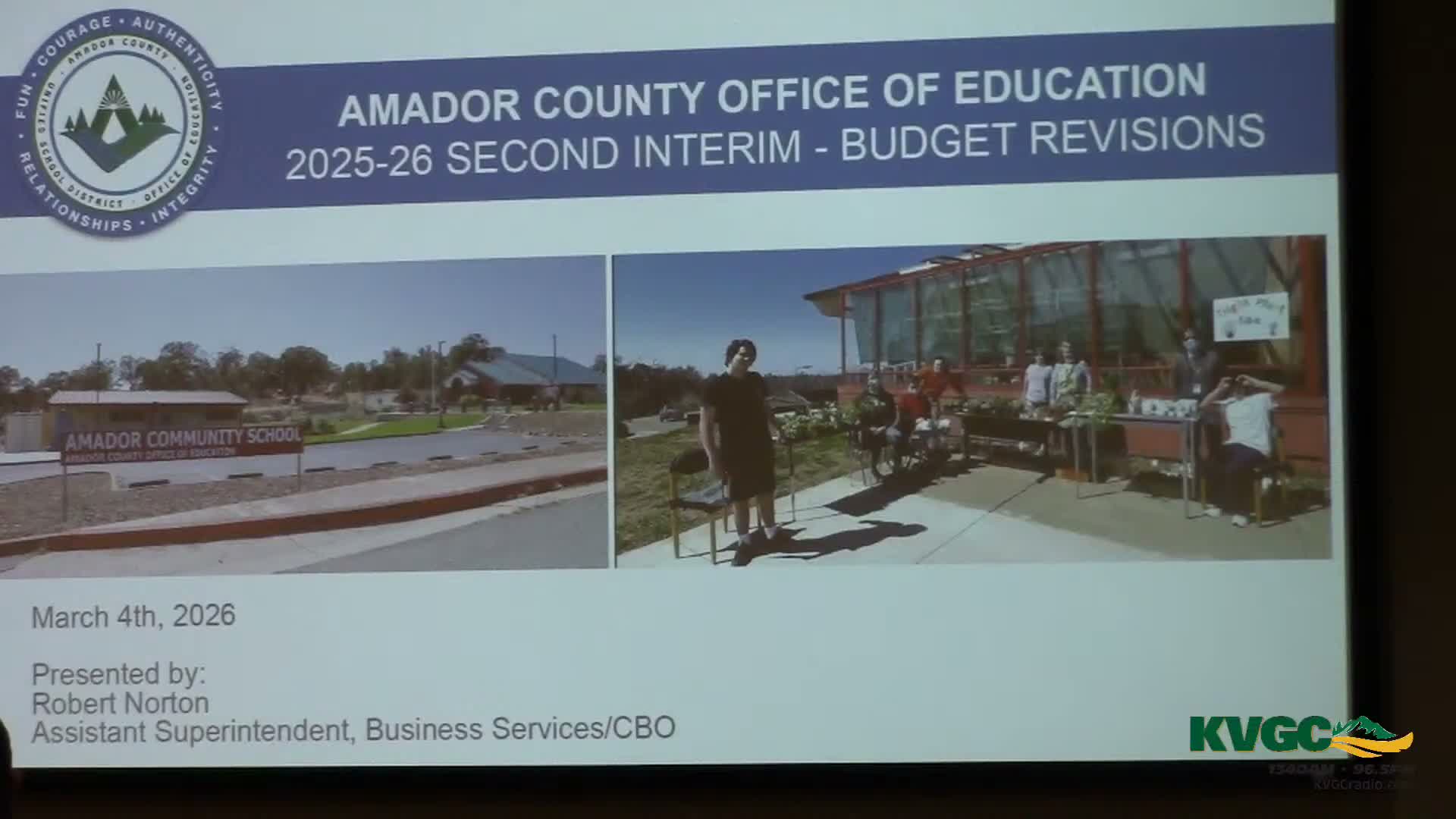
Summary
County and district fiscal staff presented second interim budget revisions showing modest revenue increases but pressure on reserves in out years; both governing bodies approved the revisions and adopted qualified certifications, citing multiyear projections that fall below required reserve thresholds without further action or new state funding.
Amador County fiscal staff presented second interim budget revisions to the county office and the Amador County Unified School District on March 11, recommending a qualified certification because multiyear projections show reserves falling below statutory requirements in out years.
Robert Norton (fiscal staff) told the boards the county office projects a roughly $222,000 increase in revenue for 2025–26 — bringing total revenue just above $13 million — and corresponding expenditure increases that raise year‑end spending and reduce the county’s fund balance by about $53,000. Norton said the county’s multiyear projections show the required reserve slipping to roughly 2.88% in 2026–27, below the county’s minimum of 4%.
On the district side, staff reported a projected revenue increase of about $115,000 and an overall reduction in deficit spending of roughly $558,000 for 2025–26, with restricted programs (including ELOP and other grants) rising while unrestricted reserves remain constrained. The district’s multiyear projection showed the reserve dipping below the minimum 3% requirement in the next fiscal year and remaining under 3% through 2027–28 under current assumptions.
Board members asked detailed questions about assumptions driving the projections, including one‑time state dollars, COLA estimates and the district’s plan for positions funded by time‑limited grants. Norton said the January governor’s budget proposal — and particularly the May revision and final enacted state budget — could materially change the outlook, but cautioned boards not to rely on one‑time funds when planning.
Both governing bodies voted to approve the 2025–26 second interim budget revisions and adopted a qualified certification for the second interim, reflecting concern that current projections show out‑year reserve shortfalls unless additional revenue or expenditure reductions are identified. The boards instructed staff to continue work on the fiscal stabilization plan and to bring follow‑up items to subsequent meetings.