Get Full Government Meeting Transcripts, Videos, & Alerts Forever!
Get email alerts on the Short Term Rental topic
No spam. Unsubscribe anytime.
Planning commission splits on Antelope Valley short‑term rental; recommends approval of two others with conditions
Summary
The Custer County Planning Commission recommended denial of a short‑term rental application at 510 Drunk Horse Lane over road‑access and fire‑safety concerns, and recommended approval of two other STR applications with conditions including removal of outdoor fires, boundary marking and local management. Commissioners also debated consistency in STR decisions.
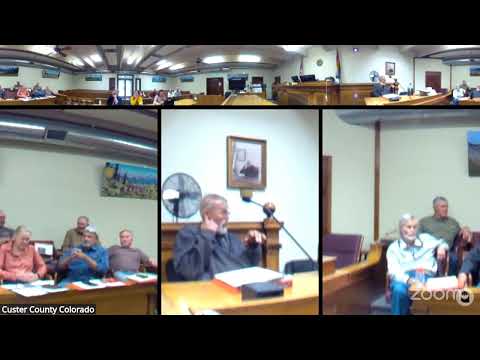
The Custer County Planning Commission on March 8 considered three short‑term rental (STR) applications and split its recommendations: the commission voted against recommending approval of an Antelope Valley STR over concerns about one‑way access and wildfire risk, and recommended approval of two other STRs after the applicants agreed to conditions.
At the public hearing for 510 Drunk Horse Lane in Antelope Valley, resident Ansel Crossgold read the subdivision’s protective covenants and argued STRs would violate them. "Nothing shall be done or permitted on any tract which may be or become an annoyance or a nuisance to the neighborhood," Crossgold read aloud and submitted a four‑signature neighborhood letter opposing the application. He raised specific worries about increased vehicle trips, cleaners visiting after each rental, an exposed fire pit and stacked wood near the house.
The applicant, who identified himself as Ashish, told the commission he and his family plan to operate the property "on a very limited basis" with strict house rules and local contacts. He said he would remove the fire pit and address decking and debris if the permit were approved.
Commissioners and staff noted a legal limit on the county’s ability to enforce private covenants; a planning staff member told the body the county enforces a county nuisance policy and zoning resolution but does not enforce homeowners’ association covenants. When the commission voted on a motion to recommend approval with conditions (removal of the pit and wood, marking property boundaries, and completion of mitigation before listing), the motion failed. A commissioner who voted no said the primary reason was "the access problem — one way in and one way out" and related emergency‑egress worries.
The commission next reviewed an STR at 264 County Road 179 (Zone 2). The applicant and agent described screening procedures, emergency contacts and local management plans; neighbors and site‑visit reviewers reported the property was largely ready but asked for removal of wood piles and securing an outdoor heater. The commission moved, amended and ultimately recommended approval with conditions that included locking or securing outdoor fire features, removing electrical extension lines from trees, excluding accessory buildings from rental use and requiring a named local contact/manager.
A third application for Lot 48 in Eagle Springs Ranch (Zone 4) produced similar safety‑focused conditions: staff and commissioners required boundary markings, local management information on house‑rule materials, removal of outdoor propane hoses and explicit prohibition of outdoor flames in the house rules. The commission amended its motion to add those provisions and approved the application.
For one of the applications (the Antelope Valley property), neighbors had cited private covenants recorded in 1971; planning staff reiterated that covenant enforcement is a private matter and outside the county’s enforcement jurisdiction, though the county may enforce its own nuisance regulations. The commission also discussed whether applicants should attend the BOCC meeting where the commission’s recommendations will be considered; applicants were advised to appear in person or join remotely.
The commission’s decisions now move to a recommendation stage for the Board of County Commissioners; for at least two approved STRs the commission attached conditions intended to reduce fire risk and clarify management and boundary responsibilities.
Votes at a glance - 510 Drunk Horse Lane (Antelope Valley): Motion to recommend approval with conditions — outcome: failed; reason cited by one commissioner: single access/egress (one way in, one way out). Vote tally: Ayes: 3; Nays: 4 (counts not specified in minutes beyond roll call exchange). - 264 County Road 179 (Zone 2): Motion to recommend approval with conditions — outcome: recommended to BOCC with conditions (fire features secured, accessory buildings excluded, local manager). Vote tally: not specified. - Lot 48, Eagle Springs Ranch (Zone 4): Motion amended to add specific safety and house‑rule conditions and then approved by the planning commission; vote tally: not specified.
Why it matters: Commissioners repeatedly framed STR decisions around emergency access and wildfire safety as well as fairness and consistency — whether similar parcels receive similar treatment. For applicants and neighbors that means local mitigation (removing or securing fire pits, marking boundaries, naming local managers and making house rules conspicuous) is likely to be a condition of approval going to the BOCC.
The commission will forward its recommendations and the record to the Board of County Commissioners for final action; applicants were advised to attend that meeting or participate remotely.