
Stewardship and grant administration: tribal values guide CSBG decisions, TA speaker says
Get AI-powered insights, summaries, and transcripts
Subscribe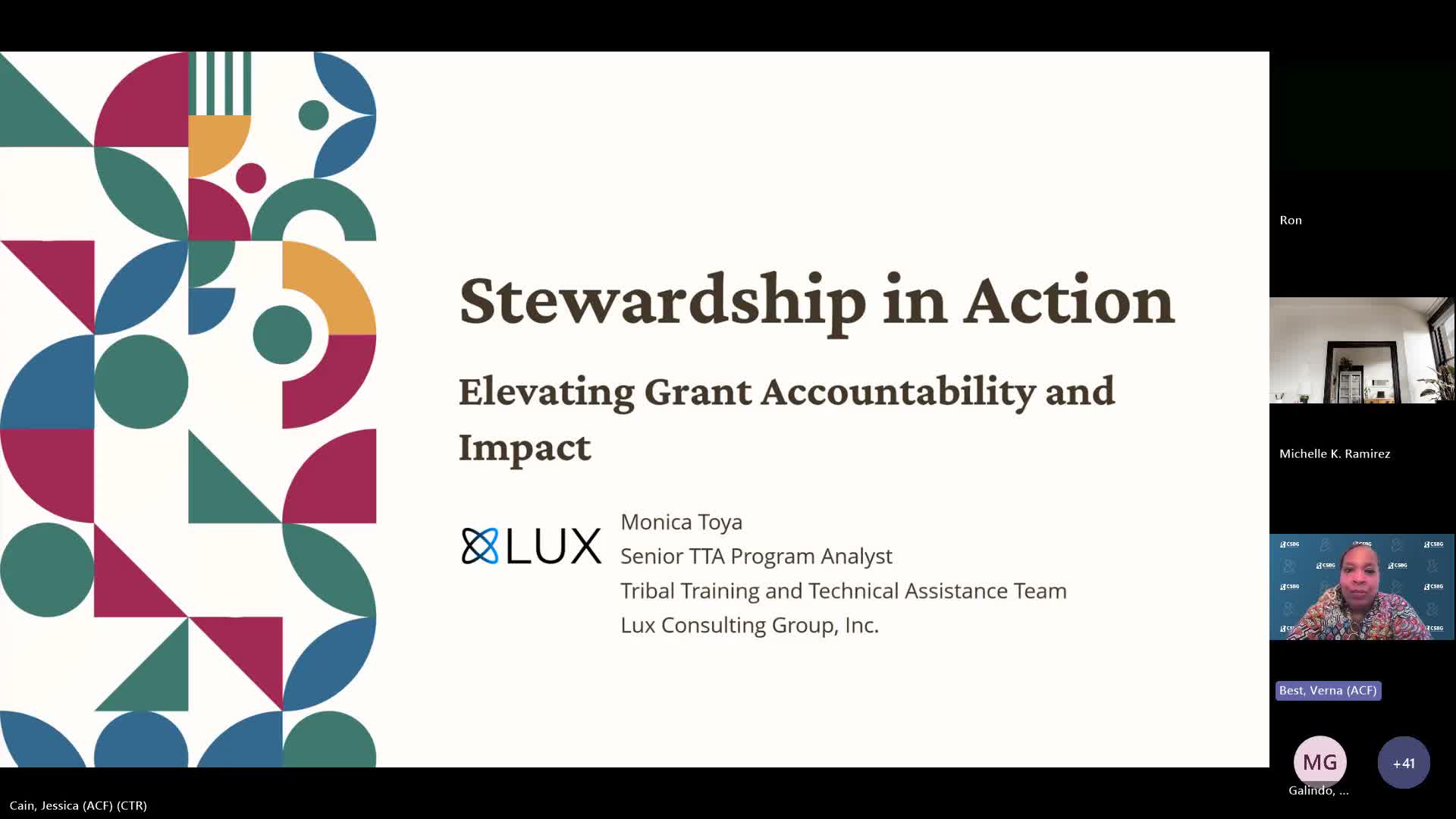
Summary
Monica Toya, senior TTA program analyst with the Tribal TTA team, urged tribal administrators to pair federal compliance with ancestral stewardship: align budgets with community values, use indigenous data practices, and practice relational accountability to sustain long‑term impact.
Monica Toya, senior training and technical assistance program analyst with the Tribal TTA team and a member of the Pueblo of Jemez, told attendees that stewardship combines contemporary administrative practice with ancestral wisdom. "Stewardship draws on deep rooted traditions and a profound respect for the land, community, and future generations," she said.
Why it matters: Toya framed stewardship as necessary to protect tribal sovereignty, direct federal resources to community priorities, and build long‑term program sustainability beyond grant cycles.
Key components and cases: Toya outlined six steward roles and core actions—values alignment, intergenerational planning, indigenous data practices, relational accountability, thoughtful resource use and sovereignty protection. She presented three case scenarios: realigning wellness budgets toward traditional food and garden programs; improving transparent reporting to community councils using accessible visuals; and adapting service delivery (a mentorship component and financial literacy) to extend impact after a time‑limited job‑training grant.
Implementation guidance: Toya encouraged administrators to embed traditional voices and elders in needs assessments, to document community feedback in tribal plans, and to seek leadership buy‑in to safeguard tribal identity in program implementation. She recommended transparent reporting and using partnerships to maximize limited funds.
Ending: Toya closed by inviting participants to reflect on three steward responsibilities they carry and to contact the Tribal TTA team for follow‑up. The session included multiple participant examples and a reminder that stewardship complements, rather than replaces, federal compliance obligations.