Get Full Government Meeting Transcripts, Videos, & Alerts Forever!
Get email alerts on the Code Enforcement topic
No spam. Unsubscribe anytime.
Delray Beach magistrate grants extensions, imposes fines and places liens across multiple code cases
Summary
Special Magistrate Wagner on March 5, 2026, heard a full docket of Delray Beach code‑enforcement cases and issued a series of orders: 180‑day extension to complete repairs at a fire‑damaged home, fines for repeated solicitation by businesses, liens for unpermitted work and staggered compliance deadlines for several properties.
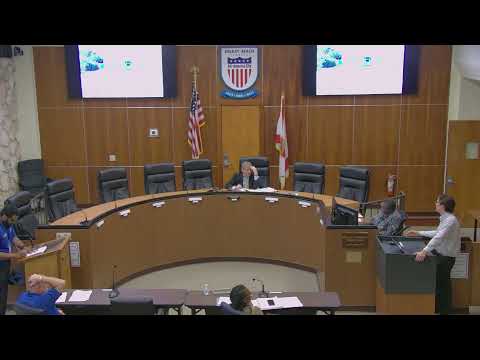
Special Magistrate Wagner convened a packed Delray Beach code‑enforcement docket on March 5, 2026, issuing a mix of extensions, fines and liens across residential and commercial cases.
The hearing opened with standard administrative instructions and swearing of witnesses. City code officers presented photographic evidence and timelines for each matter; respondents and representatives were given opportunities to respond. The magistrate largely accepted the city’s evidence and tailored remedies — ranging from days to comply to one‑time fines and property liens — intended to secure permit closures and stop on‑going violations.
Key outcomes at a glance: the magistrate stayed fines and granted a 180‑day extension for the owner of 937 Southwest 24th Court so the respondent could complete repairs and reinstate utilities; he approved a stipulation for 302 Southwest 11th Avenue and confirmed the city’s request for time to complete final inspections; he imposed a one‑time fine of $1,500 for irreparable solicitation violations at a business on East Atlantic Avenue and assessed a similar $1,500 fine (payable within 30 days) in a separate Atlantic Avenue solicitation case; several residential properties received limited stays, liens, or short compliance windows (15–90 days) tied to final inspections, permitting or cleanup. In one fence case the magistrate placed a $3,000 lien but stayed day fines for 30 days to allow correction.
The magistrate’s approach mixed enforcement and leeway. For the fire‑damaged home (case 12021012065), the city asked for a 180‑day extension and a stay of fines to allow the owner to finish work and obtain permanent utility connections; Magistrate Wagner told the owner, "I'm gonna give you the hundred and 80 days," while urging the owner to finish sooner if possible. In multiple property‑maintenance matters the magistrate accepted photographic exhibits and set short windows for compliance or daily fines (for example, 30 days or $100/day in certain listings; other properties received 60–90 day windows depending on the work needed).
Business solicitation cases on East Atlantic Avenue drew sustained attention from code officers Connor Lee and James Easley, who testified they observed employees repeatedly approaching pedestrians and offering samples from outside the premises despite prior warnings. The city characterized that conduct as an "irreversible and irreparable" violation under city code and sought $2,500 fines; the magistrate assessed one‑time fines of $1,500 in those matters, with a stern warning that further violations could yield higher penalties. The property representative in one matter said the business had relied on an earlier, informal understanding with a prior city officer; the magistrate acknowledged the contention but found that solicitation continued after the written warning and imposed the penalty while allowing limited time for payment where requested.
Several decisions emphasized process steps respondents must take to clear violations: reinstate or renew permits, request final inspections and obtain certificates of occupancy, or complete required resubmittals to planning and utility review. Where respondents said work was substantially complete but permits remained open, the magistrate repeatedly urged meetings with code staff to confirm final inspections and then permitted owners to seek lien reductions only after compliance was documented.
What happens next: Most orders put a short, specific next step on the calendar — status hearings, deadlines to obtain final inspections, or a payment window for fines — and remain enforceable if not followed. Parties were directed to coordinate with code enforcement staff, and the magistrate noted that remedies such as lien reductions are only available after formal compliance.
Quotes on the record
"I'm gonna give you the hundred and 80 days," Magistrate Wagner said while granting an extension in a fire‑damaged property case, urging the owner to seek compliance sooner where feasible.
"Because of the persistent nature of the violation... we want to put a stop to it," said Clean & Safe officer Connor Lee about repeated solicitation outside a storefront. The magistrate later assessed a one‑time fine of $1,500 in that matter.
"The amount of $2,500 is going to damage us," said Niv Conforty, a business representative, asking the magistrate to consider a reduced penalty in a solicitation case; the magistrate reduced the requested amount on the record.
Ending
The magistrate closed the hearing after issuing orders across the docket, directing respondents to pursue the specific administrative steps outlined by staff and setting deadlines for status check‑ins and payments as required. Parties were told to coordinate with code enforcement if further clarification was needed. The hearing record and exhibits remain part of each case file for follow‑up enforcement.