Get Full Government Meeting Transcripts, Videos, & Alerts Forever!
Get email alerts on the Post Acute Rehab topic
No spam. Unsubscribe anytime.
RISE Neuro Rehab asks Senate for $2.5M to build post‑acute rehab services for Georgians with catastrophic injuries
Summary
RISE Neuro Rehab Institute told the Senate subcommittee it aims to close gaps in post‑acute rehabilitation with a combined residential and outpatient model; presenters asked the Senate to match the House's $2.5M allocation to begin services and said an initial outpatient facility could open early this fall.
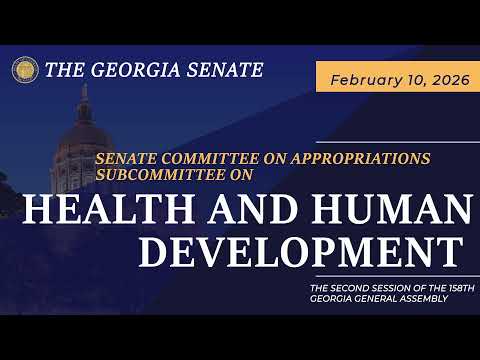
Presenters from RISE Neuro Rehab Institute described a nonprofit plan to fill a documented gap in post‑acute rehabilitation for people with catastrophic neurological injuries and asked the Senate Appropriations subcommittee for state support.
Caitlin Jones, executive director and a board‑certified neurologic physical therapist, told senators the current system provides strong acute care but offers limited post‑acute supports: "You receive only an average across the country of 37 days of inpatient care, and then you're cast into the abyss of the post acute world," she said. Jones detailed barriers such as long waiting lists (she cited up to an 18‑month waiting list in Atlanta for some adult facilities), transportation challenges and inconsistent insurance acceptance.
RISE proposes a multi‑service complex offering residential rehabilitation alongside comprehensive outpatient therapy, physiatry and mental health supports to reduce hospital recidivism and promote community reintegration. Melinda Corbett, a co‑founder and parent of a brain‑injury survivor, gave personal testimony about gaps her family experienced and urged the committee to fund the model. She said the House included $2.5M in the DCH budget and asked the Senate to "meet this $2.5 in your budget or any amount that you can find to allow us to begin serving Georgians today."
Committee members sought detail about clientele and rural access; Jones said the initial facility would focus on Georgians who presently lack access — particularly low‑income and rural residents — and the team plans outreach and training for rural providers. RISE also said it will open an early outpatient center this fall while developing a larger campus.
No vote occurred; the presenters provided copies of materials and offered to supply additional information requested by the committee.