Get Full Government Meeting Transcripts, Videos, & Alerts Forever!
Get email alerts on the Transportation topic
No spam. Unsubscribe anytime.
RTA Next pitch: regional road and transit investments framed as a boost for Oro Valley tourism
Summary
An RTA Next representative told the Oro Valley Tourism Advisory Commission that a proposed 20-year transportation plan and the associated half-cent sales tax would improve entry corridors, multimodal access and transit funding that local leaders say could support tourism growth if voters approve the plan and the tax.
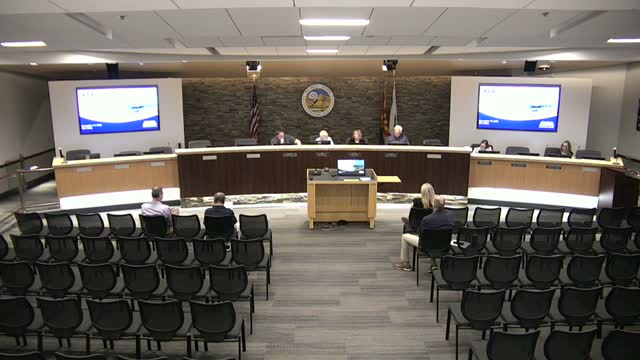
Steve Hoffman, representing the regional transportation authority’s RTA Next initiative, told the Oro Valley Tourism Advisory Commission on Nov. 17 that transportation improvements are “the engine that drives tourism,” and framed overpasses, roadway reconstructions and expanded bike and pedestrian networks as essential to visitors’ first impressions of the town.
Hoffman said RTA Next would concentrate on arterial and collector corridor reconstructions — ‘‘we are not the pothole people’’ — plus multimodal investments such as bike paths, pedestrian facilities and wildlife overpasses. He repeatedly tied those projects to tourism, citing direct access from Tucson International Airport and major corridors that lead visitors to local hotels and attractions.
The presentation emphasized funding mechanics: two separate voter questions would appear on the ballot — one to approve the RTA Next project plan and one to renew a half‑cent sales tax that currently funds the RTA. ‘‘If the plan passes but the sales tax doesn’t pass, there’s no funding to pay for the plan,’’ Hoffman said, adding that the current tax is scheduled to expire in 2026. He estimated RTA Next would provide approximately $2.67 billion for projects and described how the voter-approved local funds can be used to leverage state and federal matches for large interchanges and other large projects.
Commissioners asked how specific projects and timelines would be set. Hoffman said the 20‑year plan is divided into multi‑year periods and that the voter brochure will describe whether a project is scheduled for period 1, 2, 3 or 4; some projects might not begin for more than a decade. He stressed that RTA is a funding source and that local jurisdictions and ADOT coordinate project design and construction.
On questions about bike paths in Oro Valley, Hoffman said RTA Next includes a regional pot of money committed to active-transportation projects and that individual jurisdictions would work with the RTA board and technical committees to decide allocations. He said the RTA has already invested in more than 550 miles of bike paths and expects continued investment.
Commissioners also raised transit‑operations concerns. Hoffman said the current plan commits about $31 million a year to regional transit operations, covering services used by outlying communities; he warned that if RTA Next and the related tax fail, smaller jurisdictions could see immediate contractions in transit service. A commissioner raised an unverified concern linking some city transit routes to crime; Hoffman said he had no factual information to confirm that claim.
The RTA Next presentation concluded with a town‑focused reiteration: Hoffman said improved entry corridors, interchange projects and expanded multimodal options would make Oro Valley more accessible and likely increase tourism-related economic activity, but he repeatedly emphasized that project implementation depends on voter approval of both the plan and the funding mechanism.
The commission took questions from members and will receive the full leisure travel plan at a future meeting; there was no vote related to RTA Next during this session.