Committee moves DOER leadership salaries from federal to general funds amid federal uncertainty
Loading...
Summary
The committee recommended moving the DOER commissioner and deputy commissioner salaries from federal State Energy Program funds to the general fund, citing federal funding uncertainty; members discussed options for conditional or one-time language and carryforward provisions.
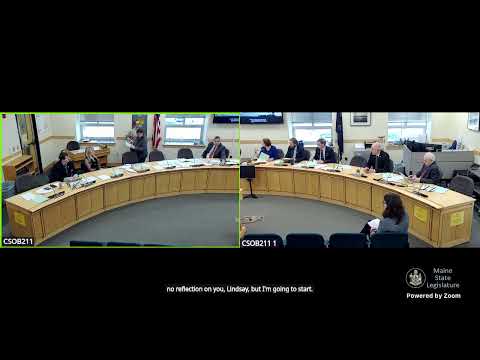
Members of the Energy, Utilities and Technology Committee voted to include in their report a recommendation to transfer the salaries of the Department of Energy Resources commissioner and deputy commissioner from federal State Energy Program (SEP) funds to state general funds.
Acting Commissioner Dan Burgess said the department prefers to fund leadership positions with general funds to ensure continuity of pay and avoid dependence on an uncertain federal SEP allocation. He told the committee that the current federal budget proposal had at times proposed reducing or zeroing SEP dollars and that some states had not yet received their last year'9s allocations. "From a certainty perspective, it makes sense to have the leadership of the department paid for using general funds and not be contingent on" federal SEP appropriations, Burgess said.
Committee members asked whether the committee could require that state funds be returned if federal funds later arrive. Michael Russo of the Office of Fiscal and Program Review replied that the legislature controls how federal funds are authorized and that the committee could: recommend a one-time general-fund allocation instead of an ongoing baseline increase; or recommend Part RR language (non-lapsing carryforward) or other drafting that would direct how unused or subsequently received federal funds should be treated.
After discussion, the committee moved references 210, 211 and 212 (the line items shifting commissioner and deputy commissioner salaries to the general fund) into the report. Members recorded straw-vote counts consistent with other LD 2212 items and signaled the desire to include drafting guidance for AFA to consider whether language should be one-time, conditional or ongoing.
Next steps: The recommendation will be submitted to AFA with options for Part RR or conditional language. If the full Legislature approves the change, implementing it will require updated budget language in subsequent bill text.