Get Full Government Meeting Transcripts, Videos, & Alerts Forever!
Get email alerts on the Direct Care Workforce topic
No spam. Unsubscribe anytime.
Committee advances LD 1932 with targeted COLA, reporting and technology planning for direct care workforce
Summary
The Health and Human Services Committee moved LD 1932 as amended, replacing prior rate language with a one-year cost-of-living adjustment (about 3.07%), adding MHDO care-gap reporting and stakeholder planning for credentialing and supportive technology; the motion passed by voice vote and the bill was advanced from committee.
The Maine Legislature's Health and Human Services Committee voted to advance LD 1932 as amended after a work session that revised pay and reporting provisions for the state's direct care workforce. Committee members adopted an amendment that replaces earlier reimbursement language with a one-year cost-of-living adjustment of about 3.07% and adds reporting, advisory‑committee membership changes and technology and credentialing planning requirements.
The committee's analyst outlined the amendment, which: substitutes a one‑year COLA for previously proposed reimbursement language; requires a biennial report estimating the biennial cost to the state of providing long‑term care services by essential support workers; adds long‑term care ombudsman and home‑based care provider representatives to the advisory committee; and directs MHDO and DHHS to develop data and a supplemental file to measure a "care gap" in services.
MHDO analyst Karen Lee, who joined by Zoom, warned that measuring care gaps for sections of MaineCare that do not use prior‑authorization data will require different methods and additional technical work. "Some services do not require prior authorization," she said, and measurement approaches will need to change for those sections.
Abby Stivers, director of government relations for the Department of Health and Human Services, said much of the credentialing and curriculum work referenced in the bill has already been completed or launched. She said the department has developed a core competencies curriculum for direct‑service workers, piloted a new DSW (direct service worker) course for private‑pay personal support specialists, and engaged national partners. Stivers said statewide rollout will require rule changes and, for some pieces, approval from the Centers for Medicare & Medicaid Services (CMS).
Committee members pressed for clarity about timelines and cost implications. The amendment sets different effective dates for sections that require CMS action (effective Jan. 1) and state‑funded sections (effective July 1). The department said CMS approval of related waiver work is targeted for October 2026 but remains contingent on federal review and system changes.
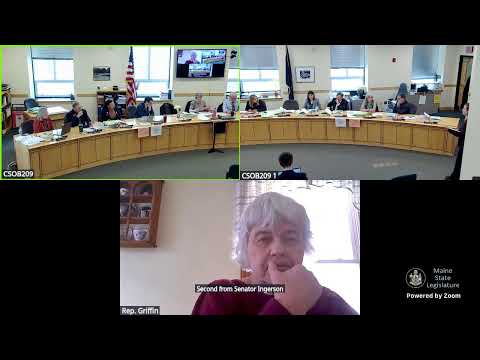
A member moved to advance LD 1932 as amended; the motion was seconded, and the committee approved it by voice vote (specific tallies were not recorded in the transcript). The committee also directed staff and agencies to provide follow‑up information, including implementation timelines and potential rule changes for the credentialing work.
The committee's action sends LD 1932 forward with the amendment package described above. The bill now proceeds according to the legislative process for further consideration.