Lifetime Citizen Portal Access — AI Briefings, Alerts & Unlimited Follows
Panel divided on studying collateral-source rule; motion to explore use fails
Loading...
Summary
Members debated whether to explore changes to the collateral-source rule as a way to reduce medical costs in auto claims. Supporters said the rule can raise awards and premiums; opponents said Delaware data show litigation is not a primary driver. The motion to further explore the rule failed on roll call.
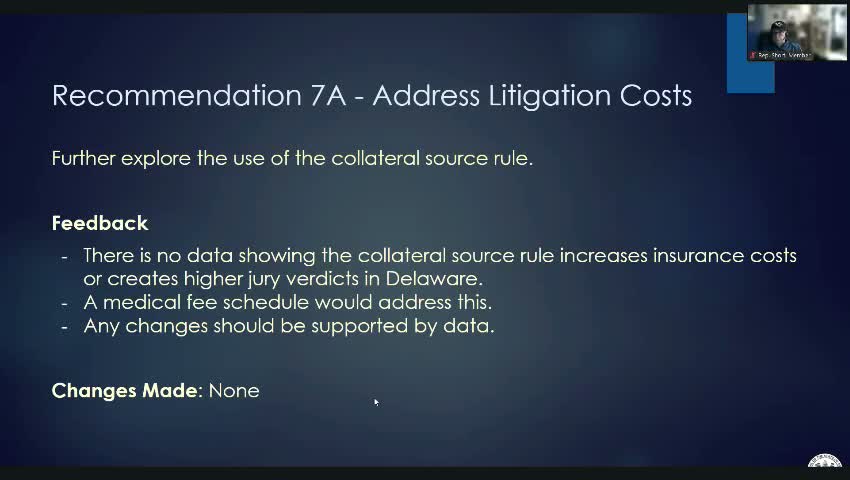
A recommendation to "further explore the use of the collateral source rule" prompted a sharp debate at the state task force meeting and ultimately failed on the recorded roll call (10 no, 6 yes).
Proponents argued the collateral-source rule—a doctrine that in many cases allows plaintiffs to recover full charges even when some medical services were covered by insurance—can add to medical-cost severity and thus insurance premiums. One member urged the task force to study how other states have modified the rule and whether Delaware could adopt an exemption tailored to reduce cost severity.
Opponents said Delaware's data do not show runaway jury verdicts or litigation costs as a primary driver of premiums here. One member characterized the recommendation as a "solution in search of a problem," saying litigation cost metrics for Delaware do not support wholesale reform and cautioning that attacking the collateral-source rule may not yield the intended rate reductions.
Task force members who favored study said they were not recommending immediate statutory change but rather analysis of other states' approaches and their impacts; members who opposed the motion said that the task force lacked enough data and that the state-specific evidence did not show litigation as a major cost driver. The motion to explore the rule failed 10–6.
Members asked staff to include discussion of the collateral-source debate in the final report so the General Assembly and other stakeholders could see both viewpoints documented.