
Task force weighs incentives, taxidermist sampling and DMAP to close CWD surveillance gaps
Get AI-powered insights, summaries, and transcripts
Subscribe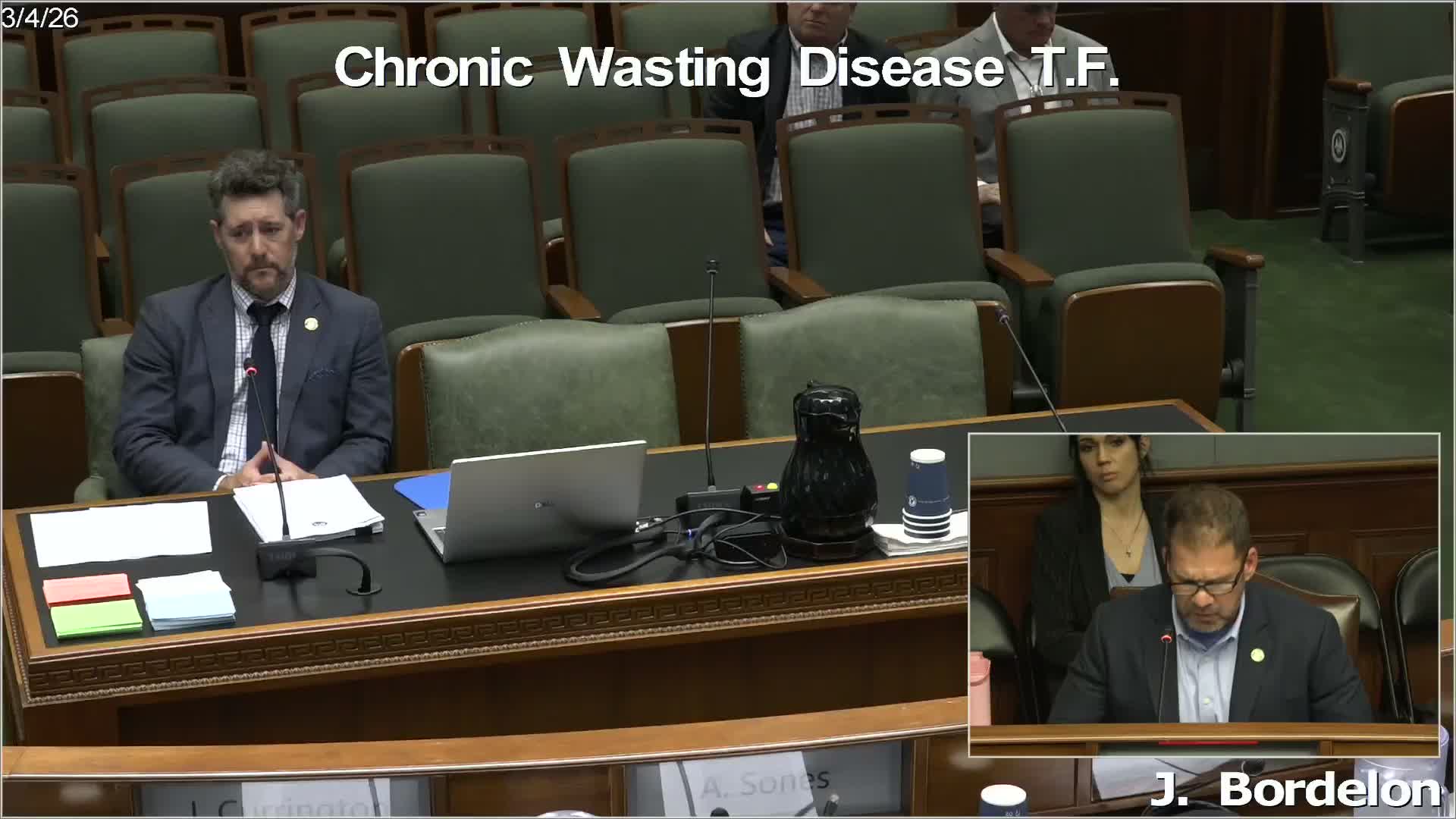
Summary
Louisiana task force members debated using DMAP sites, taxidermist incentives and special-season testing to raise deer-sample rates in under-monitored parishes; staff were asked to prepare options for the April meeting and to fold stakeholder recommendations into HCR 75.
A legislative task force reviewing chronic wasting disease surveillance in Louisiana on Wednesday focused on ways to boost hunter-derived testing in parishes that fall short of sampling goals, including using Deer Management Assistance Program properties, offering extra tags for reported animals and enlisting taxidermists to submit heads for testing.
The session heard that the state met its surveillance goals in 32 of 64 parishes but lacks sufficient samples elsewhere to be confident that CWD is absent. "We achieved surveillance goals in 32 of 64 parishes," Jonathan Bordelon said, urging development of protocols to address the shortfalls and enable a faster mitigation response where disease is detected.
Why it matters: Low sampling in half the state's parishes makes it difficult to detect early, localized CWD. Panelists said targeted approaches that capture older animals — which are statistically more likely to test positive — will provide earlier warning and allow authorities to contain outbreaks with narrower control zones.
LDWF and department scientists described two complementary sampling approaches: broad statistical surveillance in endemic areas and targeted sampling where prevalence is expected to be low. An agency scientist noted the higher diagnostic yield in older, trophy-age bucks and suggested a pragmatic channel to collect those samples: taxidermists. "If we do talk about incentivizing somewhere, taxidermy, incentivizing taxidermist to get samples for us would be for me a suggestion," the scientist said, arguing taxidermists frequently handle the older animals that are the best surveillance targets.
Committee members discussed incentives such as extra DMAP tags or bonus permits for hunters who report carcasses for testing, and special ‘‘doe days’’ or targeted seasons where testing would be required or strongly encouraged. Senator Womack asked whether DMAP test results could be stratified; LDWF said the agency flags samples by DMAP or non-DMAP collection and can report that breakdown to monitor whether DMAP-based sampling skews results.
Funding and capacity: LDWF staff said the department has relied on self-generated funds for testing historically but received competitive USDA grants in the last two years that covered diagnostic testing. Bordelon said those USDA awards were roughly $100,000–$150,000 per fiscal year as a subset of department expenditures; the department has also used more than $800,000 of its own funds over recent years to support surveillance.
What the task force asked staff to do: The chair directed staff to combine the written stakeholder input with the conversation’s main options and present a draft set of enumerated recommendations under HCR 75 at the next meeting in April. Members asked for concrete scenario options — for example, how intense within-season sampling could shrink a buffer zone — so the commission can consider trade-offs between immediate restrictions and incentives that maintain hunter participation.
The meeting concluded without votes on policy changes; staff will circulate draft recommendations ahead of the April discussion.