Advocates urge declaring maternal mortality a public‑health emergency in Louisiana
Loading...
Summary
The Louisiana Center for Health Equity asked the House committee to formally designate maternal mortality a statewide public‑health emergency, citing a maternal mortality rate near 40 per 100,000 live births and pronounced rural, racial and socioeconomic disparities.
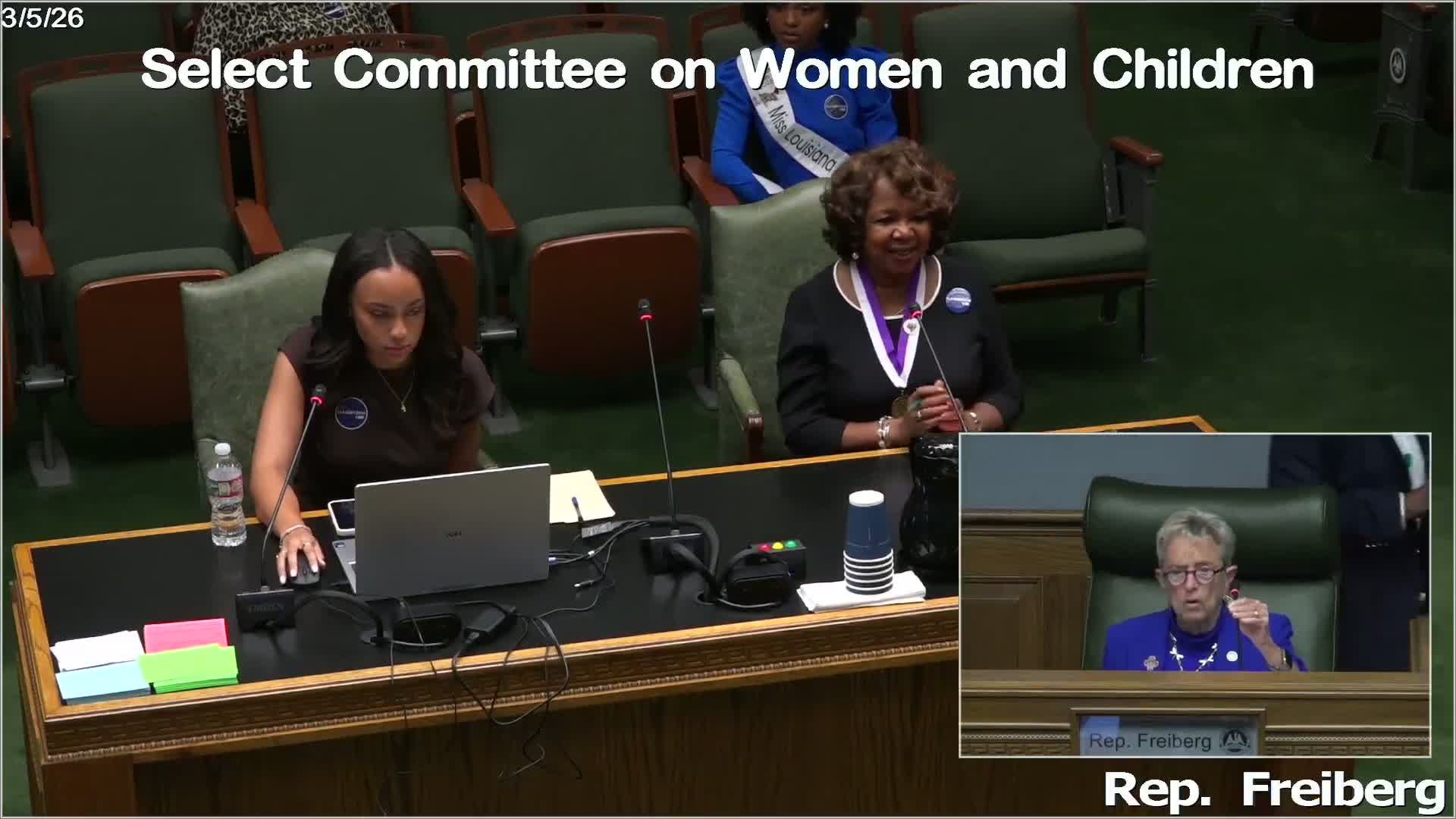
The Louisiana Center for Health Equity presented to the House Select Committee on Women and Children and urged lawmakers to declare maternal mortality a statewide public‑health emergency.
Taylor Howard (policy presenter for the center) said the state’s maternal mortality rate is roughly 40 deaths per 100,000 live births — about double the national average — and that most maternal deaths in Louisiana have been labeled preventable in recent analyses.
The proposal: The center recommended a formal emergency declaration to elevate maternal mortality as a legislative and administrative priority, improve surveillance and reporting, mobilize resources for prenatal and postpartum care, and target rural maternity‑care deserts and Medicaid beneficiaries.
Background and context: Presenters described striking geographic disparities: many rural parishes are maternity‑care deserts with no birthing hospitals or obstetric providers, and nearly 40% of rural women live more than 30 minutes from a birthing hospital. The center argued that expanded surveillance and coordinated action — similar to recent emergency responses to infant mortality in other states — could enable targeted interventions.
Policy wins and next steps: Presenters noted recent progress — Medicaid coverage for doulas and 12‑month postpartum coverage — and asked the committee to consider an emergency designation to accelerate data collection, public awareness, and resource allocation.
Voices from the community: Miss Louisiana Port City teen Autumn Percival, who advocates on youth and preconception health, described outreach work with families to build lifelong health behaviors that reduce future maternal risk.
Committee reaction: Members expressed strong support for increased attention and for bills to address access and prevention; several lawmakers volunteered to carry related legislation this session.