
Attorney general’s ICAC presents surge in tips, asks Legislature for analysts and staff
Get AI-powered insights, summaries, and transcripts
Sign Up Free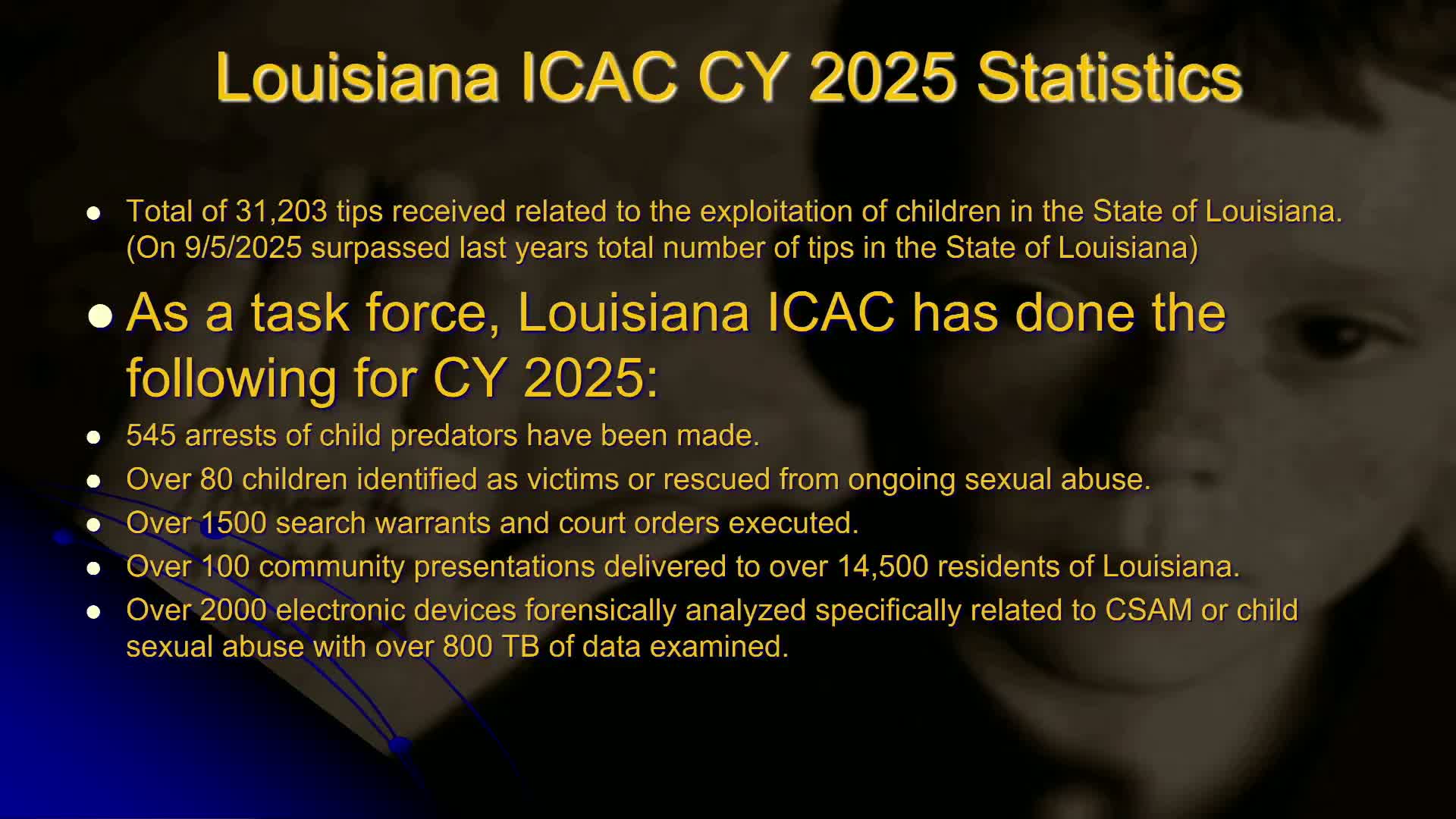
Summary
The Louisiana Internet Crimes Against Children task force reported 31,203 tips in 2025 and a record level of arrests and identifications; the task force asked lawmakers for more analysts, outreach personnel, and operational staff to process growing cyber tip volumes.
Supervisory Special Agent Chris Masters, who runs the Louisiana Internet Crimes Against Children (ICAC) task force housed in the Attorney General’s office, told the House Select Committee on Women and Children that tips and cases of online child exploitation have increased sharply and that the state needs more analysts and dedicated personnel to respond.
“Last year we had a total of 31,203 tips related to exploitation of children in the state of Louisiana,” Masters said. He described a record year for 2025 that included 545 arrests, more than 80 children identified or rescued from ongoing abuse, and more than 1,500 executed search warrants. The task force now includes more than 80 local, state and federal partners, Masters said.
Rapid operations: Masters gave examples in which the National Center for Missing & Exploited Children forwarded a tip and local partners arrested a suspect and identified a child in the same day. “By 5 PM this guy’s arrested, and a child is identified as being a victim,” he told the committee.
Drivers and new threats: Masters flagged a rise in sadistic online enticement groups and sextortion. He described live‑streamed abuse, overseas hosting and commercial models where content is monetized; he also noted that many recent takedowns targeted previously convicted registrants who continued to use social media in violation of state law.
Requested resources: Masters said his office needs more analysts and outreach staff to triage and route tips to partners faster. He described a current backlog of hundreds of thousands of tips to review nationally and said that additional analysts increase the chance of timely rescues.
Committee reaction: Members thanked Masters and asked about prosecutions and federal coordination. Masters said the task force refers investigations to local prosecutors and noted federal partners are essential for cross‑jurisdictional and overseas operations. The committee suggested appropriations and interagency collaboration for a larger staffing footprint.
Next steps: Masters asked lawmakers to consider budget and staffing support; committee members signaled willingness to follow up with appropriation and public‑safety committees.