State human‑trafficking office presents 2025 data and presses Legislature on two priority bills
Loading...
Summary
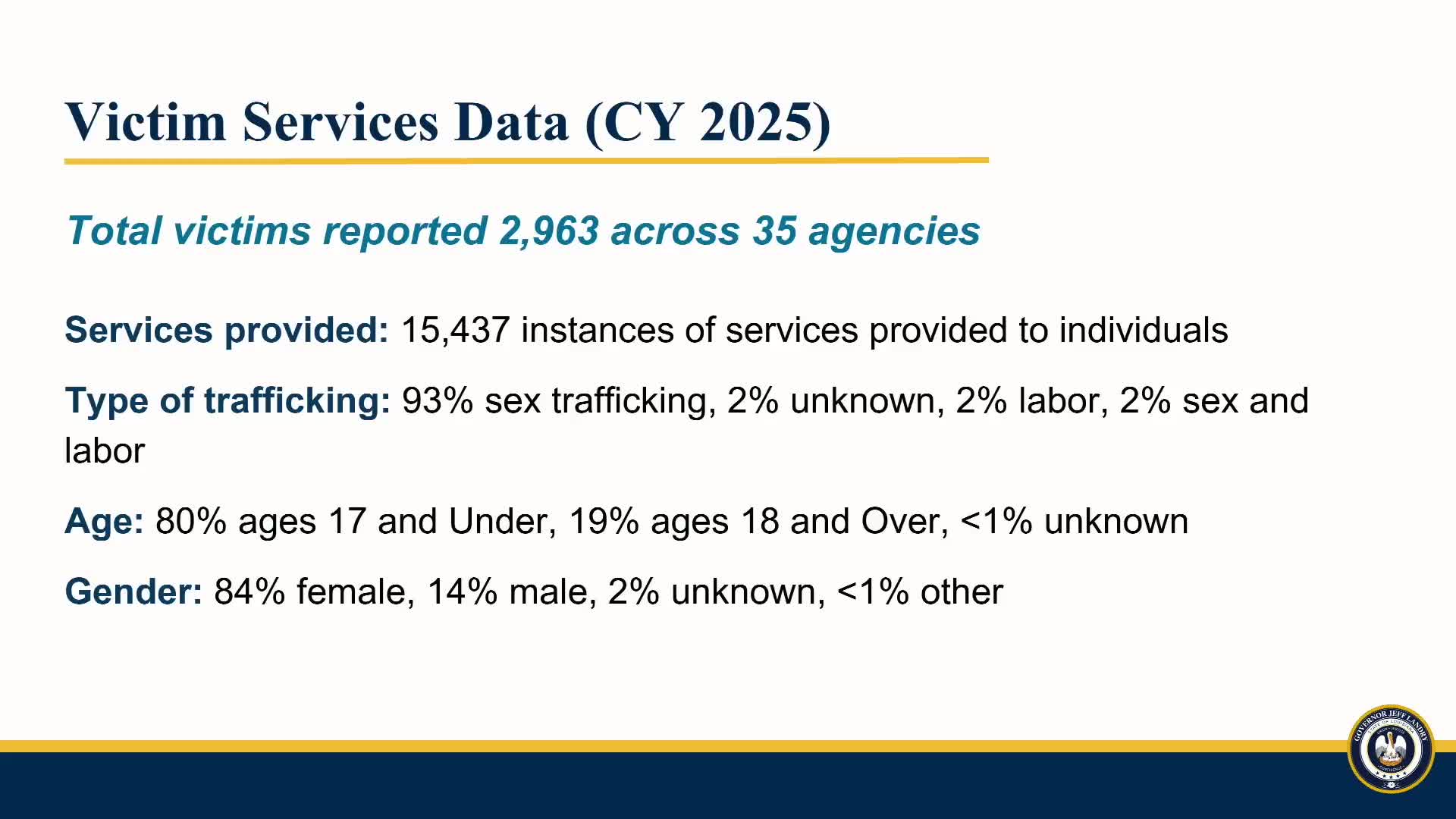
The governor’s Office of Human Trafficking Prevention told the House Select Committee that providers reported 2,963 identified victims in 2025 and urged lawmakers to back two priority bills: HB 321 (Safe Harbor for child victims) and SB 83 (school reporting policies and extended victim advocacy).
Mary Kate Andropon, executive director of the governor’s Office of Human Trafficking Prevention, told the House Select Committee on Women and Children on March 5 that service providers reported 2,963 trafficking victims across Louisiana in calendar year 2025 and that the state delivered 15,437 instances of services to those victims.
“Those numbers reflect that we are doing a really good job at identifying child and youth trafficking victims and putting wraparound services,” Andropon said, while acknowledging the data are provider‑reported and may include duplicates.
Why it matters: Committee members said the data underscored that trafficking is a statewide problem — not limited to large cities. Andropon told lawmakers the office recorded trafficking reports in 62 of Louisiana’s 64 parishes in 2025 and described high rural rates of familial trafficking, where caregivers or family members exploit children.
What the office proposed: Andropon highlighted two priority bills. HB 321 (sponsored in the House by Representative LaFleur) would expand so‑called Safe Harbor protections by creating an explicit exemption or immunity in law for children prosecuted on prostitution‑related offenses, reflecting the view that minors engaged in commercial sex are victims, not criminals. The office said the proposal is intended to ensure children receive services rather than criminal penalties.
The office also backed SB 83 (Sen. Edmonds), a measure that would require school boards to adopt human‑trafficking identification and reporting policies and expand victim‑advocacy services to include labor‑trafficking victims and people up to age 21, aligning advocacy with extended foster‑care eligibility.
Questions and follow‑up: Members pressed the office on how screening and reporting work in practice. Andropon described a statewide screening tool that prompts a report to the DCFS child‑abuse hotline when a screening result is indicated; that referral triggers both victim‑service and law‑enforcement responses through regional care‑coordination teams. She said the public and child‑serving agencies can use the screening tools and that the office has trained some districts and school counselors to use them.
The office also promoted a victim‑facing outreach campaign launched prior to Super Bowl LIX that features artwork by survivors and a QR code linking to resources, saying the campaign is designed to reach victims and help them access services.
Next steps: Andropon said the office will share its 2025 data report — which lists the 35 provider agencies that supplied data — and that staff will provide committee members the materials and contact information needed to connect with local partners.